How do steel sheet supplier quotations really work? Whether you source SPCC steel, Q235 steel, stainless steel square pipe, seamless steel tube, or API 5L pipe, pricing depends on grade, dimensions, processing, standards, and order volume. This guide explains how reliable Chinese suppliers evaluate cost, lead time, and customization, helping buyers compare offers accurately, control sourcing risk, and choose the right steel solution for industrial and construction projects.
What does a steel sheet supplier quote actually include?
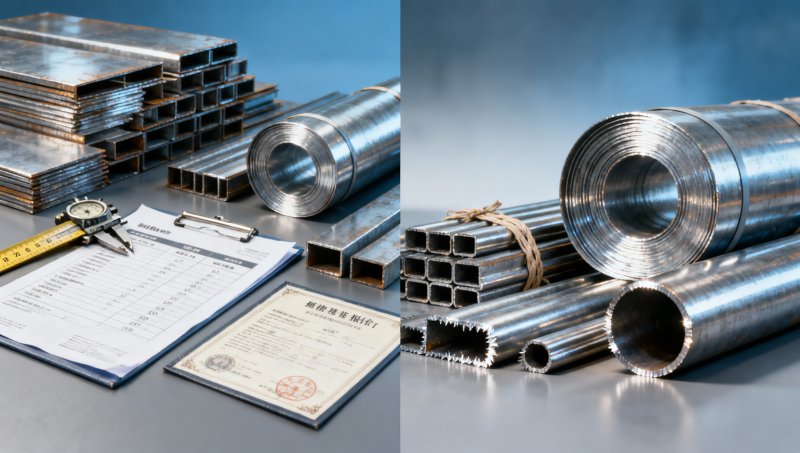
A steel sheet supplier quote is not just a price per ton. In most B2B transactions, it is a structured commercial and technical document covering base material cost, steel grade, size range, tolerance, surface condition, processing scope, packing method, inspection terms, shipment terms, and delivery schedule. For buyers comparing several offers, understanding these layers is the first step to avoiding low-price traps.
In the steel industry, even a small change in thickness, width, or coating can shift the quote noticeably. A 1 mm to 12 mm thickness range, for example, affects raw material consumption, forming difficulty, and handling method. Likewise, standard lengths such as 6 m, 9 m, and 12 m are usually easier to price than special cut lengths because production planning and loading efficiency are more predictable.
For procurement teams, finance approvers, and project managers, the key issue is not only “How much does it cost?” but also “What exactly is included?” A reliable quote should clarify whether the offer covers slitting, cutting, punching, bending, galvanizing, testing, export packing, and documentation. Without this detail, a lower unit price may become a higher total landed cost after revisions.
For technical evaluators and quality teams, the quote should also reflect the standard basis. Common references include ASTM, EN, JIS, and GB. If a supplier prices Q235 under one standard assumption while the project actually requires equivalent mechanical performance under another, the buyer may face re-approval delays of 7–15 days or even a rejected shipment.
Core elements buyers should verify in every quotation
Before comparing two steel sheet supplier quotations, buyers should normalize the commercial scope. The checklist below is useful for sourcing staff, distributors, OEM buyers, and construction project teams.
- Material grade and equivalent standard, such as SPCC, Q235, Q345, A36, SS400, or S235JR.
- Dimensions, including thickness range, width, length, and tolerance such as ±1% where applicable.
- Surface status, for example black, galvanized, pickled, oiled, powder coated, or mill finish.
- Processing services, including decoiling, cutting, bending, welding, and punching.
- Trade terms and shipment details, such as EXW, FOB, CFR, or CIF, plus packing and inspection method.
When these five items are aligned, quotation comparison becomes much more meaningful. This is especially important when multiple departments are involved in approval and every revision affects budget control, technical review, and delivery planning.
Which factors move the steel sheet quotation up or down?
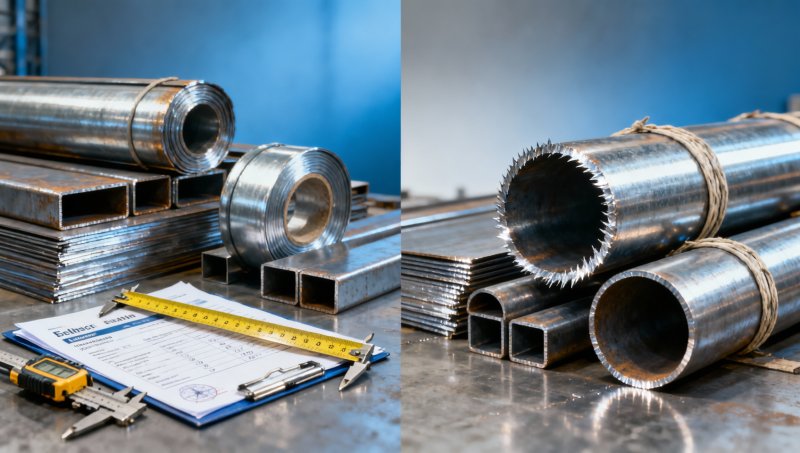
Steel sheet supplier pricing is usually built from several variable cost blocks. The biggest drivers are steel grade, specification complexity, processing depth, coating requirement, order quantity, and logistics route. In practical sourcing, two products that look similar on paper may carry different prices because one requires stricter tolerances, extra punching, or a different export packing standard.
Grade is one of the most visible factors. For example, commodity carbon steel used in general fabrication is typically quoted differently from higher-strength structural grades or corrosion-resistant stainless material. A buyer asking for “Q235 steel sheet” without confirming test requirement, yield expectation, or standard equivalency may receive offers that are not directly comparable.
Dimensions also matter. Thin-gauge products may require different rolling or forming control than heavier sections. Special widths, slit edges, perforation patterns, or custom lengths often reduce production efficiency. For some projects, moving from stock-friendly lengths to custom lengths may extend lead time from a routine 2–4 weeks to a longer schedule depending on mill planning and downstream processing.
Volume has a strong effect on unit economics. Small trial orders can be useful for qualification, but they often spread tooling, packing, and export handling over fewer tons. Medium and large-volume orders usually offer better production continuity, better loading efficiency, and more stable repeat pricing. This is one reason experienced steel sheet suppliers ask for annual demand, project forecast, or release schedule during quotation.
A practical comparison of quotation drivers
The table below helps purchasing, engineering, and commercial teams identify which quotation variables are usually straightforward and which ones need closer supplier clarification.
This comparison shows why a complete RFQ creates better offers. The more precise the technical input, the fewer hidden assumptions remain inside the quote, and the easier it becomes to judge total value rather than unit price alone.
How should buyers compare offers beyond the price per ton?
When several steel sheet suppliers respond to an RFQ, many teams compare only the top-line number. That is risky. A stronger method is to evaluate quotations across at least 5 key dimensions: technical compliance, processing scope, lead time, quality documentation, and shipment reliability. This approach helps information researchers, procurement officers, and business approvers align on the same decision logic.
For example, one supplier may offer a lower price but only for basic mill supply, while another includes punching, cutting, galvanizing, third-party inspection support, and export-ready packing. For projects with tight installation windows, the second offer may reduce coordination cost and prevent jobsite delays, even if the initial unit rate is moderately higher.
This comparison logic also applies to structural profiles and fabricated steel components. In the middle of a project, many buyers shift from plain sheet sourcing to formed sections that simplify installation. A useful example is C-beam, which is widely used in purlins, wall beams, lightweight roof trusses, brackets, and light manufacturing frames. It can be supplied in Q195, Q235, Q345, A36, SS400, or S235JR, with thickness from 1 mm to 12 mm, standard lengths of 6 m, 9 m, and 12 m, and customized large-quantity lengths when needed.
For buyers comparing profile offers, details such as perforation, galvanized coating, powder coating, black varnish, mill edge or slit edge, and processing services like bending, welding, punching, decoiling, and cutting should all be listed in the quotation. A ±1% tolerance and compliance references such as ASTM, BS, DIN, GB, JIS, plus CE, SGS, BV, or ISO-related inspection expectations, can influence both approval speed and project fit.
A quotation comparison table for multi-department review
The following table is useful when procurement, engineering, quality, finance, and management need one shared evaluation sheet before placing an order.
Using a table like this often shortens internal approval by turning a vague price discussion into a documented decision. It is especially helpful for distributors, EPC buyers, and overseas project teams managing several line items at once.
Three quotation mistakes that often increase sourcing risk
- Comparing offers with different trade terms, such as mixing FOB and CIF prices without adjusting freight and insurance.
- Ignoring processing assumptions, then discovering extra charges after drawing confirmation or production release.
- Approving a low quote before checking whether material certificates, coating details, or packaging standards meet project needs.
These errors are common when purchase teams move too fast under schedule pressure. A disciplined review process usually saves more time than a rushed order revision later.
What information should you send to get an accurate quote faster?
The fastest way to improve steel sheet supplier quotation accuracy is to improve the RFQ input. In many cases, quote delays are not caused by the supplier alone. They happen because the inquiry lacks grade details, drawing files, quantity breakdown, destination port, or required delivery window. A complete inquiry can reduce back-and-forth and help suppliers return a more usable offer within 1–3 working days for standard items.
For project owners and engineering teams, the most useful RFQ package often includes 6 items: product name, grade and standard, dimensions and tolerance, annual or project quantity, required processing, and shipment terms. If the order includes fabricated parts or perforated profiles, a drawing with hole size, pitch, edge distance, and surface treatment expectation can prevent costly assumptions.
For distributors and repeat buyers, it also helps to indicate whether the request is for stock replacement, framework agreement, or one-time project supply. A steel sheet supplier quotes differently when the requirement is a single 20-foot or 40-foot container versus a rolling monthly release. Demand visibility supports raw material planning, production slot allocation, and more stable delivery promises.
At the same time, buyers should state any mandatory compliance points early. If the project requires ASTM, EN, JIS, or GB compliance, specific packaging marks, or third-party inspection coordination, those items should be in the first RFQ instead of being added after price confirmation. Late additions often change the quote and extend production by several days.
A simple 4-step RFQ process that improves quotation quality
- Define the technical requirement: confirm grade, standard, dimensions, tolerance, and end-use environment.
- Define the commercial requirement: confirm quantity, delivery term, destination, target timeline, and packing expectation.
- Define the processing scope: identify cutting, perforation, welding, coating, and marking needs.
- Define the quality scope: specify certificates, inspection points, sample need, and document package.
This 4-step method is practical because it speaks to all stakeholders. Engineering gets specification control, procurement gets commercial comparability, quality gets inspection visibility, and finance gets a clearer total-cost basis.
How do standards, quality control, and lead time affect supplier reliability?
A competitive steel sheet supplier quote only becomes valuable when it can be executed reliably. That means the supplier should be able to connect production capacity, process control, export experience, and quality management with the quoted scope. In international purchasing, reliability often matters more than a small nominal price difference because delays, claims, and replacement shipments are expensive.
Hongteng Fengda operates as a structural steel manufacturer and exporter from China, serving construction, industrial, and manufacturing buyers in North America, Europe, the Middle East, and Southeast Asia. For overseas customers, the practical advantage is not just product supply but the ability to coordinate standard specifications and OEM-oriented structural steel solutions across multiple product categories, from angle steel and channel steel to steel beams and cold formed profiles.
For quality-sensitive projects, control starts before shipment. Buyers typically pay attention to 3 areas: material consistency, dimensional conformity, and documentation readiness. If a quote promises fast delivery but the supplier cannot maintain process discipline or document accuracy, the apparent speed can disappear in claim handling, customs clarification, or on-site fitment problems.
Lead time should also be discussed in realistic stages. For many structural steel and processed steel products, the timeline includes order confirmation, production scheduling, manufacturing and inspection, packing, and shipment release. A supplier with stable production organization is generally better positioned to support dependable lead times than one that quotes aggressively without confirming actual capacity.
Typical reliability checkpoints before order placement
Before issuing a PO, buyers can use the following service and compliance checkpoints to reduce uncertainty in cross-border sourcing.
A supplier that communicates clearly on these checkpoints is usually easier to work with over the long term. For many buyers, that reliability is the real reason one quotation becomes more competitive than another.
FAQ: common questions buyers ask before accepting a steel sheet quote
Many quotation discussions repeat the same questions across sourcing, engineering, quality, and finance teams. Addressing them early helps accelerate internal approval and reduces revision cycles.
How can I tell whether two steel sheet supplier quotes are truly comparable?
Check at least 5 points side by side: grade and standard, dimensions and tolerance, surface and processing scope, trade term, and delivery lead time. If one quote includes galvanizing, cutting, and export packing while another does not, the lower number is not a like-for-like comparison.
What is a normal lead time for structural steel or processed steel items?
There is no single answer, because standard stock supply, made-to-order sections, and fabricated components differ. In many projects, routine material can move faster than customized items with punching, bending, coating, or special inspection. Buyers should ask for production time, inspection time, and shipment readiness separately instead of relying on one broad promise.
Why do suppliers keep asking for drawings, standards, and application details?
Because steel sheet supplier quotations depend on exact technical and commercial assumptions. A detailed RFQ helps the supplier calculate material route, processing steps, packing method, and realistic lead time. It also reduces the chance of late price changes after engineering confirmation.
Should I always choose the lowest quote?
Not necessarily. In steel sourcing, the lowest quote may exclude services that your project needs, or it may carry higher execution risk. A better decision looks at total delivered value: compliance, processing accuracy, lead-time stability, document support, and communication efficiency.
Why work with a Chinese structural steel manufacturer for quotation and supply planning?
For global buyers, the right Chinese supplier can offer more than a fast steel sheet supplier quote. The real value comes from coordinated manufacturing, specification matching, quality control, and export support. This matters when your project includes multiple steel categories, tight deadlines, or customized processing that needs one accountable production partner.
Hongteng Fengda focuses on structural steel manufacturing and export, supporting buyers who need standard products, fabricated profiles, or OEM-oriented structural steel components. With experience serving overseas construction and industrial demand, the company helps customers reduce sourcing risk, improve specification alignment, and manage delivery expectations more effectively across project stages.
If you are comparing offers for steel sheet, structural sections, or related fabricated steel items, you can discuss 6 practical topics before ordering: material grade confirmation, dimension and tolerance review, coating or surface treatment, required standards, expected delivery cycle, and packing or document requirements. That conversation usually leads to a cleaner quote and fewer downstream changes.
For your next inquiry, you can send drawings, target quantity, destination, and processing details for quotation support. You can also ask about product selection, sample feasibility, standard compliance, customized solutions, and shipment planning. This is the most effective way to move from a rough budget price to a quotation that is technically sound, commercially clear, and ready for project execution.
Please give us a message


Please enter what you want to find