For project managers under pressure to keep schedules tight and labor costs under control, choosing the right materials can make a measurable difference. Lightweight steel tube helps reduce on-site handling time, improve installation efficiency, and lower the burden on crews without sacrificing structural performance. In this article, we explore how it supports faster, safer, and more cost-effective project execution.
Why handling speed has become a bigger project issue
Across construction, industrial installation, and light structural fabrication, one clear change is shaping site decisions: time lost in material movement is now treated almost as seriously as time lost in installation itself. For project managers, this shift matters because modern schedules are tighter, labor availability is less predictable, and safety compliance is more closely monitored than before. In that environment, material choice is no longer judged only by strength and cost per ton. It is increasingly judged by how quickly it can be unloaded, sorted, transported, lifted, aligned, and fixed into place.
That is why lightweight steel tube is attracting more attention in site planning discussions. It fits a broader market direction in which contractors want structural and support materials that reduce bottlenecks between delivery and final installation. Whether the application is framing, guards, handrails, support assemblies, light platforms, or modular steel systems, the ability to cut handling time can improve the whole workflow. What used to be seen as a minor operational benefit is now becoming a practical decision factor in procurement.
The trend is especially visible on projects with multiple trades working in parallel. When a crew spends less time moving and repositioning steel members, access routes remain clearer, installation sequences become easier to maintain, and downstream teams face fewer interruptions. In other words, lightweight steel tube supports schedule stability not just because the product is easier to lift, but because it helps reduce friction across the site.
The main signals behind the shift toward lighter, easier-to-handle steel solutions
Several market and operational signals are pushing buyers to pay more attention to handling efficiency. First, labor costs remain under pressure in many regions, so every unnecessary movement on site becomes more expensive. Second, safety expectations continue to rise, making teams more cautious about manual handling of awkward or heavy components. Third, project delivery models increasingly rely on prefabrication, phased installation, and just-in-time material release, all of which reward materials that are easier to control on site.
At the same time, steel manufacturers are improving product consistency, dimensional control, and customization options. This means lightweight steel tube can be supplied in forms better matched to project requirements, reducing trimming, rework, and unnecessary manipulation after delivery. For project leaders, this is not merely a product improvement. It is a sign that material sourcing is moving closer to workflow optimization.
These signals do not mean heavier steel sections are losing importance in all applications. Rather, they show that in many secondary structural, access, enclosure, and support scenarios, handling performance is becoming a stronger part of the value equation.
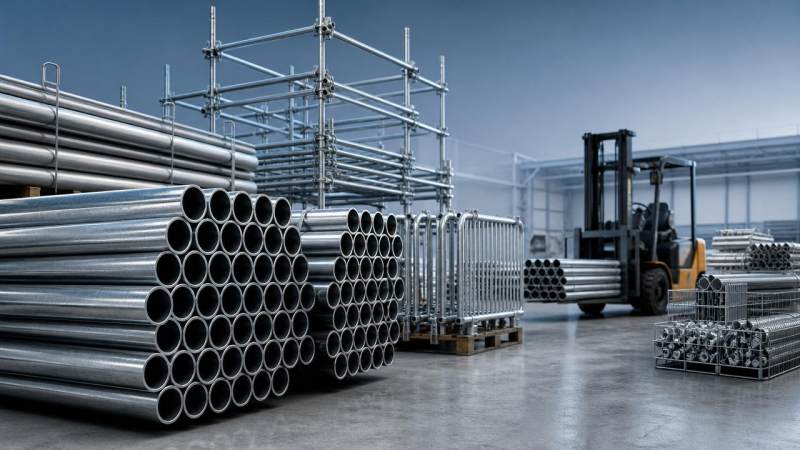
Where lightweight steel tube reduces handling time in real project workflows
The impact of lightweight steel tube is most visible when a project is reviewed stage by stage. On many sites, delays are not caused by one major event but by repeated small inefficiencies. A material that is easier to move can reduce those repeated losses across several work phases.
1. Unloading and initial staging
When steel arrives on site, the first challenge is safe unloading and organized placement. Lighter tube sections can often be separated, counted, and staged faster than bulkier alternatives. Crews spend less time adjusting lifting methods or clearing oversized storage space. This matters particularly on urban or confined sites where laydown space is limited and material turnover must be rapid.
2. Horizontal movement across work zones
Moving steel from storage to the active work face frequently consumes more labor than expected. Lightweight steel tube can reduce the number of handling pauses, lower fatigue, and simplify coordination between rigging staff and installation teams. The gain is not only speed. It is also better continuity, especially when teams need to move materials through narrow access corridors, upper levels, or temporary work platforms.
3. Positioning and alignment
A major source of hidden delay is fine adjustment during fitting. If a component is easier to lift, rotate, and hold in position, crews can complete alignment faster and with less strain. In repetitive installations such as railings, support frames, and secondary steel assemblies, these minutes add up significantly over the project duration.
4. Rework and late-stage modification
No site runs perfectly. Design changes, clash resolutions, and field modifications still happen. In those situations, lightweight steel tube gives teams more flexibility. Repositioning or replacing members becomes less disruptive, which helps protect schedule recovery efforts.
The effect on different project stakeholders
One reason this material trend deserves attention is that the benefits do not stop at the installation crew. The choice of lightweight steel tube influences several roles involved in delivery, risk control, and cost management.
For companies managing international supply chains, supplier capability also becomes part of the equation. A dependable structural steel manufacturer with stable production, quality control, and export experience can make the handling advantages more real by ensuring consistent dimensions, reliable lead times, and materials aligned with ASTM, EN, JIS, or GB requirements. That consistency reduces surprises after delivery, which is often where handling inefficiency begins.
Why the trend also connects to broader steel procurement decisions
An important industry change is that procurement teams are no longer evaluating steel products in isolation. They are comparing how different steel items perform within the full project system. For example, some projects that use lightweight steel tube in access structures, supports, or perimeter assemblies may also require specialized steel products for transport or infrastructure functions. In that context, buyers often look for suppliers able to support multiple categories with consistent quality assurance.
A practical example is Rail, which is used in applications such as railway rail, bridge railings, and deck handrails. Available in grades including U74, U71Mn, PD2, PD3, Q235, 55Q, and 45Mn, with lengths from 12m to 30m, thickness from 3mm to 24mm, and surface options such as black, oil, galvanized, or painted, it reflects the same market expectation now seen across steel sourcing: reliable specifications, prompt delivery, and materials suited to distinct use environments. For project managers, the larger signal is clear. Buyers increasingly prefer steel partners that can support both efficient handling needs and broader application requirements without compromising traceability or lead time.
What project managers should monitor before choosing lightweight steel tube
Although the direction is promising, choosing lightweight steel tube should still be a disciplined decision. The goal is not simply to reduce weight. The goal is to reduce total site effort while maintaining structural performance, installation quality, and durability. That means project managers should assess several signals before final selection.
Check the real handling scenario
The value of lighter sections depends on site reality. If the project has restricted access, frequent vertical movement, limited cranes, or small crews, the handling benefit may be significant. If heavy lifting equipment is always available and sections are installed in large assemblies, the benefit may be smaller. Site conditions should guide the decision.
Review connection and assembly details
A lighter member does not automatically mean a faster installation if the connection design is complex. Project teams should look at hole accuracy, end preparation, tolerances, and interface with adjacent components. Handling gains are strongest when material design and assembly design support each other.
Compare total installed cost, not unit price alone
This is one of the biggest changes in market thinking. Lightweight steel tube may not always be selected because it is the cheapest item on paper. It may be selected because it lowers labor hours, shortens work durations, reduces the need for rehandling, and minimizes disruption. For decision makers, that broader installed-cost view is increasingly important.
Confirm supplier consistency
Consistent quality is essential. Dimensional variation, delayed shipments, or unclear documentation can eliminate the productivity gains expected from lightweight steel tube. Buyers should confirm manufacturing capability, inspection practice, export support, and compliance with relevant standards before committing.
A practical decision framework for the next 12 months
Looking ahead, the strongest signal is not that every project will switch materials overnight. It is that more project teams will make handling efficiency a formal selection criterion. Over the next 12 months, managers can improve decision quality by using a simple framework:
Final takeaway for schedule-driven steel projects
The growing interest in lightweight steel tube reflects a wider industry change: steel selection is becoming more closely tied to labor efficiency, safer handling, and schedule reliability. For project managers and engineering leaders, this matters because the next competitive advantage on site may come less from dramatic design changes and more from reducing small operational losses that happen every day.
If your team is reviewing steel options for upcoming work, the right question is not only whether lightweight steel tube meets the technical requirement. It is also whether it can remove handling friction from the project workflow. To judge that properly, focus on where time is currently lost, which assemblies create the most labor pressure, how much flexibility the site really has, and whether your supplier can provide consistent, standards-compliant steel with dependable delivery. Those are the signals most likely to determine whether a lighter material choice turns into a measurable project advantage.
Please give us a message


Please enter what you want to find