For buyers, engineers, and project managers, choosing corrosion-resistant pipe is more than a durability decision—it is a smart way to cut lifecycle costs. From stainless steel square pipe and welded stainless tubing to API 5L pipe and carbon pipe, the right material reduces maintenance, downtime, and replacement expenses while improving long-term performance in demanding industrial and construction environments.
In steel-intensive projects, the pipe decision affects far more than the purchase order. It influences inspection frequency, shutdown planning, coating budgets, worker safety, and even the reliability of connected structural systems. For procurement teams and financial approvers, the lowest initial unit price can quickly become the highest total cost when corrosion leads to leaks, pressure loss, or early replacement.
For global buyers sourcing from China, supplier capability also matters. A manufacturer with stable production, standard compliance, OEM support, and dependable lead times helps reduce sourcing risk as much as the material itself. That is especially important in construction, industrial processing, utilities, and infrastructure projects where steel components must perform consistently across 5, 10, or even 20 years of service.
Why Corrosion-Resistant Pipe Lowers Total Cost of Ownership
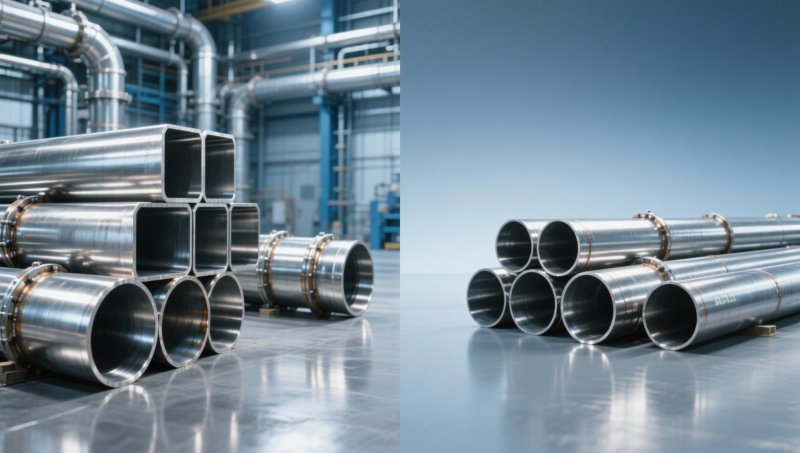
Many buyers compare pipes mainly by ton price, but lifecycle cost is usually shaped by 4 factors: service life, maintenance frequency, downtime exposure, and replacement complexity. A corrosion-resistant pipe may cost more upfront, yet if it lasts 2 to 3 times longer in a humid, chemical, or coastal environment, the overall project economics often improve significantly.
In practical steel applications, corrosion rarely creates a single visible issue at once. It starts with wall thinning, coating damage, rust scale, and joint deterioration. Over 12 to 36 months, these small failures can trigger pressure inefficiency, fluid contamination, structural weakness, or unplanned shutdowns. That chain of events is usually more expensive than the original material upgrade.
For operators and maintenance teams, corrosion-resistant materials reduce labor intensity. Instead of frequent recoating, patching, and section replacement, teams can focus on predictable inspection cycles. In many facilities, moving from standard carbon steel pipe in aggressive environments to better protected or more corrosion-resistant options can reduce maintenance interventions from quarterly service to annual review, depending on media, temperature, and exposure conditions.
For project managers, this also improves schedule stability. Replacing a damaged line in a live construction or industrial setting can take 2 to 7 days when access, safety permits, welding, and testing are considered. Avoiding just one major failure event can offset a meaningful portion of the original material premium.
Cost areas often overlooked during pipe selection
- Protective coating renewal every 6 to 18 months in high-humidity or chemically exposed areas.
- Labor cost for shutdown, isolation, cutting, welding, and recommissioning of corroded sections.
- Production losses caused by pressure drops, leaks, or contamination events.
- Safety and compliance risk when wall thickness falls below design tolerance.
- Procurement delay when replacement sizes or grades are not readily available.
The following comparison shows why material decisions should be evaluated beyond initial purchase price alone.
The key takeaway is simple: a higher-grade pipe often protects the budget in the areas that matter most after installation. That is why technical evaluators and finance teams should review pipe decisions across the full operating horizon, not only the first invoice.
How to Match Pipe Material to Environment and Budget
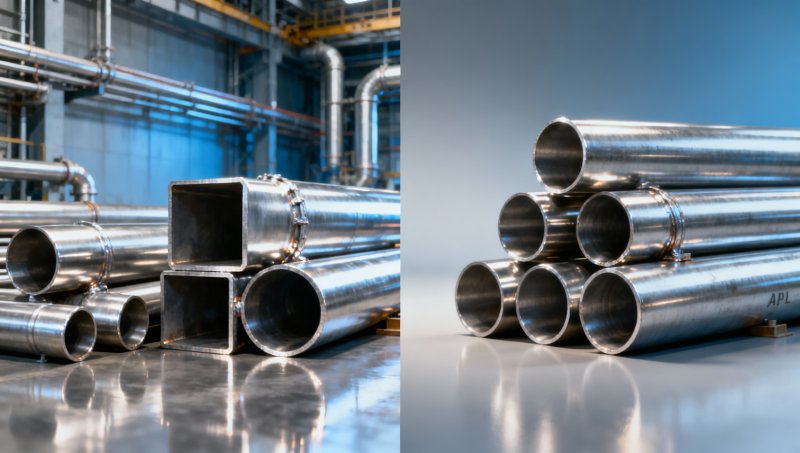
Not all corrosion-resistant pipe solutions are the same. The right choice depends on 5 practical variables: fluid or gas media, operating temperature, pressure level, outdoor exposure, and required design life. Stainless steel square pipe, welded stainless tubing, coated carbon pipe, and API 5L pipe each serve different cost-performance targets.
For example, stainless options are often selected where cleanliness, moisture exposure, or chemical resistance is critical. In contrast, carbon steel pipe may still be cost-effective for less aggressive service if supported by galvanizing, painting, or other protective systems. API 5L pipe is commonly used where strength, standardization, and line-pipe performance are priorities, especially in energy and industrial transport systems.
A common mistake is over-specifying material in low-risk applications or under-specifying it in high-risk zones. Both mistakes waste money. Over-specification inflates project CAPEX, while under-specification creates recurring OPEX. The best procurement outcome comes from balancing exposure level with realistic maintenance capability and replacement cost.
For international buyers, compliance with ASTM, EN, JIS, or GB standards should be reviewed together with thickness tolerance, weld quality, dimensional consistency, and coating execution. A small deviation such as poor surface preparation or loose tolerance can reduce the expected benefit of a corrosion-resistant design.
Selection checklist for technical and purchasing teams
- Define the operating medium: water, steam, chemical fluid, slurry, or outdoor atmospheric exposure.
- Confirm the design life target, such as 5 years, 10 years, or 20 years.
- Check whether shutdown for repair is acceptable or highly costly.
- Review standards, dimensional tolerances, and testing requirements before ordering.
- Compare not only material price per ton, but also maintenance and replacement cost.
The table below provides a practical framework for matching typical pipe choices to project conditions.
This type of comparison helps users, specifiers, and distributors align technical requirements with financial goals. It also reduces the risk of purchasing a pipe that appears economical on paper but performs poorly in actual field conditions.
Procurement, Quality Control, and Supplier Evaluation Points
A corrosion-resistant pipe can only save money if manufacturing quality is consistent. For procurement teams, supplier evaluation should cover at least 6 points: raw material traceability, dimensional tolerance, welding quality, surface treatment, testing process, and delivery reliability. Even the right steel grade may fail early if processing quality is weak.
For quality control and safety managers, dimensional stability is especially important. In many steel supply projects, tolerance control such as ±1% can affect fit-up efficiency, welding alignment, and installation waste. Poor consistency causes extra cutting, rework, and site delays, which can add hidden cost across large-volume orders.
Lead time is another budget factor. A supplier with stable capacity can reduce schedule risk for projects running on 2-week, 4-week, or 8-week milestones. When replacement material arrives late, the cost is not limited to freight. It may also affect manpower planning, subcontractor utilization, and commissioning dates.
Manufacturers with export experience also make documentation smoother. For buyers in North America, Europe, the Middle East, and Southeast Asia, clear mill data, standard compliance, packaging discipline, and responsive communication can reduce customs delays and inbound inspection issues. This supports a lower total sourcing cost, not just a lower unit price.
Mid-project steel component integration matters too
Pipe systems are often installed alongside other steel products such as beams, channels, cold formed profiles, and railing structures. In transport, industrial platforms, and infrastructure projects, buyers may also need compatible steel support components. One example is Rail, which is used in Railway Rail, Bridge Railings / Handrails, and Deck Railings / Handrails applications.
This product range includes grades such as U74, U71Mn, PD2, PD3, Q235, 55Q, 50Q, U71, and 45Mn, with carbon steel and medium manganese steel options. Typical dimensions include lengths from 12m to 30m, thickness from 3mm to 24mm, rail height from 134mm to 170mm, head width from 68mm to 73mm, and bottom width from 114mm to 150mm, with tolerance controlled at ±1%.
For buyers managing multiple steel categories in one project, sourcing from a manufacturer familiar with standard specifications, OEM requirements, coatings such as oil, black, galvanized, or painted finishes, and certifications including ISO9001-2008 and ISO14001:2004 can improve coordination. That same supply discipline benefits pipe procurement by reducing inconsistency between related steel packages.
Supplier review questions before placing a pipe order
- Can the supplier provide products aligned with ASTM, EN, JIS, or GB requirements when needed?
- Are dimensional checks, weld inspections, and surface quality inspections documented batch by batch?
- What is the typical production and delivery window for standard and customized orders?
- Can OEM or project-specific steel processing be coordinated under one supply plan?
- How are packaging, export handling, and damage prevention managed for long-distance shipment?
These questions help decision-makers compare suppliers on reliability rather than price alone. In many cases, stable quality and delivery save more money than negotiating a small discount on the purchase order.
Implementation, Maintenance Strategy, and Common Mistakes
Even premium pipe can lose value if installation and maintenance are poorly managed. Corrosion control should be treated as a 3-stage process: correct selection, correct installation, and correct inspection planning. If one stage is weak, the financial return of the material upgrade drops quickly.
During installation, surface damage, poor weld treatment, and incompatible fittings are common failure triggers. For example, if coated carbon pipe is scratched during handling and the damaged area is left unprotected, localized corrosion may begin within months in a wet or salty environment. Similarly, poor drainage design can trap moisture around supports and accelerate external attack.
Maintenance planning should be based on environment severity. In moderate service, visual inspection every 12 months may be sufficient. In aggressive conditions involving chemicals, splash zones, or continuous humidity, checks every 3 to 6 months may be more appropriate. The goal is not excessive inspection, but early intervention before corrosion becomes structural or operational damage.
For operators and distributors, documenting field feedback is valuable. It helps refine future material selection by comparing expected life versus actual service behavior. Over a 2-year to 5-year operating period, this information can significantly improve future procurement accuracy and reduce repeat failures.
Common mistakes that increase pipe cost
- Choosing by unit price only, without estimating maintenance and replacement cost.
- Using the same material grade across all areas, even when exposure conditions differ.
- Ignoring weld zone protection and post-installation surface repair.
- Skipping inspection planning until visible corrosion appears.
- Buying from suppliers without stable export documentation or tolerance control.
A simple maintenance matrix can help teams set realistic control points without overcomplicating operations.
The practical benefit of this approach is budget control. Planned inspection and targeted repair cost far less than emergency pipe replacement under time pressure.
FAQ for Buyers, Engineers, and Decision-Makers
Because pipe selection affects technical performance, maintenance workload, and long-term budget, several questions come up repeatedly during evaluation. The answers below focus on practical B2B decision points rather than generic advice.
How do I know if corrosion-resistant pipe is worth the extra cost?
It is usually worth the extra cost when the pipe operates in moisture, chemicals, outdoor exposure, pressure service, or any location where shutdown is expensive. If replacement requires scaffolding, hot work permits, or production stoppage, even a 10% to 25% increase in upfront material cost may be justified by lower maintenance and fewer failures over the service life.
Which users benefit most from better corrosion protection?
The biggest gains usually go to industrial plants, infrastructure contractors, construction project managers, distributors supplying harsh-environment applications, and facility operators responsible for uptime. Financial approvers also benefit because lifecycle cost becomes more predictable over 3-year, 5-year, or 10-year budgeting cycles.
What should be checked before ordering from an overseas steel supplier?
Check standard compliance, available grades, dimensional tolerance, inspection process, export packaging, and lead time commitment. For customized or OEM steel projects, also confirm communication speed, drawing review capability, and whether related structural steel items can be coordinated under one sourcing plan.
Can carbon steel pipe still be cost-effective?
Yes, in moderate environments and cost-sensitive projects, carbon steel pipe can still be a good option when the correct coating or surface treatment is applied and maintenance is realistic. The problem is not carbon steel itself, but using it without adequate protection in aggressive service conditions.
Choosing corrosion-resistant pipe is ultimately a financial and operational decision, not just a material upgrade. The right pipe reduces maintenance frequency, limits shutdown risk, extends service life, and supports more predictable project costs. When combined with dependable manufacturing, standard compliance, and disciplined quality control, it becomes a practical way to protect both infrastructure performance and procurement value.
Hongteng Fengda supports global buyers with structural steel manufacturing and export experience, stable production capacity, customized solutions, and reliable quality management across international projects. If you are comparing pipe materials, related steel components, or complete project supply options, contact us now to get technical details, discuss your application, or request a customized solution for your next steel procurement plan.
Please give us a message


Please enter what you want to find