API pipe grades directly influence material cost, performance, and project risk, especially when comparing API 5L pipe with carbon pipe, fluid pipe, or corrosion-resistant pipe options. For buyers, engineers, and project managers, understanding how grade selection affects pricing helps balance strength, compliance, and budget while improving sourcing decisions across industrial and structural steel applications.
In steel procurement, grade selection is rarely just a technical checkbox. It affects raw material chemistry, mechanical properties, testing requirements, welding procedures, coating compatibility, and long-term maintenance exposure. A small change from one API pipe grade to another can raise unit cost, but it can also reduce failure risk, simplify approval, or extend service life in demanding environments.
For industrial buyers and project teams, the real question is not whether a higher grade costs more, but whether that added cost creates measurable value in pressure service, structural integration, corrosion control, and total project execution. This article explains how API pipe grades affect price and how to make a cost-effective choice across steel applications.
What API Pipe Grades Mean in Cost and Performance Terms
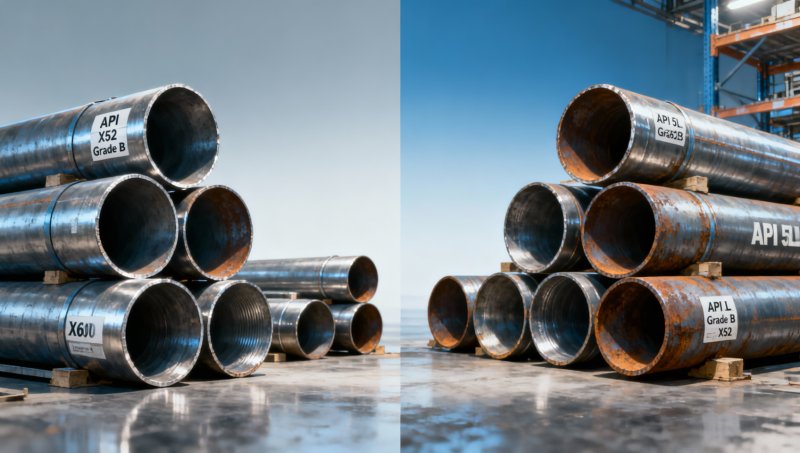
API pipe grades, especially under API 5L, classify pipe according to strength level, chemical composition, manufacturing route, and compliance requirements. Common examples include Grade B, X42, X52, X60, and X65. As the grade rises, yield strength generally increases, but so do quality control demands, production complexity, and often the base steel cost.
For example, a project using API 5L Grade B pipe may prioritize general fluid transport and broad availability. A pipeline section specified as X52 or X60 may be chosen for improved pressure capacity or wall thickness optimization. In many markets, moving from Grade B to X52 may increase pipe cost by roughly 8% to 18%, depending on size, mill source, order volume, and testing scope.
The grade itself is only one cost layer. Procurement teams also need to evaluate PSL1 versus PSL2 requirements. PSL2 often requires tighter chemical limits, impact testing, non-destructive testing, and more extensive documentation. Even when two pipes have the same nominal diameter and wall thickness, PSL2 material may cost 10% to 25% more because it reduces uncertainty in critical service conditions.
Why higher grades are not always the cheapest option per project
A higher grade can reduce wall thickness in some designs, lower transport weight, and improve installation efficiency. That means a pipe with a higher price per ton may still lower total installed cost. However, if the project does not need the additional strength, the buyer may pay more for material, qualification, and welding control without receiving proportional operating value.
This is especially relevant for distributors, fabrication shops, and project managers handling mixed-use orders. Not every system needs line pipe with advanced testing. General structural supports, low-pressure utility lines, or indoor service connections may be better served by standard carbon steel pipe or fluid pipe if local code and operating conditions allow it.
Key cost drivers behind API grade selection
- Higher yield strength grades may require more controlled chemistry and rolling processes.
- PSL2 specifications often add impact testing, NDT, traceability, and stricter dimensional control.
- Larger diameters such as 16 in to 24 in typically amplify the price impact of grade changes.
- Low-volume custom orders may face 5% to 12% higher per-ton pricing than standard mill runs.
- Sour service, low-temperature service, or coated pipe packages add further cost layers.
The table below shows how grade-related requirements commonly influence procurement decisions in steel projects.
The practical takeaway is that API grade affects both direct purchase price and downstream project economics. Cost should be evaluated at system level, not only by tonnage or meter price.
How Buyers Should Compare API 5L Pipe with Other Steel Pipe Options
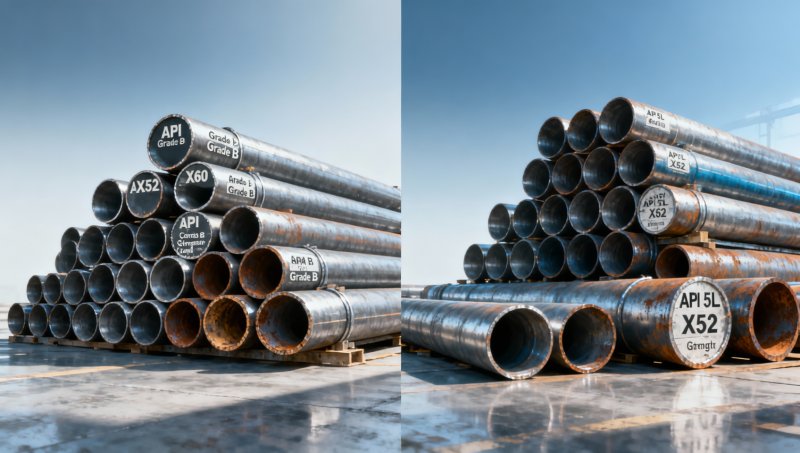
Many procurement decisions become expensive because teams compare pipes only by specification sheet labels rather than by application fit. API 5L pipe, standard carbon steel pipe, fluid pipe, and corrosion-resistant pipe may overlap in appearance, but they differ in certification pathway, testing intensity, and expected service reliability. Those differences directly affect cost control and project risk.
For low-pressure water transfer, non-critical factory utilities, or fabrication supports, a standard carbon steel or fluid pipe may satisfy the need at a lower budget point. In contrast, transmission lines, energy projects, and code-driven industrial systems often require API compliance, especially when inspection records, impact performance, or traceability are part of the approval process.
A frequent sourcing mistake is over-specification. Choosing X60 or corrosion-resistant material for a medium-duty service line may increase the pipe package by 15% to 40% without a corresponding gain in project return. Under-specification creates the opposite risk: cheaper material upfront, followed by rework, rejected lots, or shorter service life.
Decision factors that matter more than nominal price
Technical evaluators and financial approvers should look at at least 4 dimensions: pressure requirement, environmental exposure, fabrication complexity, and certification need. A pipe that is 12% cheaper per ton may become more expensive after welding qualification updates, repainting, replacement intervals, or inspection delays.
In integrated steel projects, pipe selection also interacts with structural material sourcing. For example, support frames, skid bases, pipe racks, and equipment platforms often use carbon steel sections or plates rather than API line pipe. In such cases, consolidating procurement with a supplier that understands both structural steel and industrial steel components can reduce lead-time variability from 6–8 weeks to a more manageable 3–5 weeks for coordinated orders.
Mid-project integration example
When pipe systems require matching supports, base components, or fabricated brackets, buyers often pair line pipe procurement with plate-based steel fabrication. For support structures, Carbon Steel Plate Manufacturer solutions can be relevant in applications such as building frames, pipe supports, storage tanks, bearing plates, brackets, and mechanical parts. Typical grades such as A36, Q235, and S235JR offer yield strength around 235 MPa, tensile strength of 375–500 MPa, carbon content of ≤0.22%, and thickness ranges from 0.1 mm to 400 mm, making them practical for fabricated auxiliary steel around piping systems.
This matters commercially because secondary steel components influence the total installed cost of a pipe project. A buyer who optimizes only the API pipe line item may miss savings available in supports, base plates, and prefabricated structural assemblies. Manufacturers with ASTM, EN, JIS, and GB familiarity can often help align these material packages and reduce sourcing fragmentation.
The comparison table below helps clarify where each pipe option usually fits.
The best choice depends on service duty, code obligations, and the cost of failure. A disciplined comparison framework prevents both underbuying and overbuying.
The Main Cost Components Behind API Pipe Grade Pricing
When buyers ask why one API grade is more expensive than another, the answer usually involves at least 5 cost blocks: steelmaking chemistry, rolling or forming route, testing and inspection, finishing or coating, and logistics. Grade is not an isolated price label. It changes how the product is manufactured, verified, packed, and approved for delivery.
Higher grades may require tighter control of carbon equivalent to preserve weldability while still delivering the required yield strength. This can affect alloying strategy and process stability. In practical terms, mills may need more controlled production windows, which reduces flexibility and can increase cost per ton, especially for non-standard sizes or small production lots.
Testing is another major factor. Hydrostatic testing, ultrasonic inspection, impact testing, chemical analysis, and dimensional verification all add labor and equipment time. If the order calls for third-party inspection, MTC review, or project-specific witness points, pricing can move again. On some export orders, documentation and inspection-related cost can account for 3% to 8% of the total pipe package.
Manufacturing and quality factors that raise cost
- Seamless pipe generally costs more than welded pipe of equivalent size due to production route and lower output efficiency.
- PSL2 requirements often increase laboratory and NDT workload.
- Large wall thicknesses raise steel consumption and freight weight.
- Beveled ends, varnish, coating, or bundle marking add finishing cost.
- Export packing, seaworthy handling, and port delivery can be significant for long-length material.
Typical pricing checkpoints before order confirmation
Before approving a quote, procurement teams should confirm 6 items: grade, PSL level, size range, manufacturing method, testing scope, and delivery condition. If one of these items remains unclear, the quoted price may not be comparable between suppliers. A lower offer may exclude impact testing, coating, or third-party documentation that another supplier has already included.
For international sourcing, delivery timing also matters. Standard export lead times for common structural steel products may range from 20 to 35 days, while project-specific pipe with special testing or coating may extend to 35 to 60 days. If a higher API grade shortens design weight but delays site delivery, project managers need to calculate whether the timeline tradeoff is acceptable.
This is where experienced steel manufacturers can add value. Suppliers with stable production capacity, coordinated quality control, and familiarity with ASTM, EN, JIS, and GB requirements help buyers compare like for like. The result is not just a price quote, but a more reliable picture of total cost, compliance risk, and delivery feasibility.
How to Choose the Right Grade for Budget, Safety, and Long-Term Value
Selecting the right API pipe grade starts with operating conditions, not with inventory convenience. Engineers and purchasers should first define pressure range, design temperature, transported medium, external corrosion exposure, and required service life. A 10-year utility system and a 25-year energy installation should not be evaluated with the same cost logic.
The next step is to align the pipe specification with fabrication and installation realities. Higher-strength grades may require more controlled welding procedures or different heat input management. If the fabrication team is optimized for common carbon steel work, the cost of retraining, procedure qualification, or repair rates should be included in the material decision.
Commercially, the right grade is the one that meets design and compliance needs with the lowest realistic lifecycle cost. That includes material purchase, freight, fabrication time, installation speed, inspection demands, maintenance intervals, and replacement risk. In many cases, the best value comes from a mid-range solution rather than the cheapest or highest grade on the sheet.
A practical 4-step selection method
- Define service conditions clearly, including pressure, temperature, and fluid characteristics.
- Match the required code or client specification to the correct API grade and PSL level.
- Compare at least 3 suppliers on an equal technical basis, including test scope and lead time.
- Evaluate total installed and lifecycle cost, not only ex-works or FOB unit price.
Common grade selection mistakes
One common mistake is buying by habit. Some companies repeatedly order Grade B because it is familiar, even when a modest upgrade to X42 or X52 could reduce wall thickness or improve operating margin. Another mistake is selecting premium grades for all lines in a project, even though only 20% to 30% of the piping system actually faces severe operating stress.
Another issue is separating pipe procurement from structural steel planning. Pipe racks, supports, channels, beams, cold formed sections, and customized steel components all affect installation quality and project timing. Working with a structural steel manufacturer and exporter that can support both standard specifications and OEM-oriented steel solutions often reduces coordination errors and procurement gaps.
For distributors and project-based buyers serving North America, Europe, the Middle East, or Southeast Asia, consistency matters as much as price. Stable quality, dependable lead times, and clear technical communication reduce sourcing risk, especially when multiple steel items must arrive in sequence for fabrication or erection.
FAQ: Common Questions About API Pipe Grades and Cost Control
Below are several questions frequently raised by buyers, engineers, and project teams when comparing API pipe grades with other steel pipe options in real procurement situations.
Does a higher API grade always mean a better choice?
No. A higher grade usually means higher strength and potentially tighter quality requirements, but that only creates value when the service condition actually requires it. If pressure, temperature, and approval requirements are moderate, a lower grade or standard carbon steel alternative may deliver better cost efficiency.
How much should testing influence the buying decision?
Testing can materially change cost and risk. For some projects, additional inspection may increase the order value by 3% to 8%, but it can prevent disputes, rejections, and shutdown risk later. Buyers should confirm whether the quote includes hydro test, impact test, NDT, and third-party inspection requirements before comparing offers.
When is corrosion-resistant pipe worth the extra cost?
It is generally justified when the environment is chemically aggressive, offshore, high-moisture, or maintenance access is difficult and expensive. Although the upfront price can be much higher than standard API or carbon steel pipe, the reduced replacement frequency and lower failure risk may improve lifecycle economics over 10 to 20 years.
What should procurement teams ask suppliers before placing an order?
Ask for 6 essentials: applicable standard, grade and PSL level, manufacturing method, mechanical property range, test scope, and delivery schedule. It is also useful to confirm whether the supplier can coordinate related structural steel products such as angle steel, channel steel, steel beams, cold formed profiles, and custom fabricated components for integrated projects.
API pipe grades affect cost because they change more than strength alone. They influence process control, inspection intensity, documentation, fabrication behavior, and long-term operating confidence. The smartest buying strategy is to match grade to service duty, compare full technical scope, and consider total project cost instead of focusing only on ton price.
For buyers seeking reliable steel supply from China, Hongteng Fengda supports global construction, industrial, and manufacturing projects with structural steel products, customized solutions, strict quality control, and dependable delivery coordination. If you need support comparing API-related steel selections, auxiliary structural materials, or custom steel components, contact us now to get a tailored solution, discuss product details, and explore a more efficient sourcing plan.
Please give us a message


Please enter what you want to find