This year’s hrc coil price swings are sending important signals across the steel supply chain, influencing sourcing decisions for products from gi sheet coil and coil coated steel to ASTM A106 pipe and API 5L Steel Pipe. For buyers, engineers, and project managers, understanding what is driving volatility is essential to control costs, assess risk, and plan procurement with greater confidence in a changing global market.
What are hrc coil price swings really telling buyers in the steel market?
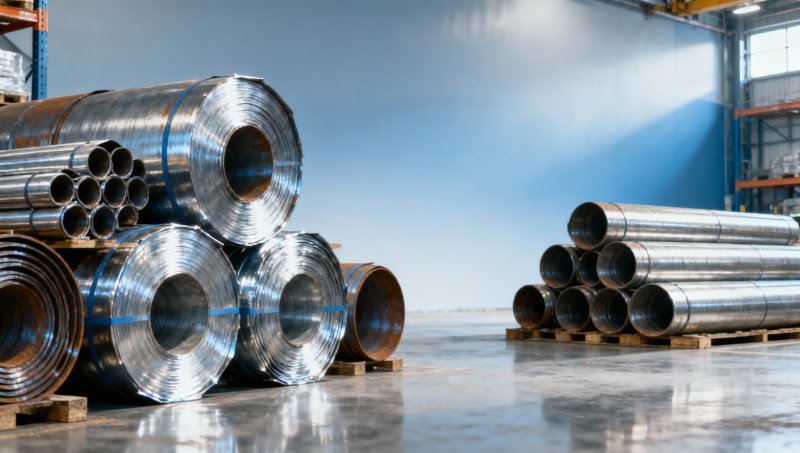
Hot rolled coil is one of the clearest pricing references in the steel industry because it affects downstream products, production planning, and contract timing. When hrc coil price moves sharply within 2–6 weeks, it often reflects more than simple supply and demand. It may indicate mill maintenance, raw material cost pressure, export shifts, freight changes, or buyers delaying orders while waiting for a better entry point.
For procurement teams, price swings matter because HRC is connected to a broad set of fabricated and structural products. Even if a project is focused on channels, beams, angle steel, or cold formed profiles, the broader steel pricing environment still affects quotations, replacement cycles, and supplier willingness to lock pricing. That is why market signals should be read as an early warning system, not just a spot price event.
For technical evaluators and project managers, volatility also changes decision speed. A quote valid for 7–15 days may be normal in a stable market, but in a fast-moving period, suppliers may shorten validity or require staged confirmation. Financial approvers often notice this first when budget assumptions from one month no longer match procurement costs in the next cycle.
This matters especially for global buyers sourcing from China, Southeast Asia, the Middle East, or Europe. Regional spread can widen quickly, and the lowest listed price is not always the lowest landed cost after lead time, coating specification, tolerances, packaging, and inspection are included.
Why the signal goes beyond HRC itself
In the steel sector, HRC is not isolated. It affects cold rolled base material, galvanized products, painted coil, tube making, and many fabricated components. If hrc coil price rises but demand from end users stays soft, the market may be signaling margin compression rather than healthy consumption. If prices rise together with shorter delivery slots, that usually signals tighter mill availability.
For a structural steel manufacturer and exporter, these signals matter because customers often buy across categories. A project may require beams, channels, customized steel components, and occasionally related industrial steel items under one procurement package. Better forecasting helps reduce sourcing risk, avoid rushed substitutions, and keep delivery milestones on track.
- A rapid upward move may suggest tightening raw material availability or a stronger export order book.
- A sharp drop can signal weak downstream demand, buyer hesitation, or inventory pressure at mills and traders.
- A narrow fluctuation band over 3–4 weeks often indicates temporary balance, but not necessarily long-term stability.
Which market drivers are shaping hrc coil price this year?
Most hrc coil price movements this year can be traced to five practical drivers: raw material cost changes, production discipline at mills, export order flow, energy and freight costs, and real demand from construction, manufacturing, and infrastructure. Buyers who monitor all five usually make better purchasing decisions than those who only track headline price charts.
Iron ore and coking coal do not determine every weekly move, but they still shape mill cost floors. When input costs rise across 2–3 consecutive purchasing cycles, mills become less willing to extend discounts. By contrast, when raw material prices soften while finished steel inventories remain high, buyers gain more room to negotiate, especially for standard grades and regular sizes.
Export activity is another strong signal. If overseas demand improves, domestic availability may tighten and support prices even when local sentiment is mixed. This affects not only sheet and coil but also tube, profile, and structural product planning. For companies managing multiple SKUs, export-driven swings can quickly change the best ordering window.
Freight and port timing also deserve attention. A 1–2 week delay in vessel space or inland transport can distort perceived availability. Some buyers interpret this as true supply shortage when it is actually a logistics bottleneck. Distinguishing between the two helps prevent overbuying at the wrong point in the cycle.
A practical comparison of the main price drivers
The table below shows how common market drivers tend to affect sourcing decisions for coil and related steel products. It is especially useful for procurement managers, commercial evaluators, and project leaders who need a structured way to read steel market volatility.
The key lesson is that price alone is incomplete. Buyers should assess at least 4 dimensions at the same time: base price, lead time, specification stability, and logistics certainty. This approach is more reliable than reacting to a single weekly quote or trader forecast.
How should procurement teams respond when steel prices are volatile?
When hrc coil price becomes unstable, the best response is not always to buy immediately or wait indefinitely. Effective procurement usually depends on matching buying strategy to project urgency, quantity scale, specification sensitivity, and approval speed. For routine replenishment, phased purchasing over 2–3 order windows can reduce timing risk. For fixed-deadline projects, supply assurance may matter more than catching the lowest market point.
This is where experienced suppliers add value. A manufacturer with stable production, export coordination, and quality control can help buyers compare standard versus custom routes, balance batch size with shipping efficiency, and avoid costly rework caused by incorrect assumptions. Hongteng Fengda supports this type of decision process across structural steel products by aligning production planning with international specifications such as ASTM, EN, JIS, and GB.
In the middle of a volatile year, buyers also tend to review adjacent products that serve lifting, mining, marine, infrastructure, or industrial operations. For example, projects that combine steel structures with mechanical handling systems may also need Galvanized Steel Wire Rope. Typical options include 6X7+FC, 6X19+IWR, and 8x19S+FC, with diameter ranges of 1.0mm–22mm and normal tensile strength from 1470Mpa to 1960Mpa.
That kind of product selection is rarely separate from steel market timing. If corrosion resistance, zinc coating level, and compliance with ISO 9001, DIN, EIPS, GB/T 20116-2008, or ABS are required, it is better to align rope procurement with the broader project schedule rather than treat it as a last-minute accessory purchase.
A 4-step buying method for unstable steel markets
The following steps can help procurement, engineering, and finance teams move faster without increasing avoidable risk.
- Confirm the must-have specification set first, including grade, standard, coating, section size, tolerances, and inspection points.
- Separate urgent items from flexible items. Materials needed within 2–4 weeks should follow a different approval path than items for the next quarter.
- Request quotation validity, lead time, packing method, and testing scope in one document to avoid later price disputes.
- Review total landed cost, not only ex-works or FOB price, especially when freight changes faster than base steel pricing.
Key checks before order release
- Are drawing revisions frozen, or could section sizes still change within 7–10 days?
- Does the budget approval process match the supplier’s quote validity period?
- Will third-party inspection be required before shipment, and if so, at which production stage?
What should technical and commercial teams compare before locking a steel order?
A common mistake in volatile markets is comparing only unit price. In practice, technical compliance, manufacturing route, and supply reliability can create bigger cost differences than the quote itself. This is especially true for structural steel, where project schedules depend on fit-up accuracy, documentation, and shipment coordination.
Commercial teams want competitive pricing, but technical evaluators need confidence that the steel will meet the specified standard and arrive in the right sequence. Quality and safety managers focus on traceability, coating consistency, tolerances, and inspection records. A balanced comparison model helps all departments work from the same decision framework.
For importers and distributors, supplier responsiveness also matters. A delay of even 5–7 days in confirming mill schedules or export documents can affect port booking, customs timing, and customer commitments downstream. Good service in steel trade is operational, not promotional.
The table below offers a simple selection matrix that can be used for HRC-linked purchasing as well as structural steel packages and related industrial items.
This comparison method is useful because it speaks to different stakeholders at once. Engineers can focus on conformance, finance on budget exposure, procurement on negotiation leverage, and management on delivery confidence. In many cases, the best supplier is the one who makes total project execution more predictable over 30–90 days.
Common sourcing mistakes during price swings
Three mistakes appear often. First, buyers delay too long waiting for the absolute bottom, then face longer lead times when the market turns. Second, teams switch suppliers based only on a short-term quote difference without checking whether standards and documentation match project needs. Third, they underestimate how quickly related items can become critical once the main steel package is confirmed.
A more disciplined approach is to define 3 decision thresholds in advance: the acceptable price band, the maximum acceptable lead time, and the minimum compliance package. Once these are clear, the team can act faster and with less internal conflict.
FAQ: how to read steel volatility and plan orders with less risk
The questions below reflect common concerns from market researchers, operators, purchasing teams, distributors, project owners, and quality reviewers. They are also highly relevant when hrc coil price affects broader steel planning.
How often should buyers review hrc coil price trends?
In a stable market, a weekly review may be enough. In a volatile market, it is better to review price direction, lead time changes, and freight conditions every 3–7 days. The goal is not to chase every movement but to catch shifts in quotation validity, mill allocation, and export activity early enough to adjust procurement timing.
Does a falling hrc coil price always mean it is better to wait?
Not always. If your project start date is fixed, or the required specification is less common, waiting can increase operational risk. A lower nominal price may be offset by weaker availability, longer lead time, or added freight. Buyers should compare at least the next 2 scenarios: buy now for delivery certainty, or wait for a possible lower price with schedule risk.
What delivery period is common for structural steel export orders?
Typical lead times vary by product and processing scope. Standard items may fit within 2–5 weeks, while customized structural components, mixed containers, or OEM requirements can require longer planning. The most reliable approach is to confirm the production slot, inspection timing, and shipment window together rather than discussing lead time in isolation.
Which documents should be confirmed before approval?
Buyers usually need a full specification sheet, quotation validity, applicable standard, packing details, inspection scope, and shipping term. For quality-sensitive projects, it is also wise to align on marking, traceability, and any third-party inspection plan before deposit release. This reduces disputes when prices move during execution.
Why choose a China-based structural steel partner when the market is uncertain?
When hrc coil price swings create uncertainty, buyers need more than a supplier that simply sends a quotation. They need a partner that understands how market timing, specification control, production coordination, and export execution work together. Hongteng Fengda supports global construction, industrial, and manufacturing projects with structural steel manufacturing and export capability from China, covering angle steel, channel steel, steel beams, cold formed steel profiles, and customized steel components.
For customers across North America, Europe, the Middle East, and Southeast Asia, the value is practical. Stable production capacity helps reduce disruption. Quality control aligned with ASTM, EN, JIS, and GB supports technical review. OEM and standard supply routes improve flexibility when projects need both common sections and custom-fabricated parts. Dependable lead times help purchasing and project teams plan with fewer surprises.
If you are reviewing steel purchases this year, the most useful next step is not a generic inquiry. It is a focused discussion around your real procurement variables: required standards, section sizes, coating or processing needs, target delivery window, shipment terms, and whether the project needs standard items, OEM support, or a mixed product package.
You can contact us to discuss 5 practical points: parameter confirmation, product selection, delivery cycle, customized solutions, and certification or inspection requirements. If needed, we can also support sample evaluation, quotation comparison, and multi-item export coordination so your team can make a clearer decision in a volatile steel market.
Please give us a message


Please enter what you want to find