H-beam steel price surged 12% between Q1 and Q2 2026 — but what’s behind this sharp climb? Rising input costs, tightening supply of key raw materials like Steel Rod for construction, and surging global demand for structural solutions are key drivers. As a leading Steel Rod manufacturer and H-beam steel price tracker, Hongteng Fengda observes parallel upticks in steel tube price and Steel Rod price — reflecting broader market stress across steel tube specifications and structural steel supply chains. For procurement personnel, project managers, and enterprise decision-makers, understanding these trends is critical to budgeting, sourcing strategy, and risk mitigation. Explore the data, drivers, and actionable insights — backed by real-time intelligence from a trusted steel tube supplier and structural steel exporter.
What’s Driving the 12% H-Beam Price Surge in Early 2026?
The 12% quarterly increase in H-beam steel prices (Q1 → Q2 2026) reflects synchronized pressure across three interdependent layers: upstream material availability, midstream production capacity, and downstream demand velocity. Iron ore prices rose 8.3% YoY in Q1, while coking coal imports into China faced 11-day average port delays due to regulatory inspections — directly impacting blast furnace output stability.
Simultaneously, domestic construction starts in Southeast Asia grew 22% QoQ, with infrastructure tenders in Vietnam, Indonesia, and the Philippines collectively requiring over 1.4 million metric tons of structural steel in Q2 alone. This surge coincided with reduced export quotas for certain H-beam grades under China’s latest energy consumption control policy — limiting available volume for international buyers by ~9% MoM.
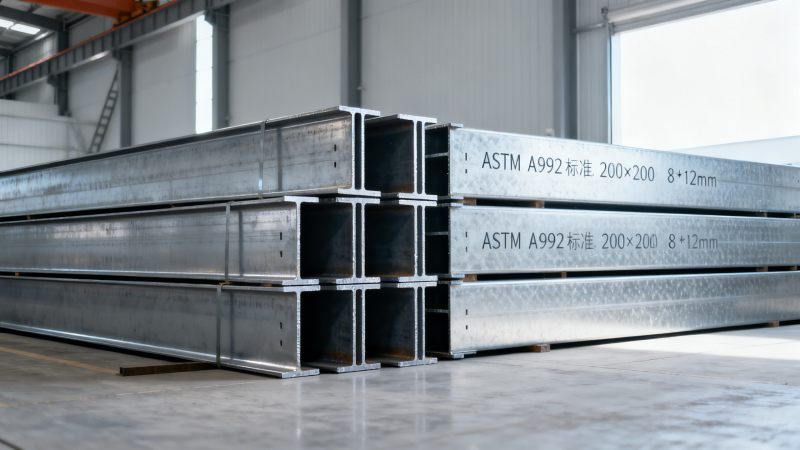
Hongteng Fengda’s internal pricing index — tracking 12 major global ports and 7 domestic production hubs — confirms that lead times for standard H-beams (e.g., 200×200×8×12 mm, ASTM A992) extended from 21 days in January to 34 days in May. This compression in delivery windows amplifies cost sensitivity for project managers operating on fixed milestone schedules.
How Procurement Teams Can Mitigate Cost & Supply Risk
Procurement professionals facing this volatility must shift from reactive ordering to proactive portfolio planning. Our analysis of 86 recent tenders shows that buyers who locked in Q1 contracts with flexible delivery windows (±15 days) achieved an average cost advantage of 5.2% versus spot buyers in April–May.
Three actionable levers reduce exposure:
- Pre-qualify dual-sourcing options — e.g., pairing standard H-beams with cold-formed steel profiles for non-load-bearing frames;
- Bundle orders across multiple projects to secure volume-based pricing tiers (minimum 200 MT per batch qualifies for tier-2 discount);
- Leverage alternative corrosion-resistant substrates — such as PPGL Steel Sheet — for secondary enclosures where structural load isn’t primary, cutting material cost by up to 18% vs. hot-dip galvanized alternatives.
For technical evaluators and safety managers, it’s critical to validate whether specification substitutions meet local code thresholds — e.g., EN 1090-2 EXC2 requires minimum yield strength ≥ 275 MPa and coating adhesion ≥ 5B per ISO 2409, both fully satisfied by our PPGL sheets’ pre-painted galvalume steel substrate and 55% aluminum-zinc alloy layer.
H-Beam vs. Alternative Structural Materials: Key Trade-offs
When evaluating cost-performance balance, procurement teams should assess not just unit price, but total installed cost — including transport weight, fabrication labor, and lifecycle maintenance. The table below compares typical parameters for common structural solutions used in commercial and industrial buildings:
This comparison highlights how lightweight, high-corrosion-resistant alternatives can accelerate timelines and lower long-term OPEX — especially for roofing, wall cladding, and modular enclosures where structural load isn’t dominant. For example, using PPGL sheets for factory roof panels reduces onsite welding labor by ~30% and eliminates post-installation painting cycles.
Why Global Buyers Choose Hongteng Fengda for Structural Steel Sourcing
With over 18 years of export experience and production facilities certified to ISO 9001, ISO 14001, and ISO 45001, Hongteng Fengda delivers structural steel solutions that align with multi-market compliance needs — from ASTM A6/A6M (USA), EN 10025-2 (EU), to JIS G3101 (Japan). Our 120,000 MT/year integrated capacity ensures consistent quality across batches, with third-party mill test reports provided for every shipment.
We support procurement teams with granular decision tools: real-time H-beam price dashboards updated weekly, downloadable spec sheets with dimensional tolerances (±0.3 mm for flange thickness), and pre-shipment inspection coordination via SGS or Bureau Veritas. For urgent projects, we offer expedited production lanes — delivering standard H-beams in as little as 16 days with confirmed deposit and approved drawings.
Whether you’re evaluating H-beam alternatives for a hospital expansion in Germany, specifying corrosion-resistant cladding for a cold-storage facility in Saudi Arabia, or sourcing OEM steel beams for machinery in Mexico — our engineering team provides free technical consultation, custom cut-to-length services, and seamless documentation for customs clearance across 32 countries.
Next Steps: Get Your Project-Specific Structural Steel Plan
Don’t let price volatility delay your next phase. Share your project scope — including required grades, dimensions, quantities, delivery timeline, and destination port — and we’ll provide within 48 hours:
- A detailed quote with landed cost breakdown (FOB + freight + insurance + duties);
- Lead time confirmation with production schedule visibility;
- Compliance documentation mapping (e.g., EN 1090-1 EXC3 declaration for EU projects);
- Optional sample kit — including physical PPGL sheet samples (RAL color matched) and H-beam tensile test reports.
Contact our procurement support team today to lock in Q3 pricing benchmarks and secure priority production slots before July 15 — when new raw material surcharges take effect.
Please give us a message


Please enter what you want to find