As 2026 approaches, galvanized steel price trends are becoming a critical concern for business decision-makers facing tighter budgets, volatile raw material costs, and global supply uncertainty. Understanding the key risks and cost drivers behind price changes can help buyers plan procurement more effectively, reduce sourcing exposure, and make smarter long-term steel purchasing decisions.
For contractors, distributors, fabricators, and industrial buyers, pricing is no longer influenced by zinc alone. In most procurement cycles, the final galvanized steel price is shaped by at least 6 variables: base steel cost, zinc market movement, energy expense, coating specification, freight, and lead time pressure.
That matters even more in cross-border sourcing. A difference of 3%–8% in raw material input or logistics can quickly change landed cost, especially on project volumes above 200 tons. For buyers managing budgets across 2 to 4 quarters, a reactive purchasing strategy often increases risk rather than reducing it.
For global steel buyers, the key question is not only whether prices will rise or fall in 2026, but which cost drivers are most likely to create disruption. A clearer view of those drivers helps procurement teams compare offers more accurately, time orders better, and protect margin in competitive project environments.
What Will Shape Galvanized Steel Price in 2026
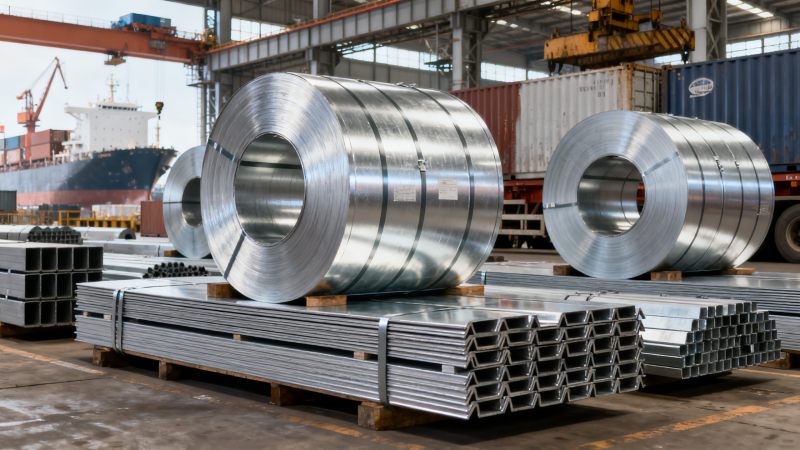
The 2026 market outlook points to continued volatility rather than a single-direction trend. In practical terms, galvanized steel price levels may fluctuate within short cycles of 30 to 90 days, depending on steelmaking inputs, zinc availability, and demand from construction, infrastructure, and manufacturing sectors.
Decision-makers should also separate headline market sentiment from real procurement cost. A quoted price that looks attractive on day 1 can become less competitive after coating upgrades, port charges, packaging, or shipment delay costs are included. This is why a total-cost view is more useful than a spot-price view.
1. Base steel and zinc remain the two primary pricing levers
Galvanized products depend on both carbon steel substrate pricing and zinc coating cost. In many standard orders, the steel base may account for roughly 70%–85% of total product cost, while zinc and galvanizing processing represent another 10%–20%, depending on coating thickness and product geometry.
When zinc prices move sharply, the effect is more visible on products requiring heavier coatings such as Z275 or similar specifications. For buyers purchasing sheet, coil, structural profiles, or fabricated components, the coating requirement can create a meaningful difference in unit cost across otherwise similar quotations.
Why zinc volatility matters
A moderate shift in zinc cost may not look significant per ton at first glance, but across a 500-ton order it can materially affect budget forecasts. Buyers using annual contracts or fixed-price tenders should therefore request clear coating assumptions, rather than relying on a general galvanized steel price reference.
2. Energy, environmental compliance, and processing cost are rising factors
Galvanizing is energy-intensive. Fuel, electricity, pickling chemicals, wastewater treatment, and emissions compliance all influence processing cost. In regions where energy tariffs fluctuate seasonally or environmental controls tighten, mills may adjust quotations every few weeks rather than every quarter.
This is particularly relevant for buyers comparing suppliers across countries. A low ex-works offer may not reflect the same compliance burden or process consistency. From a procurement standpoint, price comparison only works when coating quality, inspection scope, and processing route are aligned.
The table below shows the most common cost drivers that influence galvanized steel price in 2026 and how they typically affect procurement decisions.
The main takeaway is simple: price movement in 2026 will rarely come from one source alone. Buyers that monitor only steel mill offers, while ignoring zinc, freight, and process assumptions, are more likely to face budget variance at the approval stage.
3. Regional demand and project timing can tighten supply unexpectedly
Construction starts, public infrastructure tenders, and manufacturing restocking can all affect availability. In active regions, lead times for galvanized structural items may extend from a normal 15–25 days to 30–45 days, especially when custom punching, cutting, or fabrication is required.
For business buyers, lead time pressure often acts like a hidden price driver. Rush production, split shipments, substitute sizes, or emergency local purchases usually cost more than a well-planned order placed 4 to 8 weeks earlier.
Key Risks Buyers Should Watch Before Locking 2026 Contracts
Even when the galvanized steel price appears stable on paper, several risk factors can still increase actual project cost. Procurement teams should review technical, commercial, and supply chain details together, because the cheapest offer is not always the lowest-cost outcome after delivery, inspection, and installation.
Specification mismatch is one of the most common cost traps
Quotations may differ in steel grade, coating weight, tolerance, surface treatment, packing method, or testing scope. A lower number on the quote can hide thinner zinc coating, reduced inspection, or looser dimensional tolerance. That creates downstream issues such as accelerated corrosion, rework, or rejected material.
For example, two offers may both be labeled galvanized steel, yet one may be suitable for indoor fabrication while the other is specified for outdoor exposure with a longer service-life expectation. Without a side-by-side technical review, the price comparison is incomplete.
Checklist before approving a quotation
- Confirm steel grade and equivalent standard such as ASTM, EN, JIS, or GB
- Verify coating requirement, including zinc weight or galvanizing method
- Check dimensional tolerance, straightness, and length range
- Review test certificates, inspection frequency, and surface condition
- Clarify Incoterms, packaging, and shipment schedule in writing
Freight instability can change landed cost faster than mill price
International buyers should not underestimate freight. On some routes, shipping cost can swing meaningfully within 2 to 6 weeks, particularly during container shortages, congestion periods, or geopolitical disruption. For heavy steel cargo, mode selection between break bulk, container, and mixed loading also matters.
This is one reason many importers now evaluate supply partners on both production capacity and export coordination. A supplier with consistent documentation, packing control, and booking experience may help reduce demurrage, loading delay, or customs-related cost leakage.
The table below outlines practical procurement risks and the control actions buyers can take before committing to volume orders.
The strongest buyers are usually not those who chase the lowest figure, but those who define risk controls before issuing purchase orders. In 2026, disciplined specification management may save more than short-term bargaining alone.
Currency, payment terms, and inventory strategy also affect real cost
When steel is imported, exchange-rate movement can alter final cost between order confirmation and payment settlement. A 2%–5% currency shift may offset negotiated savings, particularly on large-value shipments. Payment terms such as 30% deposit with 70% before shipment also influence cash-flow timing and inventory risk.
For this reason, many industrial buyers now divide procurement into 2 or 3 batches rather than placing one fully exposed order. This approach can reduce market timing risk while preserving continuity for fabrication and project installation schedules.
How B2B Buyers Can Build a Smarter Steel Purchasing Plan
A better purchasing plan does not require perfect market prediction. It requires better control over specifications, sourcing windows, supplier capability, and total landed cost. For many organizations, even a 3-step improvement in procurement discipline can reduce overruns and improve contract execution.
Use product mix strategically, not only by lowest unit price
Many buyers focus heavily on galvanized steel price for corrosion-related applications, but a broader sourcing strategy often improves total cost. In some projects, not every component needs the same treatment level or profile type. Matching the right material to the actual load, exposure, and fabrication need can avoid over-specification.
For example, structural packages may combine galvanized sections with carbon steel bars or machined components where coating is not always the primary requirement. Products such as 45# Carbon Steel Round Bar are often selected for applications requiring excellent strength and wear resistance, especially in construction-related fabrication, machinery support parts, railings, or customized OEM processing.
This type of round bar is available in hot rolled or cold rolled forms, with diameter ranges from 5mm to 2500mm and common lengths such as 2m, 5m, 6m, and 12m. Standards may include ASTM, DIN, JIS, GB, and EN, which gives procurement teams more flexibility when balancing availability, machining performance, and budget.
Why mixed sourcing can work
When buyers group products by exposure level, load requirement, and fabrication method, they can often reduce unnecessary galvanizing cost. That does not mean lowering quality. It means aligning steel grade, finish, and processing route with the real service condition of each component.
Evaluate suppliers on four practical dimensions
A reliable supplier should be assessed on more than unit price. For global sourcing, four dimensions matter most: manufacturing consistency, standards compliance, export execution, and communication speed. If one of these is weak, the apparent price advantage may disappear during fulfillment.
- Manufacturing: stable capacity for repeat orders, not just one-time samples
- Quality: ability to supply to ASTM, EN, JIS, and GB specifications
- Delivery: realistic lead times, usually 15–35 days depending on product complexity
- Service: responsive clarification on drawings, tolerances, and packaging details
Hongteng Fengda operates as a structural steel manufacturer and exporter from China, serving buyers across North America, Europe, the Middle East, and Southeast Asia. For B2B customers, that matters because stable production capacity and dependable lead times are often just as valuable as headline price when project schedules are tight.
Create a 5-step purchasing workflow for 2026 projects
Procurement teams can improve outcomes by standardizing a simple workflow. This helps reduce confusion between engineering, sourcing, finance, and logistics functions, especially on orders involving multiple steel products or customized processing.
- Define the technical scope: grade, dimensions, coating, tolerances, and standards.
- Request comparable quotations with clear validity periods, usually 7–15 days.
- Review total landed cost, not only mill price or FOB unit price.
- Confirm production schedule, inspection method, and shipping milestone dates.
- Use phased ordering for large projects when market conditions remain unstable.
This process is especially effective when steel buyers need both standard sections and customized structural components. It supports cost control without sacrificing quality or schedule discipline.
Practical Outlook for 2026 and What Decision-Makers Should Do Now
The most realistic outlook for galvanized steel price in 2026 is continued movement within a volatile but manageable range. Buyers should expect periodic adjustments driven by substrate cost, zinc trends, energy pressure, freight fluctuation, and project demand cycles rather than assuming a stable annual average.
That means the best response is preparation, not speculation. Companies that define specifications clearly, qualify suppliers carefully, and plan purchase timing in 30-, 60-, and 90-day windows are generally better positioned than those waiting for the market to become fully predictable.
For organizations sourcing structural steel, beams, channels, cold formed profiles, or custom fabricated components, procurement performance in 2026 will depend on balancing three priorities at once: cost visibility, supply reliability, and standards compliance. Missing any one of these can create avoidable commercial risk.
Hongteng Fengda supports global buyers with structural steel products, customized solutions, modern manufacturing capability, and strict quality control aligned with ASTM, EN, JIS, and GB requirements. If you are reviewing 2026 steel sourcing plans and need practical support on specification matching, lead time control, or cost-focused export supply, contact us to get a tailored solution, discuss product details, or explore the right procurement strategy for your project.
Please give us a message


Please enter what you want to find