Galv steel pipe price changes can reshape sourcing plans, budget control, and supplier comparison. In today’s steel market, galv steel pipe values move with raw material costs, coating demand, mill output, and freight pressure.
Price shifts are rarely caused by one factor alone. Zinc markets, hot rolled coil trends, order size, specifications, testing requirements, and export conditions all affect the final quotation.
Understanding these drivers helps improve cost visibility and reduce supply risk. It also supports more accurate evaluation of Chinese suppliers offering stable quality, compliant production, and dependable delivery.
Why galv steel pipe price movement deserves closer attention now
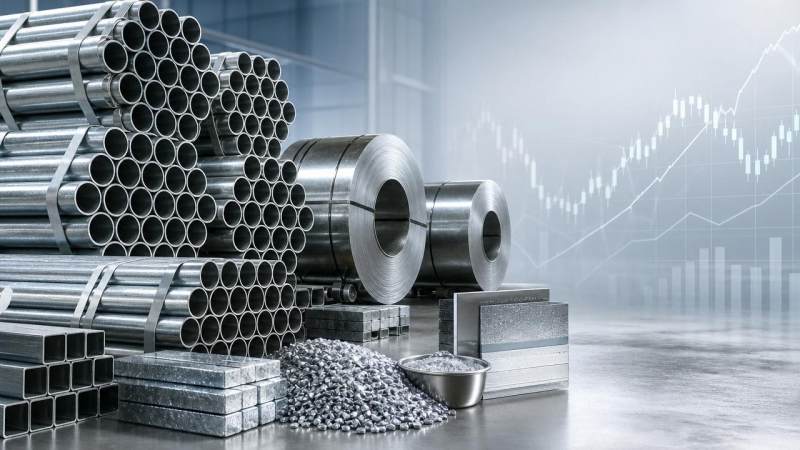
Recent galv steel pipe market behavior reflects wider pressure across the steel industry. Construction cycles, infrastructure demand, and factory utilization rates have made pricing less predictable than in stable periods.
At the same time, buyers increasingly compare not only unit price, but also zinc coating consistency, dimensional tolerance, standard compliance, and shipping reliability. This changes how value is judged.
In export markets, galv steel pipe often competes on total landed cost. A low ex-works offer may become less attractive after packing, port charges, inspection, and ocean freight are included.
This is especially relevant when projects require ASTM, EN, JIS, or GB compliance. Certification and process control can influence both pricing and lead time.
The clearest signals behind galv steel pipe price shifts
Several signals usually appear before galv steel pipe prices change materially. Tracking them together gives a more useful view than watching spot quotations alone.
When these signals move at the same time, galv steel pipe quotations can shift quickly. This is why quote validity periods are often short in active market conditions.
What actually drives galv steel pipe costs from mill to export port
1. Steel substrate cost
The largest cost layer usually starts with strip steel or coil. If upstream steel prices rise, galv steel pipe follows, even before galvanizing expenses are added.
2. Zinc coating weight
Thicker coating improves corrosion resistance, but increases zinc consumption. Different coating standards can create notable price differences for similar pipe sizes.
3. Pipe dimensions and tolerance
Wall thickness, diameter, length, and straightness requirements affect material use and production difficulty. Special tolerances often lead to higher galv steel pipe processing cost.
4. Production method and finishing
ERW production, pre-galvanized processing, hot dip galvanizing, threading, cutting, bundling, and marking all change the final quotation and delivery schedule.
5. Standards and certification
ASTM, EN, JIS, and GB requirements influence chemistry control, testing steps, and paperwork. More complex compliance usually means a firmer galv steel pipe price.
6. Export logistics and trade terms
FOB, CFR, and CIF quotations differ because inland transport, terminal charges, customs procedures, and sea freight affect the total deal structure.
In many steel supply chains, related materials also influence planning. For example, Carbon Steel Sheet Plate may be sourced alongside pipe for structural fabrication.
A Q345A(16Mn) hot-rolled plate with sizes from 3000-11880mm in length, 1500-4000mm in width, and 6-700mm in thickness supports construction, machinery, mining, and crane components.
When steel partners can supply products meeting GB, JIS, DIN, ASTM, and EN standards, coordination becomes easier and project timing becomes more predictable.
How galv steel pipe price changes affect budgets, schedules, and supplier evaluation
Galv steel pipe increases can pressure project estimates quickly, especially when coated steel is a large share of structural or utility material cost.
Even small price changes matter when quantities are large. The impact grows further when specifications require thicker zinc coating or strict mechanical performance.
- Budget revisions may be needed sooner than expected.
- Alternative sizes may be reviewed to control cost.
- Order splitting can reduce exposure to sudden market spikes.
- Supplier comparison becomes more focused on stable execution.
- Delivery timing may outweigh marginal unit price savings.
Price declines also require caution. An unusually low galv steel pipe offer may reflect lighter coating, weaker raw material control, or incomplete export costs.
A reliable quotation should clearly state steel grade, coating method, dimensions, standard, packing, inspection, trade term, and validity period.
What deserves closer review when comparing Chinese galv steel pipe suppliers
China remains a major source for galv steel pipe because of broad production capacity, flexible specification support, and established export experience.
Still, price comparison works best when commercial details are aligned. Apparent savings may disappear if coating weight, tolerance, or lead time assumptions are different.
- Check whether zinc coating data is clearly specified.
- Confirm compliance with ASTM, EN, JIS, or GB requirements.
- Review mill testing, third-party inspection, and traceability.
- Ask about monthly output and shipment stability.
- Verify export packing and port handling experience.
- Compare total landed cost, not only base unit price.
Hongteng Fengda, as a structural steel manufacturer and exporter from China, supports global projects with controlled production, customized solutions, and international standard compliance.
This kind of capability matters when galv steel pipe demand must align with angle steel, channels, beams, cold formed profiles, or OEM structural components.
Practical ways to judge the next galv steel pipe price move
No forecast is perfect, but several habits improve pricing decisions and reduce reaction delays when galv steel pipe conditions change.
These steps help separate temporary noise from meaningful movement. They also improve confidence when choosing when to lock a galv steel pipe order.
A steadier sourcing approach creates better long-term value
Galv steel pipe price shifts are driven by a chain of connected factors, not a single market headline. Steel substrate, zinc cost, processing standards, and logistics all matter.
The most effective response is disciplined comparison, clear specification control, and cooperation with suppliers that can maintain quality and schedule under changing conditions.
If current projects require galv steel pipe or related structural steel products from China, the next step is to request a specification-based quotation with full technical and export details.
That approach supports better budget planning, stronger cost transparency, and more reliable execution across construction, industrial, and manufacturing applications.
Please give us a message


Please enter what you want to find