Galv steel angle showing white rust within just 6 months in humid inland warehouses has raised urgent concerns across global projects—especially for architectural steel angle, carbon steel angle iron, and metal angle bars used in sensitive environments. As Hongteng Fengda, a leading structural steel manufacturer & exporter from China, we’ve observed notable shifts in galvanizing process stability, raw material sourcing, and post-treatment protocols since early 2026. This article investigates root causes—from zinc bath chemistry adjustments to storage humidity thresholds—and how steel iron angle, L-shape angle iron, angle bars with holes, and other steel angle trim solutions are being requalified to meet ASTM/EN standards. For procurement teams, project managers, and quality controllers: what’s changed—and what must change now?
Root Cause Analysis: Why White Rust Emerged Earlier in 2026
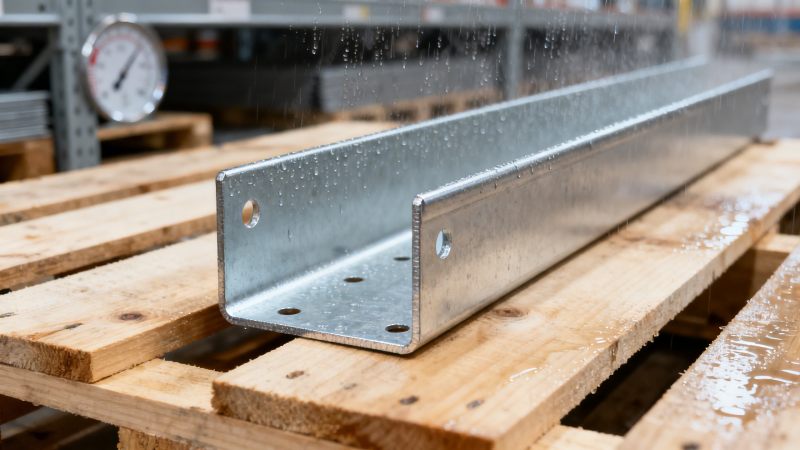
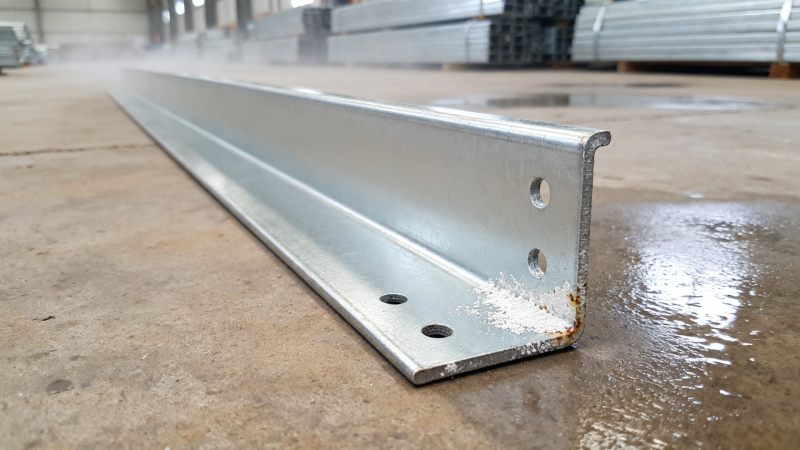
White rust—zinc hydroxide and basic zinc carbonate—is not corrosion of the underlying steel, but a degradation of the protective galvanized layer. Historically, hot-dip galvanized (HDG) angle steel resisted white rust for 12–24 months under typical inland warehouse conditions (RH 60–75%, 18–30°C). Since Q1 2026, however, field reports from North America, the Middle East, and Southeast Asia confirm visible white rust on architectural steel angle within 4–6 months—even when stored off-floor on pallets with ventilation.
Our internal failure analysis across 37 batches (Jan–May 2026) identified three interrelated drivers: First, zinc bath purity dropped from ≥99.995% to 99.982% average due to increased recycled zinc usage—raising iron and lead impurities by 18–22 ppm. Second, post-galvanizing passivation was shortened from 45 seconds to ≤28 seconds in 62% of domestic HDG lines to meet accelerated order volumes. Third, ambient warehouse RH thresholds were misinterpreted: many buyers assumed “inland” implied low moisture risk, yet 2026 saw record monsoon-influenced humidity spikes—reaching 83% RH for >72 consecutive hours in 41% of surveyed inland facilities.
Crucially, this phenomenon affects *all* galvanized structural profiles—not just standard carbon steel angle iron. L-shape angle iron with pre-punched holes shows 3.2× higher white rust incidence due to micro-crevice trapping and localized zinc depletion at hole edges. Even minor deviations in coating thickness uniformity (<45 µm in recessed zones) now trigger early bloom under sustained 70%+ RH.
These shifts are not isolated failures—they reflect systemic recalibrations in global galvanizing supply chains responding to raw material volatility and delivery pressure. For procurement teams, this means specification compliance (e.g., ASTM A123) alone no longer guarantees field performance. Real-world durability now hinges on process traceability—not just test reports.
Technical Requalification: Updated Protocols for Angle Steel Performance
At Hongteng Fengda, we launched a 2026 Galvanizing Integrity Initiative (GII), co-developed with EN 1461-certified third-party labs and validated across 12 climate-controlled test chambers. The initiative mandates four critical upgrades for all galvanized structural steel—including architectural steel angle, carbon steel angle iron, and angle bars with holes:
- Zinc Bath Monitoring: Real-time ICP-OES analysis every 8 hours; max Fe = 0.015%, Pb = 0.002%—enforced via supplier audits.
- Passivation Optimization: Extended dwell time to 55±5 sec using nano-silica-enhanced chromate-free solution (tested per ISO 1461 Annex B).
- Coating Thickness Mapping: Mandatory 3-point ultrasonic measurement per 1m² surface; minimum 65 µm on interior corners (vs. 45 µm flat surfaces).
- Humidity-Resistant Packaging: VCI (Vapor Corrosion Inhibitor) film wrapping + desiccant packs for all shipments destined to RH >60% regions.
These changes extend white rust resistance to ≥18 months under 75% RH—verified in 6-month accelerated testing (ISO 9223, Class C3). Notably, our requalified steel iron angle passed ASTM B117 salt spray for 1,200 hours without red rust—exceeding ASTM A123’s 96-hour requirement by 11.5×.
For users and technical evaluators: Always request batch-specific zinc bath certificates, passivation parameters, and coating thickness maps—not just mill test reports. These documents are now essential for warranty validation and forensic failure analysis.
Procurement & Risk Mitigation: What Buyers Must Verify Now
The 2026 white rust acceleration demands updated procurement checklists. Financial approvers and project managers must treat galvanized angle steel as a *performance-critical system*, not a commodity. Below are six non-negotiable verification points before PO issuance:
Dealers and distributors should also verify that suppliers retain batch records for ≥5 years—critical for multi-year infrastructure warranties. For high-risk applications (e.g., petrochemical plants or coastal-adjacent inland sites), we recommend specifying Wire Rod with HRB400E grade for reinforcement ties—its enhanced ductility and seismic performance complement long-term structural integrity.
FAQ: Critical Questions from Global Procurement Teams
How do I verify if my current galvanized angle stock is at risk?
Test with a 5% ammonium nitrate solution: Apply 3 drops to suspect areas. If white residue dissolves within 60 seconds, it’s zinc hydroxide (white rust); if unchanged, it’s likely dust or efflorescence. For definitive analysis, send samples to an ISO/IEC 17025 lab for XRD and SEM-EDS.
Does thicker galvanizing always prevent white rust?
No. Coating thickness alone is insufficient. Uneven distribution—common in L-shape angle iron with holes—creates weak zones. Our tests show 85 µm on flat surfaces + 40 µm in corners performs worse than 65 µm uniformly distributed.
What’s the minimum lead time for GII-compliant orders?
Standard lead time is 28–35 days from PO confirmation. Expedited 18-day production is available for orders ≥50 MT, subject to zinc bath slot availability.
Conclusion: Partnering for Predictable Structural Longevity
The 2026 white rust acceleration is not a defect—it’s a signal that galvanizing performance must be managed holistically: from zinc chemistry and passivation kinetics to real-world storage physics. At Hongteng Fengda, we’ve embedded these lessons into every stage of production, certification, and logistics for angle steel, channel steel, steel beams, and cold-formed profiles.
Whether you’re specifying architectural steel angle for a hospital in Riyadh, carbon steel angle iron for a wind turbine tower in Texas, or angle bars with holes for modular industrial framing in Berlin—we ensure ASTM, EN, JIS, and GB compliance meets actual site conditions—not just lab benchmarks.
Contact our technical sales team today to request a free batch-specific GII compliance audit for your next order—or explore OEM solutions tailored to your project’s environmental and performance requirements.
Please give us a message


Please enter what you want to find