In coastal construction, Corrosion Resistant Steel is not just an upgrade but a practical requirement for longer service life, lower maintenance, and safer structures. From Steel Construction Material such as U Channel Steel, ASTM C-beam, galvanized C-beam, and Hot Rolled Beams to customized profiles, understanding what changes in design, coating, and material selection helps engineers, buyers, and project managers make smarter decisions in harsh marine environments.
Why Coastal Projects Change the Steel Selection Standard
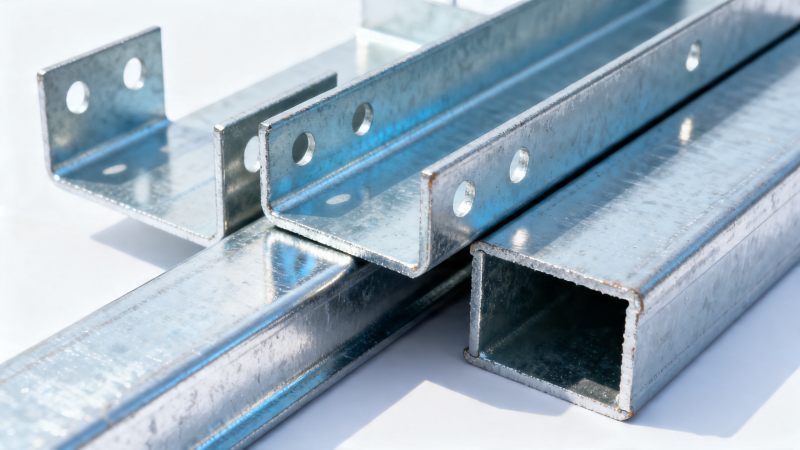
Coastal projects face a different corrosion profile than inland structures. Salt-laden air, frequent condensation, splash zones, ultraviolet exposure, and wet-dry cycles accelerate steel deterioration even when the structure is not directly submerged in seawater. For this reason, corrosion resistant steel is evaluated not only by base material strength, but also by coating system, detailing design, and long-term maintenance strategy.
For engineers and technical evaluators, the key change is that material selection moves from simple mechanical compliance to lifecycle suitability. A beam or channel meeting the required yield strength may still fail economically if corrosion protection is underspecified. In many coastal applications, review cycles are planned around 6–12 month inspection intervals, and coating performance is expected to remain stable through repeated exposure to humidity and chloride contamination.
For buyers and project managers, another major change is procurement planning. Coastal steel projects often require clearer surface treatment specifications, tighter packaging controls, and better documentation for ASTM, EN, JIS, or GB compliance. Lead time must also include coating confirmation, third-party inspection if required, and shipment protection, especially for export projects moving over 2–6 weeks by sea.
For business decision-makers and finance approvers, the practical question is not the lowest initial price. It is whether a lower-cost steel option will trigger higher repainting costs, shutdowns, replacement risk, or structural safety concerns over the next 5–15 years. In coastal work, the budget conversation usually shifts from unit price alone to total cost of ownership.
What usually changes first in a coastal steel specification?
- Coating thickness and coating type become explicit rather than optional.
- Section design pays more attention to drainage, trapped moisture, and edge protection.
- Inspection plans are defined earlier, often before mass production begins.
- Packaging, storage, and transport conditions are checked more carefully to avoid premature white rust or surface damage.
Which Steel Options Fit Different Coastal Exposure Levels?
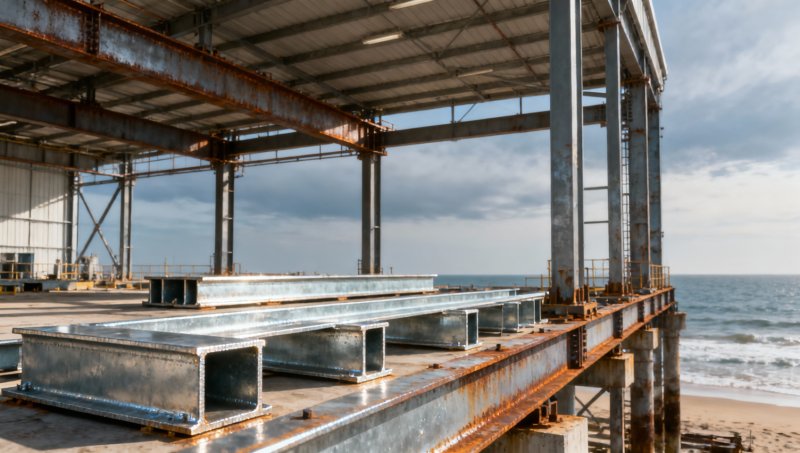
Not every coastal project needs the same corrosion protection level. The best choice depends on distance from shoreline, direct splash exposure, structural criticality, expected service life, and maintenance accessibility. A warehouse frame located 3–10 km inland may accept a different coating strategy than a port conveyor support, bridge accessory frame, or rooftop support system directly exposed to marine winds.
Cold formed steel profiles, angle steel, channel steel, and steel beams can all be used in coastal construction, but the protection system must match the environment. Hot-dip galvanized steel is widely selected because the zinc layer acts as a practical sacrificial barrier. In harsher applications, galvanized steel may also be paired with additional paint systems or higher coating mass, depending on design life and maintenance access.
The table below helps procurement teams, designers, and distributors compare common coastal steel options by exposure condition, maintenance burden, and project suitability. It is not a substitute for project-specific engineering review, but it offers a useful framework for early-stage selection and budget alignment.
The practical takeaway is simple: coastal steel selection is rarely only about the section type. It is about the section plus the coating plus the exposure condition. Companies that define all three early can reduce rework, avoid vague quotations, and compare suppliers on a more realistic basis.
How exposure level affects material judgment
Low to moderate marine influence
Where salt concentration is present but not extreme, galvanized sections and coated structural members often provide a practical solution. Typical applications include logistics buildings, exterior support frames, rooftop members, and utility structures. Service planning still matters, but inspection and touch-up work may remain manageable.
High marine influence or splash-prone zones
In severe zones, decision-makers should expect more detailed coating requirements, edge treatment controls, and stronger emphasis on drainage and crevice prevention. Here, even small design details can change maintenance frequency significantly over a 3–10 year operating period.
What Should Buyers Check in Coating, Parameters, and Supply Scope?
In the middle of a coastal project, buyers often need a corrosion-control material that supports fabrication efficiency as well as long-term protection. For cladding, roll forming, ducting, secondary structural components, and industrial manufacturing, Galvanized Steel Coil Manufacturers can be relevant where consistent zinc coating, thickness control, and international standard compatibility are required.
The available grades include G40, DX51D+Z, DX52D+Z, DX53D+Z, DX54D+Z, DX56D+Z, DX57D+Z, SGCC, SGCD series, S220GD+Z through S550GD+Z, covering a practical range for forming and structural-related applications. Typical dimensions include thickness from 0.12mm to 3.5mm and width from 600mm to 1500mm, with coil inner diameter options such as 508mm or 610mm and customization support for project needs.
For coastal procurement, zinc layer specification should never be treated as a minor detail. A common working range is hot galvanizing at 60–275g/m² and pre-galvanized at 80–275g/m², depending on processing route and intended environment. The coating helps prevent moisture from reaching the steel substrate, improves corrosion resistance, and extends the service life of fabricated parts when storage and installation are handled properly.
The table below provides a practical buyer-focused view of what to verify before approving galvanized coil or related corrosion resistant steel supply for coastal fabrication and construction projects.
For procurement and quality teams, these checks create a clearer quotation basis. Instead of comparing only price per ton, buyers can compare coating mass, dimensional tolerance, grade availability, and customization fit. That approach reduces ambiguity and usually shortens the approval process between engineering, commercial, and finance departments.
A 5-point coastal procurement checklist
- Confirm whether the steel will face airborne salt only or direct splash exposure.
- Define the target standards, such as ASTM, EN, JIS, or GB, before quotation.
- Specify coating mass, section dimensions, and surface quality in writing.
- Ask about packaging, storage recommendations, and shipping protection for 2–6 week export transit.
- Check if customized fabrication, hole punching, cutting, or OEM support can reduce your downstream processing cost.
How to Balance Cost, Service Life, and Compliance
A common misconception is that corrosion resistant steel always means a much higher budget. In practice, the cost impact depends on the protection level, fabrication complexity, and maintenance burden over time. If a project can avoid one major repair campaign, one repainting shutdown, or one premature replacement cycle, the higher initial material cost may be commercially justified.
This matters especially for project owners, distributors, and finance reviewers comparing standard painted steel against galvanized or duplex-protected alternatives. The right decision is usually made by measuring three layers together: initial supply cost, installation efficiency, and expected maintenance frequency within the first 3–8 years. Coastal projects with difficult access often favor stronger upfront protection because later intervention is expensive.
Compliance also plays a major role. Structural steel for global projects may need alignment with ASTM, EN, JIS, or GB specifications depending on destination market and contract language. For offshore-adjacent industrial works, ports, and export construction packages, document readiness is often as important as the material itself. Mill test certificates, dimensional checks, and coating verification can all affect approval speed.
The comparison below is useful for technical and commercial teams deciding how far to upgrade corrosion protection without overspending.
The key point is not to buy the most expensive option automatically. It is to choose the most appropriate protection level for the real service environment. That is the difference between overspecification and smart coastal engineering.
Standards and documentation buyers should align early
- Base steel grade standard and mechanical property requirement.
- Coating type, coating mass, and acceptable surface condition.
- Dimension tolerance, length range, and fabrication scope.
- Inspection documents needed before shipment and after arrival.
Common Questions Before Ordering Corrosion Resistant Steel for Coastal Use
Even experienced buyers often face uncertainty when a coastal project combines structural requirements, anti-corrosion demands, and schedule pressure. The questions below address common concerns raised by engineers, procurement teams, distributors, and project owners before order confirmation.
How do I know whether galvanized steel is enough for my project?
Start with the exposure condition. If the structure is in a general coastal atmosphere with no direct splash and routine inspection access every 6–12 months, galvanized steel may be a practical choice. If the structure is directly exposed to seawater spray, trapped moisture, or difficult maintenance conditions, a stronger coating strategy or duplex system may be more suitable.
What mistakes are most common in coastal steel procurement?
The most common errors are underdefining the zinc coating requirement, ignoring transport and storage conditions, and comparing supplier quotes without matching standards. Another frequent issue is focusing only on section size and strength while overlooking connection details, drainage paths, and post-fabrication edge protection.
How long is the usual supply cycle for export structural steel?
The answer depends on grade availability, processing complexity, and destination. For standard sections or coils with clear specifications, production planning may move faster than customized fabricated components. Export sea transit commonly adds 2–6 weeks, so project teams should confirm manufacturing time, inspection schedule, and shipping protection at the quotation stage instead of after order release.
What should quality and safety teams inspect on arrival?
A practical inbound check includes at least 4 items: visual surface condition, dimension verification, coating-related confirmation, and document matching. If there is evidence of wet storage, white rust, packaging damage, or mechanical edge impact, the materials should be isolated and reviewed before installation. Early checking avoids hidden corrosion claims later.
Why Work With Hongteng Fengda for Coastal Structural Steel Supply
For coastal construction and industrial projects, supply reliability is as important as the material itself. Hongteng Fengda is a professional structural steel manufacturer and exporter from China, supporting global buyers with angle steel, channel steel, steel beams, cold formed steel profiles, and customized structural steel components. This matters when your project requires both standard products and practical adaptation to local specifications or fabrication needs.
Our production and export support are built around real B2B project needs: stable manufacturing capacity, strict quality control, and coordination with international standards such as ASTM, EN, JIS, and GB. For buyers in North America, Europe, the Middle East, and Southeast Asia, that means easier standard alignment, clearer technical communication, and more dependable lead-time planning.
If your coastal project involves corrosion resistant steel selection, we can support several practical tasks before you commit: parameter confirmation, section and coating matching, OEM or customized profile evaluation, packaging and shipment recommendations, and document preparation for international procurement review. This helps reduce sourcing risk and shortens the gap between technical approval and commercial decision.
You can contact us to discuss 5 key topics: required standards, section dimensions, coating expectations, order quantity, and target delivery schedule. If needed, we can also review whether standard sections, galvanized components, or custom structural steel solutions are more suitable for your coastal environment, budget range, and project timeline.
Please give us a message


Please enter what you want to find