In coastal construction, corrosion resistant rebar can significantly improve durability, safety, and lifecycle value under salt-laden conditions. For engineers, buyers, and project managers evaluating structural steel components, understanding what changes in material selection, design standards, and maintenance planning is essential. This article explains how corrosion resistant rebar compares with conventional reinforcement and how a reliable Structural Steel Manufacturer & Exporter from China can support long-term project performance.
Why coastal projects change the rebar decision
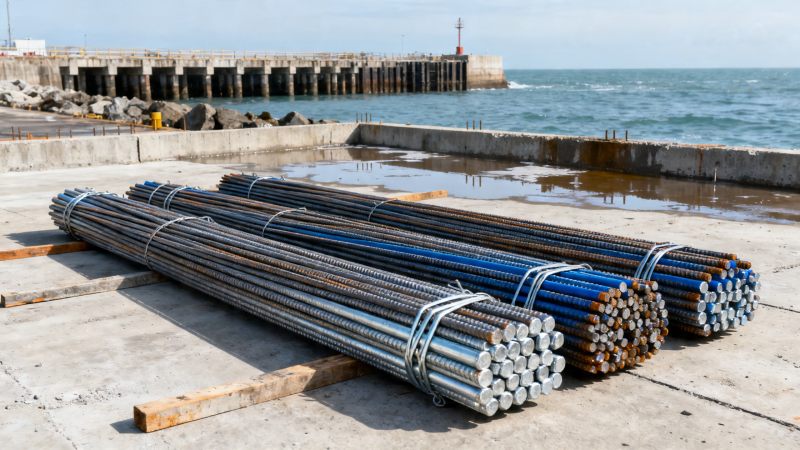
Coastal concrete structures face a different corrosion profile from inland buildings. Salt spray, airborne chlorides, tidal wet-dry cycles, and high humidity accelerate the breakdown of passive protection around embedded steel. In many marine or near-shore zones, deterioration risk is no longer a long-term possibility but an early design consideration that can affect serviceability within the first years if reinforcement selection is too conservative on upfront cost alone.
For project owners, this changes more than just a material line in the bill of quantities. Corrosion resistant rebar often affects cover thickness, crack control strategy, maintenance intervals, inspection planning, and whole-life budgeting. A finance approver may first compare unit price, but an engineering team will usually compare 20- to 50-year durability expectations, repair exposure, shutdown risk, and structural reliability under chloride attack.
This is why coastal projects often move from a simple steel grade discussion to a system-level decision. Designers need to judge the environment category, expected chloride exposure, and concrete quality. Procurement teams need to confirm standards, coating consistency, traceability, and delivery timing. Quality and safety managers need practical acceptance criteria that can be checked within 3 to 6 inspection points during receiving and installation.
For distributors, contractors, and industrial end users, the key question is not whether corrosion resistant rebar costs more at purchase. The real question is what changes in risk profile, maintenance burden, and replacement timing once the structure is exposed to marine conditions. That is the point where technical and commercial evaluation finally meet.
What typically drives corrosion faster near the sea?
- Chloride ingress through concrete pores and cracks, especially where cover depth and curing quality are inconsistent.
- Frequent wet-dry cycling in splash zones, bridge decks, piers, seawalls, and transport structures within a few kilometers of the shore.
- Construction variability, including bar damage, poor handling, contamination on site, or uncontrolled bending after coating application.
- Long service life targets, often 25 years, 50 years, or more, which magnify the cost of early corrosion and patch repair.
How corrosion resistant rebar differs from conventional reinforcement
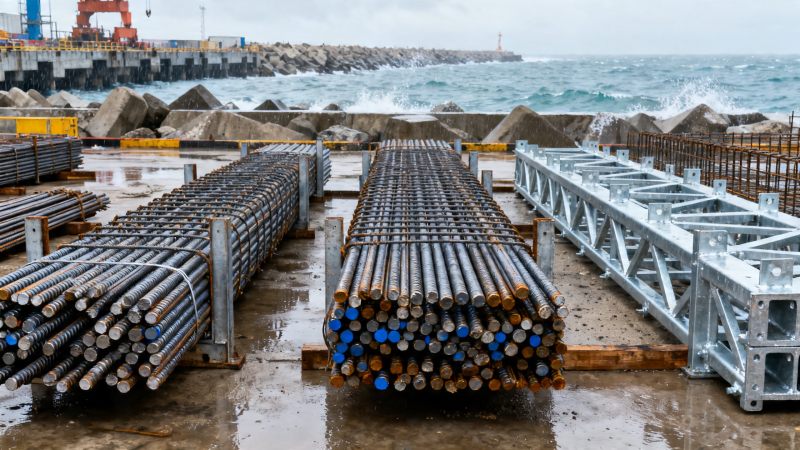
Conventional carbon steel rebar remains common because it is widely available and cost-effective in lower-risk environments. In coastal projects, however, it may need stronger supporting measures such as lower permeability concrete, stricter cover control, membrane systems, and more frequent inspection. Corrosion resistant rebar is selected to reduce vulnerability when chlorides penetrate the concrete or when the structure faces severe atmospheric marine exposure.
Depending on the project, corrosion resistant reinforcement may include epoxy-coated rebar, galvanized rebar, stainless steel rebar, or other engineered options specified by the design team. Each solution has a different balance of initial cost, fabrication sensitivity, chloride resistance, and expected service life. The right choice depends on exposure severity, maintenance access, structural importance, and the owner’s tolerance for future intervention.
The comparison below helps procurement managers and technical reviewers frame the decision in practical terms. It is not a substitute for project specifications, but it shows why the same rebar strategy does not fit every coastal job. A seawall, a parking structure, and a logistics warehouse near the coast may all face salt, but their exposure mechanisms and repair economics differ.
In procurement practice, the most cost-effective option is often not the cheapest tonnage. If a project includes hard-to-access components, high downtime cost, or a 30- to 50-year design intent, corrosion resistant rebar can reduce future repair cycles. For lower exposure areas, mixed strategies are also common, such as using premium reinforcement only in 2 to 4 critical zones where chloride attack is most severe.
What changes in design, detailing, and site handling?
Once corrosion resistant rebar enters the design, the project team usually reviews more than product availability. Detailing rules, bending sequence, repair procedures for damaged coating, storage conditions, and inspection checkpoints may all change. Site crews should know whether bars can be cut or rebent in the field, what touch-up materials are required, and how to separate different reinforcement types during staging.
A practical coastal project often follows a 4-step control logic: define exposure class, select rebar system, verify compatible concrete design, and implement receiving plus installation inspection. If any of these steps are weak, the expected benefit can narrow. This is why technical evaluation should not stop at the mill certificate or coating label.
What engineers and buyers should evaluate before ordering
In coastal steel and concrete projects, procurement errors usually come from incomplete evaluation rather than poor intention. A buyer may focus on price per ton, while the engineer focuses on durability, and the project manager focuses on delivery within 2 to 4 weeks. The right sourcing process aligns these priorities early so that the selected reinforcement and related steel products fit design, schedule, and budget at the same time.
The first checkpoint is standard and specification alignment. For international projects, teams often work across ASTM, EN, JIS, and GB references. The supplier should be able to clarify which standard applies to base steel, dimensions, tolerances, coating, and inspection documents. This reduces the risk of receiving acceptable-looking material that still fails the project submission package.
The second checkpoint is manufacturing and supply coordination. In many marine or industrial jobs, reinforcement is only one part of a wider structural package. Secondary steel components, galvanized sheet products, channels, beams, and cold formed sections may also be required. Working with one manufacturer that understands cross-product coordination can reduce document gaps, packaging confusion, and delivery mismatch across 3 or more shipment batches.
That is where an experienced Chinese structural steel exporter can add value beyond unit pricing. Hongteng Fengda supports global buyers with structural steel products, customized components, and standard-compliant manufacturing. For coastal and industrial environments, buyers may also need related corrosion-control materials such as Galvanised Steel Sheet Metal for cladding, enclosures, equipment covers, ducting, or fabricated support parts that require resistance to atmospheric corrosion and practical forming performance.
A practical procurement checklist for coastal steel packages
- Confirm exposure category and whether the specification requires coated, galvanized, stainless, or mixed reinforcement zones.
- Review supporting steel items in the same package, including beams, channels, angle steel, and sheet products used in marine-adjacent structures.
- Check dimensional tolerances, bundle marking, traceability, coating inspection records, and shipping protection before approval.
- Ask about sample support, typical lead time, document package, and OEM capability if the project includes custom fabricated parts.
- Plan receiving inspection with 5 key checks: identification, surface condition, dimensions, quantity, and compliance documents.
Related material note for integrated corrosion control
Where the project also needs sheet-based fabricated parts, buyers often compare grades such as DX51D, SGCC, or S250GD depending on forming demand and required strength. Common thickness ranges can span 0.12mm to 6.00mm, widths 600mm to 1500mm, and lengths 1m to 12m. These ranges are useful for coastal auxiliary structures, equipment housings, and construction-related steel parts where corrosion resistance and processability both matter.
For buyers managing mixed steel procurement, this integrated view matters. Reinforcement may be hidden in concrete, while sheet-based accessories remain exposed to humid marine air. Selecting both categories with a corrosion strategy in mind helps avoid the common mistake of protecting the structural core while under-specifying external steel components.
Cost, service life, and compliance: how to make the business case
The business case for corrosion resistant rebar becomes clearer when the team compares lifecycle impact instead of purchase price only. Initial material cost can rise, but expected maintenance frequency may fall, especially in decks, piles, retaining structures, quay areas, and coastal industrial platforms where repairs are disruptive. For some assets, avoiding one major rehabilitation cycle during a 25- to 40-year operating period can justify the upgrade.
Commercial evaluation should consider at least 4 dimensions: upfront material cost, installation complexity, expected inspection and repair burden, and consequence of downtime. This is especially important for owners, distributors, and financial approvers who need a structured justification rather than a general statement that premium rebar is “better.” The correct question is better for which exposure level, over which service interval, and under which maintenance assumption.
Compliance also influences cost. International projects often require document consistency across mill certificates, coating or material declarations, packing lists, and inspection records. A supplier familiar with ASTM, EN, JIS, and GB frameworks can help align submittal packages more efficiently. That reduces approval delays and protects the project schedule, which is often as valuable as direct material savings.
The table below gives a practical decision framework for owners and procurement teams deciding whether corrosion resistant rebar is justified in a coastal project.
A useful compromise is selective deployment. Instead of upgrading all reinforcement, some projects protect the most exposed 10% to 30% of rebar zones where corrosion is most likely to begin. This approach can balance cost control with durability improvement, especially when budget is limited but failure consequences are high.
Common mistakes that increase coastal corrosion risk
One common mistake is assuming the rebar choice alone solves the problem. In reality, concrete permeability, curing quality, crack width control, drainage detailing, and construction discipline remain essential. Another mistake is poor storage and site handling. Even a correctly specified material can lose expected value if bundles are exposed unnecessarily, mislabeled, or damaged before placement.
A third mistake is splitting procurement among too many vendors without a unified compliance review. This can create mismatched standards, unclear responsibilities, and delays in approvals. For global buyers, working with a structural steel manufacturer and exporter that can coordinate multiple steel categories often reduces this risk and shortens communication loops.
FAQ and next steps for project teams
Project stakeholders usually ask the same practical questions before approving corrosion resistant rebar in coastal work. The answers below are written for technical evaluators, procurement teams, project managers, and decision-makers who need direct guidance instead of generic theory.
How do I know whether a coastal project really needs corrosion resistant rebar?
Start with 3 checks: chloride exposure level, maintenance accessibility, and design service expectations. If the structure is close to marine spray, exposed to wet-dry salt cycles, or expensive to repair after commissioning, corrosion resistant rebar is often worth serious evaluation. The stronger the exposure and the longer the target life, the stronger the case for upgrading at least the most exposed zones.
Is corrosion resistant rebar always the most economical choice?
Not always. For lower-risk environments or temporary structures, conventional reinforcement plus good concrete design may remain adequate. The economic advantage appears when future repair is costly, access is difficult, or downtime affects operations. That is why many owners compare total cost across one full service period rather than the first purchase order only.
What should buyers request from suppliers during evaluation?
Ask for applicable standards, size range, manufacturing route, inspection documents, packaging method, and realistic lead time. If the package includes other structural steel items, confirm whether the supplier can provide coordinated production and shipment. For custom projects, request drawing review support, sample confirmation, and clarification of 2 to 3 alternative material schemes if budget optimization is needed.
How can Hongteng Fengda support coastal and industrial steel projects?
Hongteng Fengda supplies structural steel products and customized solutions for global construction, industrial, and manufacturing projects. The company supports buyers needing angle steel, channel steel, steel beams, cold formed steel profiles, and custom structural steel components under common international standards such as ASTM, EN, JIS, and GB. This is useful when the project requires coordinated sourcing, consistent quality control, and dependable lead times across multiple steel categories.
Why choose us for coastal steel sourcing and technical coordination?
Because coastal projects demand more than basic supply. They require specification understanding, cross-product coordination, practical quality control, and clear delivery communication. Hongteng Fengda helps global buyers confirm parameters, review applicable standards, compare structural steel options, and plan customized supply for marine-adjacent construction and industrial applications.
You can contact us for product selection support, reinforcement-related steel package coordination, delivery schedule discussion, OEM fabrication needs, standard and certification alignment, sample availability, and quotation planning. If your project includes both structural sections and corrosion-control sheet applications, we can also help you review whether Galvanised Steel Sheet Metal or other steel products fit your exposure conditions, fabrication needs, and cost targets.
For faster evaluation, prepare 4 items before inquiry: project application, required standards, size or drawing list, and target delivery window. With that information, our team can respond more accurately on material options, customization feasibility, documentation needs, and export supply arrangements for your coastal project.
Please give us a message


Please enter what you want to find