For project leaders in steel-based infrastructure, selecting corrosion-resistant pipes now affects more than pipe lifespan. It directly influences water quality stability, maintenance frequency, compliance confidence, and total asset value over decades.
Many failures do not begin with visible rust. They begin with hidden interactions between pipe material, internal surface condition, water chemistry, flow pattern, and installation practice. These factors often stay unnoticed until complaints, leaks, scaling, or contamination appear.
In the steel industry, this shift matters. Buyers increasingly compare corrosion-resistant pipes not only by initial price, but by lifecycle performance, compatibility, and predictable quality under real operating conditions.
Why water systems are redefining how corrosion-resistant pipes are evaluated
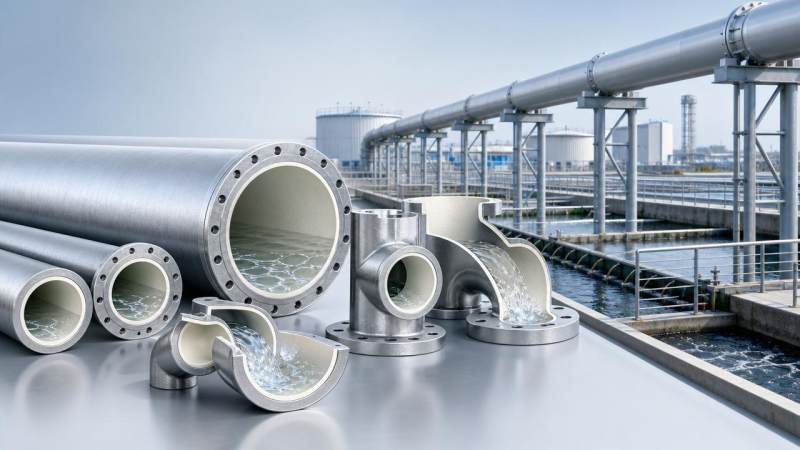
Water networks used to focus heavily on mechanical strength and delivery speed. Today, the evaluation of corrosion-resistant pipes is broader, because operating environments have become more variable and performance expectations are higher.
Industrial plants, buildings, and municipal systems now face changing water sources, tighter hygiene expectations, and stronger pressure to reduce unplanned maintenance. That makes corrosion behavior a strategic issue, not a minor material detail.
For steel-related projects, this is especially important where carbon steel components, structural supports, and connected piping systems operate together. A durable system depends on material matching, coating quality, and installation discipline.
The hidden factors behind water quality risk are becoming more visible
The phrase corrosion-resistant pipes sounds simple, but field performance depends on several hidden variables. Ignoring them can lead to taste changes, discoloration, sediment release, pressure loss, and premature replacement.
Key drivers reshaping material decisions
These points explain why corrosion-resistant pipes can perform very differently even under similar specifications on paper. Real durability is achieved through system thinking, not label-based buying.
Material upgrades are no longer judged by corrosion alone
The market increasingly treats corrosion-resistant pipes as part of water quality protection. That changes how steel products are selected, fabricated, transported, and integrated into wider systems.
For example, supporting steel elements and connected components must also resist surface damage and contamination during installation. A mismatch between pipe quality and surrounding steel accessories can weaken the whole system.
In some projects, related steel materials are evaluated for strength, wear resistance, and finish control before final assembly. One relevant option is Q235 Carbon Steel Round Bar, used across construction, water supplying, railings, and fabricated supports.
With diameters from 5 mm to 2500 mm, lengths such as 2 m, 5 m, 6 m, and 12 m, and finishes including passivation, galvanizing, phosphating, and anti-rust oil, it fits projects requiring controlled steel integration.
What is changing in specification logic
- Material selection is moving from generic corrosion resistance to water-specific compatibility.
- Surface treatment quality is becoming as important as base metal grade.
- International standards such as ASTM, EN, JIS, and GB are used with closer application review.
- Lifecycle cost is replacing purchase price as the primary decision benchmark.
- Documentation, traceability, and consistent production quality now carry greater weight.
The impact spreads across design, fabrication, operation, and maintenance
The shift toward better corrosion-resistant pipes affects more than procurement files. It changes decisions across the entire project chain, especially where steel fabrication and water system reliability intersect.
Design stage
Design choices now require closer review of water source conditions, pressure cycles, connection methods, and service life assumptions. Pipe grade alone is not enough without understanding system chemistry and exposure patterns.
Fabrication and supply stage
Fabrication quality affects how corrosion-resistant pipes actually perform. Surface defects, improper coating handling, and inconsistent dimensional control can create points where corrosion begins earlier than expected.
Operation stage
Water quality changes over time. Seasonal chemistry shifts, cleaning practices, and stagnation periods can all alter corrosion behavior. Monitoring should track both pipe condition and water characteristics together.
Maintenance stage
Maintenance teams increasingly prefer systems that minimize hidden corrosion zones and simplify inspection. Corrosion-resistant pipes with proven coating integrity and stable supply quality reduce reactive repairs and service disruption.
The most important details deserve attention before final selection
To improve outcomes, several checkpoints should be reviewed before confirming corrosion-resistant pipes for water-related use. These points reduce uncertainty and improve long-term system confidence.
- Confirm actual water chemistry, including chloride level, hardness, alkalinity, and pH variation.
- Check whether coatings are certified, continuous, and suitable for the target operating range.
- Review welding, cutting, threading, and joining procedures for possible surface damage.
- Assess storage and transport conditions to avoid moisture exposure before installation.
- Match fittings, supports, and adjacent steel components with the same durability expectations.
- Request mill certificates, inspection records, and dimensional consistency documentation.
- Consider cleaning, flushing, and startup procedures that preserve protective surfaces.
Where structural steel and pipeline systems overlap, dependable suppliers matter. Hongteng Fengda supports global projects with stable manufacturing, strict quality control, and steel products aligned with ASTM, EN, JIS, and GB requirements.
Practical judgment should balance trend awareness with field conditions
No single material solves every water quality challenge. The better approach is to evaluate corrosion-resistant pipes through a combination of environment, fabrication quality, installation control, and expected operating behavior.
This balanced method helps avoid the common mistake of overvaluing nominal corrosion resistance while underestimating hidden operational variables. Better decisions come from combining material science with practical steel project experience.
A stronger next step is to assess the whole steel-water interface
When evaluating corrosion-resistant pipes, the smartest next step is not simply requesting another quote. It is reviewing the full interface between water quality, pipe selection, coatings, fabrication, and connected steel components.
That review should include technical standards, finish requirements, installation risks, and replacement cost exposure. Small hidden factors often create the largest long-term losses in water systems.
If a project also needs dependable structural steel support elements, controlled export packaging, and customized specifications, integrated sourcing can reduce quality gaps between corrosion-resistant pipes and surrounding steel assemblies.
A careful evaluation today protects water quality tomorrow, extends service life, and keeps corrosion-resistant pipes performing as intended under real conditions.
Please give us a message


Please enter what you want to find