Choosing the right construction wire can significantly improve binding speed, labor efficiency, and on-site safety. From industrial wire used in fast-paced rebar tying to wire mesh applications in reinforcement and support, the right selection affects workflow, durability, and material performance. For projects using Steel Construction Material and Corrosion Resistant Steel, understanding wire choices helps contractors, buyers, and engineers reduce delays and improve construction results.
Why does construction wire selection directly affect on-site binding speed?
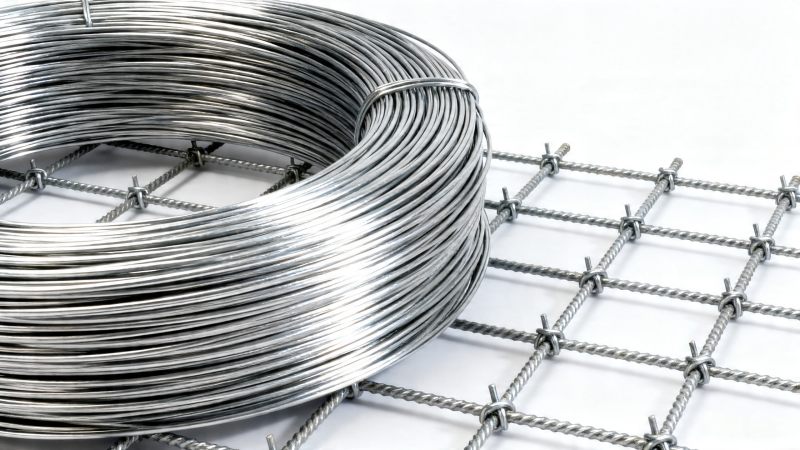
On construction sites, binding speed is not determined by labor alone. It is strongly influenced by wire diameter, tensile behavior, ductility, coil packaging, and how easily the wire feeds through manual or semi-automatic tying processes. A small mismatch between wire type and site conditions can slow repetitive work across hundreds or thousands of tie points per day.
For operators, the most visible issue is handling efficiency. If wire is too stiff, tying takes longer and hand fatigue rises. If it is too thin, breakage risk increases during tightening. In most routine binding tasks, teams evaluate 3 core factors first: twistability, feed consistency, and resistance to corrosion during short-term outdoor exposure.
For technical evaluators and project managers, wire choice also affects schedule predictability. A crew working across 7–10 hours in changing weather needs a wire that performs consistently, not just one that meets a basic material description. This matters even more when reinforcement work, mesh installation, packaging, and temporary fixing happen in parallel on the same project.
For procurement and finance teams, the lowest unit price is rarely the full answer. When rework, wasted coils, damaged ties, and slower installation are included, a cheaper construction wire may create a higher total installed cost. In steel-related projects, purchasing decisions should therefore connect material cost with labor efficiency and delivery reliability.
What actually slows binding work on site?
Several common issues reduce tying speed even when labor is available. These problems are often underestimated during early purchasing discussions, especially when buyers focus only on ton price instead of application fit.
- Wire diameter outside the practical range for the tool or manual tying method, causing slow twisting or unstable knots.
- Poor ductility that leads to cracking during repeated bends, especially in fast bar tying or wire mesh fixing.
- Inconsistent coil winding, which creates feeding interruptions and more operator adjustments during peak work periods.
- Surface condition that is too rough or insufficiently protected for humid or outdoor staging areas, increasing friction and short-term corrosion risk.
Which stakeholders care most about wire speed performance?
The answer varies by role. Operators want easier tying and less fatigue. Quality and safety personnel focus on tie stability and handling consistency. Procurement teams want a balance between price and usable yield. Decision-makers care about whether the material supports delivery targets across 2–4 weeks of active installation. Distributors also look for packaging flexibility and repeat-order stability.
How should buyers compare wire types for binding, mesh, and general construction use?
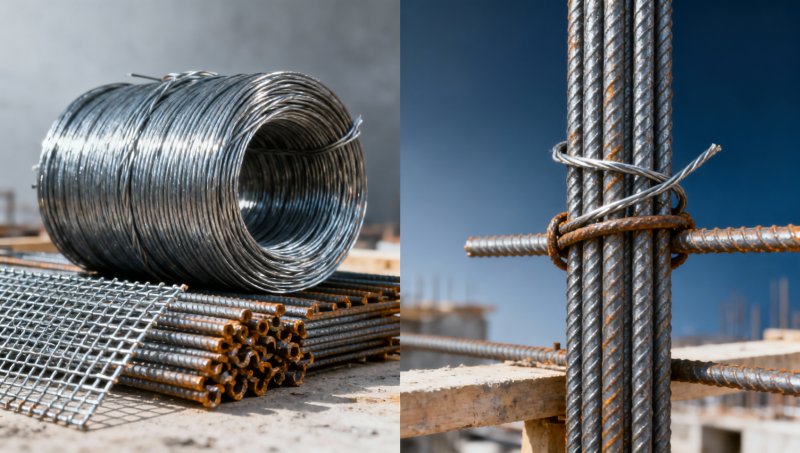
Construction wire is not a single-use material. Depending on the project, it may be used for tying reinforcement, making wire mesh, temporary fixing, packaging steel components, barrier isolation, or light industrial support tasks. Because of this, selection should match the job environment, working rhythm, and expected exposure conditions rather than relying on a one-size-fits-all specification.
In practical sourcing, buyers often compare low carbon steel wire by application range, handling behavior, and coating condition. For example, indoor dry-site tying may prioritize smooth feeding and low cost, while outdoor storage or coastal delivery routes may require stronger attention to corrosion resistance. A useful review method is to compare 5 key points: diameter range, tensile strength, ductility, coating level, and packaging format.
The table below helps distinguish common construction wire use scenarios and what they mean for binding speed, material stability, and procurement planning. This is especially useful for contractors, distributors, and technical buyers evaluating steel construction material supply across multiple applications.
This comparison shows why construction wire should be chosen by task, not by category name alone. When buyers align wire properties with the real work sequence, crews can maintain steadier tying speed, and purchasing teams can avoid ordering material that is technically acceptable but operationally inefficient.
How do cost and usability trade off?
Lower-cost wire may be suitable for packaging, handicrafts, or light daily use, but high-frequency site binding usually needs better consistency. A slightly higher material cost can reduce losses from broken ties, worker slowdown, and extra handling time. On projects with tight milestones, even small improvements repeated across 500–2,000 tying points can justify a better-grade wire choice.
Where corrosion resistant steel components are being handled or stored outdoors, zinc-coated wire may also be preferred for temporary exposure. This does not replace full anti-corrosion system design, but it can improve short-cycle storage performance and reduce visible rust during transport, staging, or installation phases.
Which technical parameters matter most when selecting construction wire?
Technical selection starts with matching the wire to the operation. In general construction and steel-related applications, a practical assessment includes 4 measurable dimensions: wire diameter, tensile strength, coating condition, and packaging form. These determine whether the wire can be bent quickly, hold reliably, and remain workable through the project cycle.
One insertive example relevant to many construction, wire mesh, and packaging applications is Mild Steel Wire Rod. Produced in Q195 and Q235 low carbon steel grades, it is used in construction, decoration, breeding, barrier isolation, wire ropes, hangers, filter baskets, fences, and tie ropes. Such a broad application range is useful for buyers who want one supply source to cover several routine job needs.
Its stated wire diameter range is 0.25 mm–5.0 mm, tensile strength is 350–550 Mpa, and zinc coating thickness is 8–25 g/m2. For project teams, these ranges are practical because they cover light tying, general fabrication, mesh-related work, and packaged steel component bundling. Packaging options such as 50–1,000 kg coils or wire bobbin supply can also affect handling efficiency and storage planning.
The appearance is described as silvery white with a slight yellow tinge, while product advantages include bright and smooth surface condition, good corrosion resistance, relatively pure and strong coating, excellent ductility, and low cost. For on-site speed, ductility and surface smoothness are especially valuable because they support faster knot formation and reduce resistance during repeated handling.
Parameter reference for technical and purchasing evaluation
The following table summarizes the parameter ranges and procurement implications that buyers should check before placing an order for construction wire, industrial wire, or wire mesh related work.
For technical reviewers, these parameters should be checked together rather than individually. A wire with suitable tensile strength but poor packaging may still slow the line. Likewise, a corrosion-resistant surface without enough ductility may not support fast binding. Balanced specification selection is the most dependable approach.
A practical 5-point inspection checklist
- Confirm the diameter range needed for the actual tying or mesh process.
- Check whether tensile strength supports both bending and retention.
- Review whether zinc coating is necessary for storage or environmental exposure.
- Match coil or bobbin packaging to site handling equipment and labor routine.
- Ask for consistency details if repeat orders or distributor supply is planned.
How can procurement teams reduce risk when buying construction wire from overseas suppliers?
International sourcing creates opportunities for cost control, but it also introduces risks in specification interpretation, packaging mismatch, and delivery timing. For steel industry buyers, the solution is not simply choosing the cheapest exporter. It is building a procurement process that links technical confirmation, quality review, production scheduling, and shipment planning into one workable sequence.
A typical B2B purchase cycle includes 4 stages: specification confirmation, sample or detail review, order production, and logistics coordination. Depending on volume, customization, and destination, lead time may vary from 2–4 weeks for standard items to longer for mixed structural steel and wire-related orders. Projects with phased delivery often benefit from splitting orders by installation priority instead of shipping everything at once.
This is where an experienced structural steel manufacturer and exporter can offer more value than a trading-only approach. Hongteng Fengda supplies angle steel, channel steel, steel beams, cold formed steel profiles, customized structural steel components, and related steel solutions for global projects. For buyers who need coordinated sourcing, this can reduce communication gaps between the primary structure and the supporting wire or accessory materials.
With modern manufacturing facilities and strict quality control, products are produced to major international standards such as ASTM, EN, JIS, and GB where applicable. For procurement teams in North America, Europe, the Middle East, and Southeast Asia, this matters because compliance language, document expectations, and acceptance criteria often differ by market. Stable production capacity and dependable lead times help reduce sourcing risk and avoid site delay costs.
What should buyers verify before confirming an order?
Before final approval, procurement, technical, quality, and financial teams should align on a shared checklist. This avoids later disputes over performance expectations or packaging assumptions.
- Verify material grade, such as Q195 or Q235, and ensure it fits the intended construction or industrial use.
- Confirm the required diameter, coating range, and packaging method for the site handling plan.
- Review whether the order is standard specification or OEM-based, especially for mixed steel procurement.
- Clarify inspection points, shipping marks, and delivery schedule by project stage.
- Check whether sample support, document review, or quote revision is needed before mass production.
Common purchasing mistakes that increase total cost
Some buyers over-focus on base price per ton and under-review usability. Others order a single wire type for all tasks, even when binding, mesh work, packaging, and barrier isolation have different handling needs. Another common issue is ignoring packaging details, which later causes slower site movement, damaged coils, or higher waste during issue and storage.
A more effective strategy is to evaluate 3 levels together: technical fit, operational fit, and commercial fit. When these three align, the wire supports speed on site, the budget stays controlled, and the project team avoids preventable disruptions.
Frequently asked questions about construction wire choices
The questions below reflect common concerns from contractors, operators, distributors, and project decision-makers who need better clarity before selecting construction wire for steel-related work.
How do I choose the right wire diameter for faster binding?
Start with the tying method and object size. Thin wire generally bends faster, but if it is too thin for the holding requirement, breakage or weak ties may occur. For practical selection, compare the expected twist count, the operator method, and whether the wire is being used for rebar tying, mesh fixing, or simple bundling. A diameter range inside 0.25 mm–5.0 mm covers many common applications, but the best point depends on the actual task.
Is zinc-coated wire always necessary on construction sites?
Not always. For indoor dry use or very short installation windows, uncoated or lightly protected options may be sufficient if corrosion exposure is minimal. However, if materials will be stored outside, shipped over longer routes, or used in humid conditions, a zinc coating in the 8–25 g/m2 range can improve resistance during handling and temporary exposure. The requirement should be based on environment and storage duration, not assumption alone.
What matters more for speed: tensile strength or ductility?
For binding speed, both matter, but ductility is often felt first by operators because it affects how easily the wire bends and twists. Tensile strength in the 350–550 Mpa range can provide a practical balance, but if the wire is too stiff for the application, tying slows down. Fast site work usually requires a combination of workable strength and reliable bend performance.
Can one wire product cover multiple uses such as construction, wire mesh, and packaging?
Yes, in many cases a low carbon steel wire product can serve multiple functions if its diameter, coating, and packaging are correctly selected. For example, Mild Steel Wire Rod is used in construction, wire mesh, packaging, decoration, daily use, breeding, barrier isolation, and several fabricated items. This type of flexibility is useful for distributors and project buyers consolidating purchases across several routine applications.
Why work with a structural steel partner that understands both material supply and project execution?
Construction wire is a small item compared with major structural steel sections, but it can still affect daily progress, labor output, and project coordination. When buyers source from a supplier that understands the broader steel construction context, they gain more than a quotation. They gain support in matching material choice to actual project conditions, compliance expectations, and delivery planning.
Hongteng Fengda supports global buyers with structural steel products and customized solutions for construction, industrial, and manufacturing projects. This is valuable for customers who need standard specifications, OEM supply, or coordinated procurement across beams, channels, cold formed profiles, and supporting steel materials. A supplier with this scope can help reduce the sourcing fragmentation that often creates schedule and communication problems.
If you are evaluating construction wire for faster binding, lower labor loss, or better corrosion handling, the next step should be specific. Confirm the application, diameter range, coating needs, packaging preference, and project timeline. Then compare these with available grades, standards, and shipping options. Clear technical alignment at the start usually saves more cost than late-stage correction.
You can consult on parameter confirmation, product selection, delivery lead time, OEM or customized solutions, applicable standards, sample support, and quotation planning for mixed steel orders. For contractors, distributors, and project owners seeking a dependable China-based structural steel supply partner, this approach supports better purchasing decisions and smoother execution from factory to site.
Please give us a message


Please enter what you want to find