For procurement teams sourcing coil rolled steel, understanding what drives lead time and total cost is essential to making better purchasing decisions.
From raw material availability and mill scheduling to processing requirements, order volume, and export logistics, every factor can affect project timelines and budgets.
This article explains the main delivery and pricing factors behind coil rolled steel and offers practical guidance for better sourcing planning.
Understanding coil rolled steel and its supply chain context
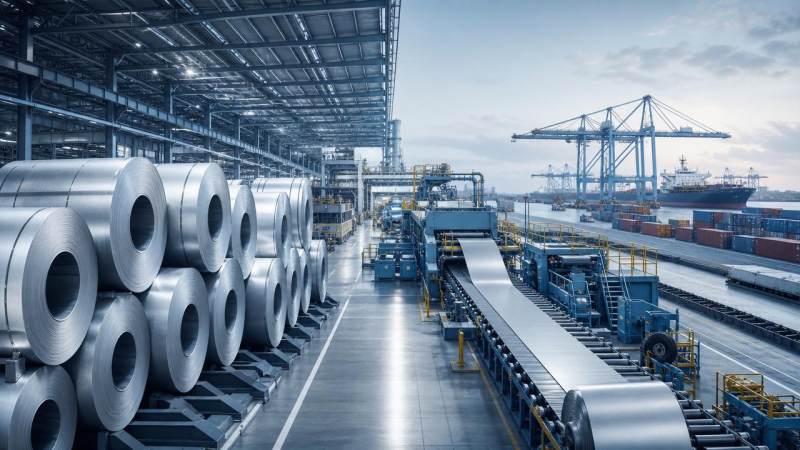
Coil rolled steel usually refers to steel produced in continuous coils through hot rolling or cold rolling processes.
It is widely used for construction components, machinery parts, forming, fabrication, and further downstream processing.
In international trade, coil rolled steel is not priced only by weight.
Lead time depends on mill capacity, raw material flow, finishing steps, inspection, and shipping conditions.
Cost also changes with steel grade, thickness tolerance, surface treatment, order size, and destination market requirements.
For steel buyers, the important point is simple.
The cheapest coil rolled steel quote may not deliver the lowest total landed cost or the safest project schedule.
Primary factors that affect lead time
Lead time for coil rolled steel begins long before loading at port.
It starts with melt planning, slab supply, rolling schedule, and line availability.
Raw material availability
When iron ore, scrap, slabs, or alloying elements are tight, coil rolled steel production can slow down quickly.
This is more visible for special grades, higher strength materials, or non-standard chemistries.
Mill production scheduling
Steel mills group orders by grade, thickness, width, and finishing route.
A small order outside the regular rolling plan may wait longer than a standard volume booking.
Peak seasons can also extend coil rolled steel lead time by several weeks.
Processing and finishing requirements
Pickling, cold rolling, galvanizing, slitting, cut-to-length, and special packaging all add time.
Each additional process introduces queue time, quality checks, and handling steps.
Testing and compliance review
Orders requiring ASTM, EN, JIS, or project-specific documentation often move slower.
Third-party inspection, mill test certificates, and export documents can affect release timing.
Port and logistics conditions
Even completed coil rolled steel can face delay from trucking shortages, port congestion, customs review, or vessel space limits.
For export projects, inland transport and container or breakbulk planning should be checked early.
Core cost drivers behind coil rolled steel pricing
The cost of coil rolled steel includes more than the base steel market price.
A realistic budget should account for material, conversion, quality, packaging, inland delivery, and ocean freight.
Grade and specification complexity
Common grades usually have better availability and lower conversion cost.
Higher strength, tighter tolerance, or custom chemistry coil rolled steel often carries a premium.
Thickness, width, and weight range
Non-standard dimensions reduce rolling efficiency and may increase scrap or trimming loss.
Buyers requesting narrow tolerances or restricted coil weight may see higher unit pricing.
Order volume and batching efficiency
Larger orders generally improve mill planning and freight economics.
Small mixed orders can raise the cost of coil rolled steel because setup and handling are less efficient.
Surface treatment and corrosion protection
Oiled, dry, pickled, galvanized, or painted surfaces all affect cost.
The right finish depends on storage conditions, fabrication route, and final application environment.
Export packaging and logistics
Coil rolled steel for overseas shipment often needs moisture protection, steel strapping, edge protection, and marked documentation.
These items are not large individually, but together they change the final landed cost.
Key market signals that influence planning
Several market indicators can help estimate future lead time and cost movement for coil rolled steel.
Watching these signals helps reduce surprises when planning coil rolled steel procurement over several months.
Practical value for steel sourcing and project control
Understanding lead time and cost drivers improves more than quote comparison.
It supports better inventory timing, production coordination, and risk control across the full steel supply chain.
For example, some projects combine coil rolled steel with fabricated structural products.
In such cases, aligning specifications across product categories can improve schedule reliability.
A useful reference is Structural Steel Channel, often used in building structure, mechanical equipment, vehicle manufacturing, ship beam, and industrial furnace applications.
This product range includes models such as 5-40# and 6.5-30#, with common lengths of 6m, 9m, and 12m.
Available grades include A36, Q235B, Q345B, S235JR, S355JR, A572 GR50, and other international options.
Galvanized or painted finishes, tensile strength of at least 520MPa, and standards such as ASTM, JIS, GB, DIN, and EN support wider project compatibility.
When a supplier can coordinate both coil rolled steel and downstream structural sections, planning becomes more stable.
Typical scenarios where lead time and cost differ
Not all coil rolled steel orders behave the same.
The following scenarios often show clear differences.
- Standard commercial grades usually offer the shortest lead time and best pricing consistency.
- Custom thickness or width orders often require special scheduling and extra trimming cost.
- Galvanized or painted coil rolled steel needs additional process steps and inspection time.
- Small trial orders may carry higher unit cost because batching efficiency is lower.
- Urgent export shipments can become expensive if premium freight or rushed documentation is needed.
Recommended practices to reduce sourcing risk
A structured approach can improve both price control and delivery predictability for coil rolled steel.
- Confirm grade, dimensions, coating, coil weight, and tolerance before requesting quotations.
- Ask for separate visibility on base price, processing cost, packaging, and shipping terms.
- Check production window, not only shipment date, when reviewing coil rolled steel offers.
- Allow time for certification, third-party inspection, and export documentation if required.
- Use realistic forecast volumes to improve batching efficiency and reduce unit cost.
- Review port options and transport mode early for heavy or time-sensitive steel cargo.
It is also wise to compare total landed cost rather than only ex-works or FOB pricing.
That comparison gives a clearer view of the real cost of coil rolled steel in project use.
Next-step planning for better coil rolled steel decisions
Coil rolled steel sourcing becomes easier when supply assumptions are made visible early.
Clear specifications, realistic delivery targets, and aligned logistics planning reduce avoidable delay and cost escalation.
For projects involving structural steel, it helps to work with a supplier that offers stable production, quality control, and export coordination.
Hongteng Fengda, a structural steel manufacturer and exporter from China, supports global construction and industrial projects with dependable supply and customized solutions.
Review current specifications, target quantity, compliance standards, and destination requirements before placing the next coil rolled steel order.
That step creates a stronger basis for accurate quotation, smoother production scheduling, and more reliable project delivery.
Please give us a message


Please enter what you want to find