Choosing the right carbon steel manufacturer can determine whether your project stays on schedule or faces costly delays. For business decision-makers, lead time risks often go beyond production speed, involving raw material supply, capacity planning, quality control, and export coordination. Understanding these warning signs is essential to reduce sourcing uncertainty, protect budgets, and keep construction or industrial operations moving efficiently.
Understanding Lead Time Risk in Carbon Steel Supply
When buyers evaluate a carbon steel manufacturer, lead time is often reduced to one simple question: how many days will production take? In practice, total lead time is broader. It usually includes raw material booking, mill scheduling, rolling or forming, surface treatment, inspection, packing, inland transport, customs handling, and ocean shipment. For structural steel and fabricated components, the gap between a promised 20-day production cycle and an actual 45-day delivery window can reshape a project budget.
This is especially important in steel procurement because carbon steel products are deeply connected to downstream sequencing. A delayed batch of channels, beams, or custom profiles can hold up foundation framing, purlin installation, equipment supports, or manufacturing line assembly. For enterprise buyers, the real issue is not just whether a supplier is late once, but whether its operating model makes delay more likely across repeated orders of 50 tons, 200 tons, or even larger project packages.
A reliable carbon steel manufacturer should therefore be assessed as part producer, part planner, and part exporter. The strongest suppliers combine stable steel sourcing, predictable capacity, disciplined quality control, and export execution. In the structural steel industry, a lead time promise without supporting systems is only a sales statement. Decision-makers need to understand the mechanisms behind delivery performance before approving a long-term sourcing partner.
What Lead Time Usually Includes
For many imported steel orders, lead time can be divided into 5 service nodes: order confirmation, raw material allocation, production scheduling, quality release, and shipment booking. If any one node slips by 3 to 7 days, the total schedule may move by 1 to 3 weeks. This is why buyers should request a milestone-based delivery plan rather than a single estimated date.
- Commercial lead time: quotation approval, drawing confirmation, contract terms, and deposit receipt.
- Operational lead time: material preparation, processing, welding, cutting, forming, galvanizing, and testing.
- Logistics lead time: packing, port delivery, container loading, customs clearance, and vessel schedule.
A useful internal benchmark for buyers is to separate factory lead time from door-to-port and port-to-port transit. That distinction helps identify whether delay risk comes from the manufacturer itself or from the external logistics environment.
Why Decision-Makers Should Look Beyond the Quote
Two suppliers may offer similar pricing, material grades, and standards such as ASTM, EN, JIS, or GB, yet produce very different schedule outcomes. One may hold regular stock of common grades like Q195, Q235, or Q345B, while another sources upstream only after receiving payment. The first supplier may start within 3 to 5 days; the second may need 10 to 15 days before production even begins.
For executive teams managing construction, industrial expansion, or equipment projects, those differences affect more than procurement metrics. They influence contractor mobilization, cash flow timing, labor utilization, and penalty exposure. That is why the selection of a carbon steel manufacturer should be treated as a project continuity decision, not merely a purchasing event.
Why the Steel Industry Pays Close Attention to Lead Time
The steel industry operates in cycles of fluctuating demand, variable raw material availability, and periodic freight disruption. Even in stable markets, buyers can face congestion in galvanizing lines, inconsistent billet supply, or longer vessel booking windows during peak export seasons. A standard lead time for structural carbon steel may be 15 to 30 days ex-works for common items, but project complexity can extend that to 35 to 50 days.
This industry attention is not limited to giant infrastructure works. Medium-size factories, warehouse developers, agricultural building contractors, and machinery manufacturers all depend on sequence-sensitive steel deliveries. If channels arrive late, secondary framing may be delayed. If customized beams are rejected for tolerance issues, site assembly can stop entirely until replacement pieces arrive.
For importers working across North America, Europe, the Middle East, and Southeast Asia, international lead time adds another layer of uncertainty. Shipment timing may be affected by port cut-off dates, transshipment schedules, inspection documentation, or destination customs review. A capable carbon steel manufacturer must therefore support both production reliability and export reliability.
The table below shows common lead time risk points in structural steel sourcing and the business impact they create for project owners and purchasing teams.
The pattern is clear: lead time risk is cumulative. A few small delays across separate stages can easily add 2 to 4 weeks to a project supply plan. This is why experienced buyers evaluate supplier systems, not only supplier promises.
Industry Signals That Merit Extra Attention
Several market conditions should prompt deeper supplier review. These include sudden steel price volatility, unusually short quotation validity periods, requests to substitute grades without engineering explanation, and delivery promises that seem faster than standard processing cycles. None automatically proves risk, but each suggests the need for verification.
Decision-makers should also examine whether a supplier focuses on standard stock distribution or true manufacturing. Distributors can be valuable for urgent requirements, but project buyers ordering formed sections, beams, or custom structural items often need manufacturing discipline, traceability, and specification control that go beyond trading activity.
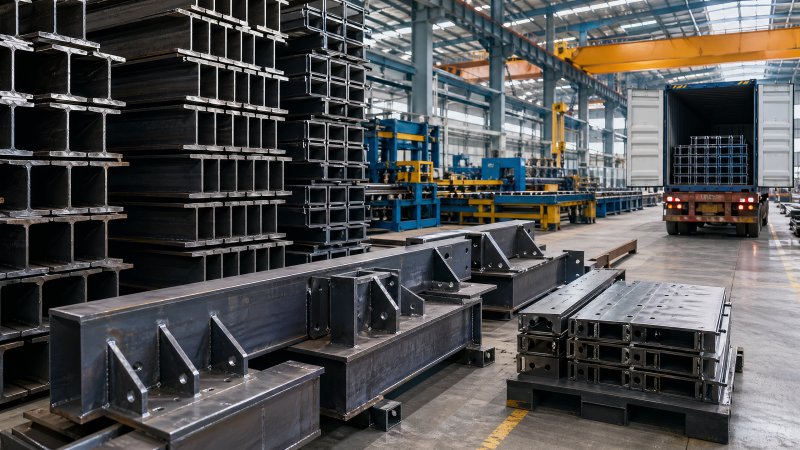
Operational Warning Signs When Selecting a Carbon Steel Manufacturer
The most important warning signs are usually operational rather than promotional. A carbon steel manufacturer may present strong catalogs and attractive pricing, but if internal coordination is weak, lead time performance often suffers. Buyers should ask how orders move from sales to planning, planning to production, and production to shipment release.
One practical example is section steel supply for construction and fabrication. Products like Channel In Steel are commonly used in construction, automobile manufacture, steel structure purlins, wall beams, lightweight roofs, brackets, and mechanical supports. Depending on grade, coating, and tolerance requirements, production may involve multiple process steps, such as forming, galvanizing, and final inspection. If the supplier cannot explain these steps clearly, the proposed schedule may not be dependable.
For example, U channel steel in thicknesses from 1.5 mm to 25 mm, heights from 80 mm to 160 mm, and lengths from 6 m to 12 m may be supplied in carbon structural steel or galvanized versions. When buyers require grades such as Q195, Q235B, or Q345B under standards including ASTM, DIN, JIS, BS, or GB/T, capacity planning and inspection control become more important than headline lead time. A supplier with abundant stock may dispatch faster for standard dimensions, while custom runs may need a more realistic 20- to 35-day cycle.
A Practical Review Framework
A useful framework is to review the supplier across 4 dimensions: material readiness, production capacity, quality stability, and export execution. If one dimension is weak, the entire schedule may become fragile. For enterprise purchasing teams, this helps turn qualitative impressions into a repeatable evaluation method.
- Material readiness: Does the supplier stock or reserve common grades and sizes before order confirmation?
- Production capacity: Can it explain line availability, batch sequencing, and peak-season load?
- Quality stability: Are tolerances, surface finish, and testing steps controlled before shipment release?
- Export execution: Can it coordinate packing, documents, and vessel booking without last-minute changes?
This type of review is particularly helpful when comparing suppliers that serve global buyers with similar product portfolios but different levels of planning maturity.
Questions Buyers Should Ask Early
A strong purchasing conversation should include concrete schedule questions. Ask how often the supplier updates production status, whether mill test certificates and inspection records are prepared before loading, and what percentage of orders require rescheduling in peak months. Even if the supplier cannot share exact internal metrics, the clarity of the answer is informative.
Another key question is how the supplier handles mixed orders that combine standard sections with customized steel components. These mixed orders are common in real projects, yet they create coordination pressure. A carbon steel manufacturer with integrated planning usually handles them more smoothly than a supplier that depends on multiple outsourced process points.
Where Lead Time Reliability Creates Business Value
Lead time reliability has direct business value because it supports project sequencing, inventory control, and cash flow predictability. For construction buyers, receiving structural steel in the right sequence can reduce site congestion and minimize idle crews. For manufacturers, dependable supply supports installation windows, shutdown planning, and line expansion schedules.
The value also appears in sourcing strategy. When a carbon steel manufacturer consistently delivers on time, buyers can operate with leaner safety stock, fewer emergency purchases, and lower exposure to spot-market premiums. Over a 6- to 12-month procurement cycle, that stability often matters as much as the unit price per ton.
In cross-border trade, reliable delivery supports customer commitments downstream. Importers serving regional contractors or industrial end users often need accurate ETD and ETA planning. Missing one container cut-off can affect not only freight cost but also sales credibility in the destination market.
Different application environments place different demands on lead time planning. The table below shows how common steel-use scenarios shape schedule priorities.
This comparison shows why buyers should align supplier selection with use case. The best carbon steel manufacturer for a distributor’s stock replenishment may not be the best choice for a tightly sequenced construction package with custom fabrication needs.
Balancing Cost, Speed, and Control
It is common to assume that faster supply always costs more. In reality, the lowest apparent price can become the highest total cost when delay triggers expedited freight, secondary handling, installation disruption, or liquidated damages. Buyers should evaluate total delivered value across at least 3 dimensions: unit cost, schedule reliability, and specification compliance.
This is where experienced structural steel exporters create practical value. Manufacturers with modern facilities, strict quality control, and export familiarity can often reduce hidden risk, even when their quoted lead time is slightly more conservative. For project planning, a realistic 28-day delivery is usually more useful than an optimistic 18-day promise that slips repeatedly.
Practical Evaluation Steps for Business Buyers
A structured evaluation process helps enterprise buyers avoid avoidable delay. It also improves internal alignment between procurement, engineering, project management, and finance teams. Before final supplier approval, companies should define required grades, dimensions, standards, inspection points, packaging expectations, and target shipment windows in writing.
For steel categories such as angle steel, channel steel, steel beams, cold formed profiles, and customized structural components, a buyer should confirm which items are stock-supported and which require dedicated production. This distinction affects lead time, minimum order quantity, and contingency planning. In many cases, standard items can move within 7 to 15 days, while OEM or nonstandard fabrication may require 20 to 40 days depending on process complexity.
The evaluation should also include export readiness. A technically capable factory may still cause delay if shipping marks, packing lists, certificates, or customs paperwork are not prepared correctly. For international sourcing, document discipline is part of delivery performance.
Recommended Buyer Checklist
- Request a production and shipping schedule broken into milestones, not just a final date.
- Confirm available material grades, dimensional ranges, and tolerance capabilities before PO release.
- Ask whether galvanizing, cutting, drilling, or fabrication steps are handled in-house or outsourced.
- Verify what inspection documents are supplied and when they are issued relative to loading.
- Clarify packaging method, loading plan, and port booking responsibility at least 7 days before dispatch.
- Set communication frequency, such as weekly status updates for normal orders and 48-hour updates for urgent ones.
These steps help buyers compare suppliers more fairly and reduce dependence on assumptions. They are also useful when building a long-term approved vendor list for recurring steel procurement.
How a Capable Long-Term Partner Supports Better Outcomes
For global buyers, a dependable partner contributes more than tonnage supply. It helps reduce sourcing risk, control cost, and keep projects moving efficiently through realistic planning and consistent execution. Manufacturers that understand international standards and can support both standard specifications and OEM requirements are often better positioned to serve repeat industrial and construction demand.
Hongteng Fengda, as a structural steel manufacturer and exporter from China, focuses on reliable steel products, customized solutions, modern manufacturing capability, and strict quality control. For buyers seeking a carbon steel manufacturer, this type of operating model is valuable because it connects production capacity with export coordination, helping customers manage lead time with fewer surprises.
Why Choose Us for Structural Steel Supply
Selecting a carbon steel manufacturer is ultimately about confidence in execution. Buyers need a supplier that can support common structural products, customized components, international standards, and practical delivery planning in one coordinated process. That is particularly important for projects where schedule, compliance, and cost control must move together.
Hongteng Fengda supplies angle steel, channel steel, steel beams, cold formed steel profiles, and customized structural steel components for global construction, industrial, and manufacturing projects. With service experience across multiple export markets, we support customers with stable production capacity, consistent quality, and dependable lead times based on realistic planning rather than oversimplified promises.
If you are reviewing suppliers for an upcoming steel order, contact us to discuss material grades, size confirmation, application needs, delivery cycles, OEM requirements, certification expectations, sample support, and quotation details. We can help you evaluate the right product solution, clarify lead time risk points early, and build a sourcing plan that fits your project schedule.
Please give us a message


Please enter what you want to find