When comparing carbon pipe cost with long-term service life, buyers often weigh options such as seamless steel tube, API pipe, and corrosion-resistant pipe for different project demands. For construction, industrial, and fluid pipe applications, understanding how material grade, operating environment, and maintenance affect total value helps engineers, purchasers, and project managers make smarter, lower-risk steel sourcing decisions.
For most projects, the lowest initial carbon pipe price is not the lowest real cost. Service life can vary widely depending on steel grade, wall thickness, corrosion exposure, pressure conditions, fabrication quality, and maintenance planning. In practical terms, a competitively priced carbon steel pipe can deliver strong lifetime value in controlled environments, but in aggressive service conditions, paying more upfront for better specifications or protective treatment often reduces total ownership cost, downtime, and replacement risk.
What Buyers Really Need to Compare: Purchase Price or Total Cost Over Service Life?
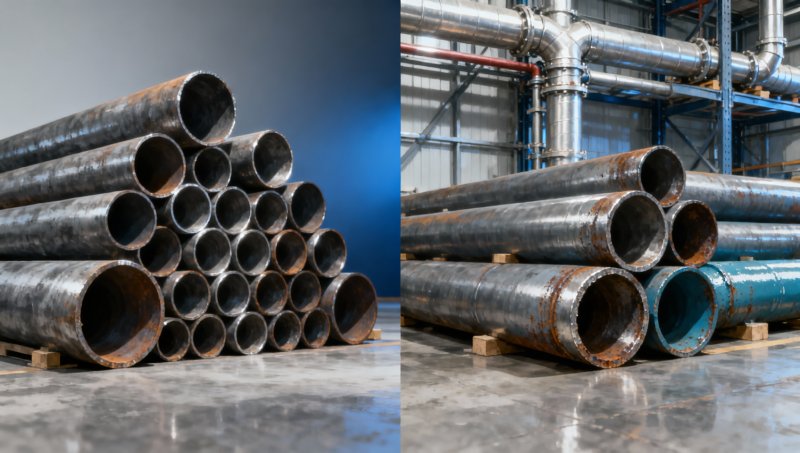
When users search for “carbon pipe cost vs service life,” they are usually not looking for a simple price list. They want to know whether a lower-cost pipe will remain reliable long enough for the application, and whether a higher initial investment will save money later. This is especially important for procurement teams, technical evaluators, project managers, and financial approvers who need a decision that balances budget, safety, and long-term operating value.
A useful comparison should include more than the base material price. It should also consider:
- Expected service life under actual operating conditions
- Corrosion rate and environmental exposure
- Installation and fabrication requirements
- Inspection and maintenance frequency
- Risk of leakage, shutdown, or replacement
- Compliance with project standards such as ASTM, EN, JIS, GB, or API
For many industrial and construction uses, carbon steel pipe remains a cost-effective choice because it offers strong mechanical performance, broad availability, and easier sourcing than many alloy or stainless alternatives. But the true value only becomes clear when cost is measured across the full service cycle.
What Has the Biggest Impact on Carbon Pipe Service Life?
The service life of carbon pipe depends less on one single factor and more on how material selection matches the job. In many projects, early failure happens not because carbon steel is inherently weak, but because the pipe grade, coating, thickness, or production quality does not match the operating environment.
The most important factors include:
1. Corrosion Environment
Moisture, salt, chemicals, acidic media, soil conditions, and oxygen content strongly affect durability. A carbon pipe used indoors in dry structural service may last for decades. The same pipe in coastal, buried, or chemically exposed service may degrade much faster without coating, lining, or cathodic protection.
2. Pipe Manufacturing Method
Seamless steel tube and welded pipe each have valid use cases. Seamless pipe is often preferred in higher-pressure or more demanding applications because of its uniform structure, while properly manufactured welded pipe can provide excellent cost efficiency for many low- to medium-pressure systems. The right choice depends on design conditions, not just price.
3. Material Grade and Thickness
Higher-grade material does not automatically mean longer service life, but suitable chemistry and mechanical properties improve reliability. Wall thickness also matters. A lower-cost thin-wall option may reduce initial spending, yet shorten replacement intervals if corrosion allowance is insufficient.
4. Surface Protection
Galvanizing, painting, epoxy coating, or internal lining can significantly extend pipe life. In many environments, the added treatment cost is more economical than early replacement. This is one of the most overlooked drivers of long-term value.
5. Maintenance and Inspection Practice
Even well-selected carbon steel pipe performs poorly when inspection is delayed or fluid conditions change over time. Regular monitoring helps identify wall loss, scaling, joint deterioration, and localized corrosion before they become failure events.
How to Judge Whether a Lower-Cost Carbon Pipe Is Actually a Better Deal
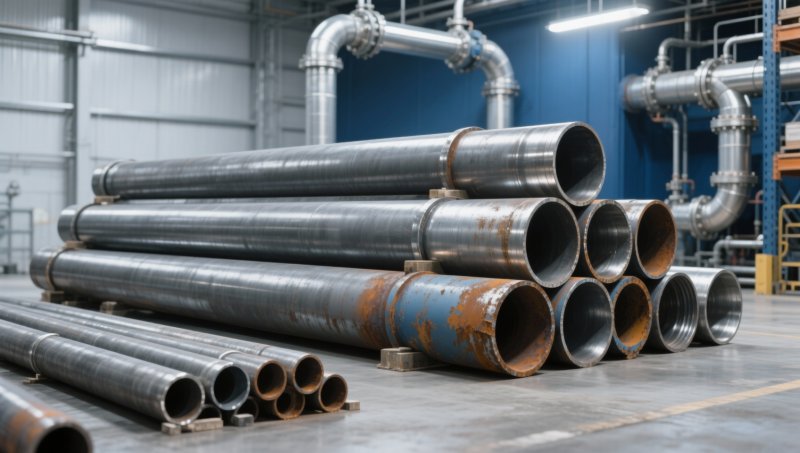
For purchasing and business evaluation teams, the most practical method is to compare total cost of ownership rather than unit price alone. A lower quotation can be misleading if it increases lifecycle expense.
Use this simple decision framework:
- Define service conditions clearly: pressure, temperature, fluid type, external environment, target service years, and maintenance access.
- Check specification fit: confirm grade, size tolerance, wall thickness, coating, and standard compliance.
- Estimate replacement interval: compare realistic service life scenarios, not ideal laboratory assumptions.
- Quantify risk cost: include shutdown loss, labor, safety exposure, claims, and delivery delays.
- Review supplier consistency: stable quality control often matters more than a small difference in offer price.
For example, if one pipe option costs 8% less initially but requires earlier replacement or higher corrosion-control spending, it may be the more expensive choice within just a few years. By contrast, a correctly specified carbon steel pipe with reliable mill quality can offer an excellent balance of affordability and service stability.
In broader construction procurement, the same logic applies to reinforcement materials. For projects balancing cost and structural performance, products such as HPB300 Rebar are often chosen for load-bearing, structural, and stirrup applications because they offer moderate cost, ease of processing, and standard yield strength of no less than 300 MPa. Available in sizes from 6mm to 50mm, and supplied under certifications such as API, ISO9001-2008, SGS, and BV, this type of material shows how buyers should assess steel products by fit-for-purpose value rather than price alone.
When Does It Make Sense to Spend More Upfront?
Paying more at the beginning is usually justified in the following situations:
- Corrosive outdoor, coastal, underground, or chemical service environments
- Systems where leakage or shutdown creates high financial loss
- Projects with long design life and limited maintenance access
- Export or EPC projects requiring strict standard compliance and traceability
- Applications with safety-critical pressure or structural demands
In these cases, investing in better wall thickness, improved coating, higher consistency manufacturing, or stricter inspection can lower lifetime risk significantly. This is especially relevant for engineering contractors and distributors serving global customers, where replacement and warranty issues can cost far more than the original pipe price difference.
Where Carbon Steel Pipe Still Delivers Excellent Value
Carbon steel pipe remains a preferred option across many sectors because its cost-performance ratio is still very strong when used correctly. Common value-driven applications include:
- Construction and structural support systems
- General industrial fluid transport
- Water transmission in controlled environments
- Mechanical fabrication and manufacturing
- Oil and gas applications using suitable API pipe specifications
For buyers sourcing from established manufacturers, carbon steel pipe also offers advantages in availability, customization, and lead time management. Suppliers with modern facilities and strict quality control can help reduce sourcing risk by providing consistent mechanical properties, dimensional accuracy, and compliance documentation. For project-driven purchasing, this supply reliability is a major part of long-term value.
What Procurement and Technical Teams Should Ask Before Ordering
Before finalizing a carbon pipe order, teams should ask several practical questions:
- What is the target service life under actual site conditions?
- Is standard black carbon steel sufficient, or is protective treatment required?
- Should the project use seamless steel tube or welded pipe?
- What standards and test certificates are mandatory?
- How much corrosion allowance is designed into the wall thickness?
- What are the inspection, maintenance, and replacement assumptions?
- Can the supplier ensure consistent quality across repeated deliveries?
These questions help avoid a common procurement mistake: buying a product that is technically acceptable on paper but operationally expensive in the field.
Conclusion: The Best Carbon Pipe Choice Is the One That Lowers Lifetime Risk
Carbon pipe cost vs service life should never be judged by purchase price alone. In low-corrosion and well-controlled applications, carbon steel pipe often provides excellent value and dependable long-term performance. In harsher environments, however, better specifications, coatings, or stricter quality control can produce a much lower total cost over time.
The smartest buying decision is to match pipe specification to service conditions, quantify lifecycle risk, and work with a reliable supplier that can support consistent quality and international standards. For engineers, purchasers, and decision-makers, that is the most practical way to control cost while protecting project performance, safety, and long-term return on investment.
Please give us a message


Please enter what you want to find