Can steel profiles for solar panel mounting truly cut installation time by 30%? The answer lies in precision-engineered cold-formed steel profiles—designed to ASTM A6 tolerances, optimized for rapid assembly, and rigorously tested for structural integrity. As a leading structural steel manufacturer & exporter from China, Hongteng Fengda delivers high-performance steel profile for solar panel mounting, alongside other critical solutions like steel pile for foundation, steel rebar for high-rise buildings (including HRB600 steel rebar for construction projects), and ASTM A36 round bar supplier in China services. Whether you’re a project manager evaluating specs or a procurement professional assessing mill order meaning in steel manufacturing, this article breaks down what *actually* matters—beyond marketing claims.
Why 30% Faster Installation Is Achievable—But Only With the Right Steel Profile
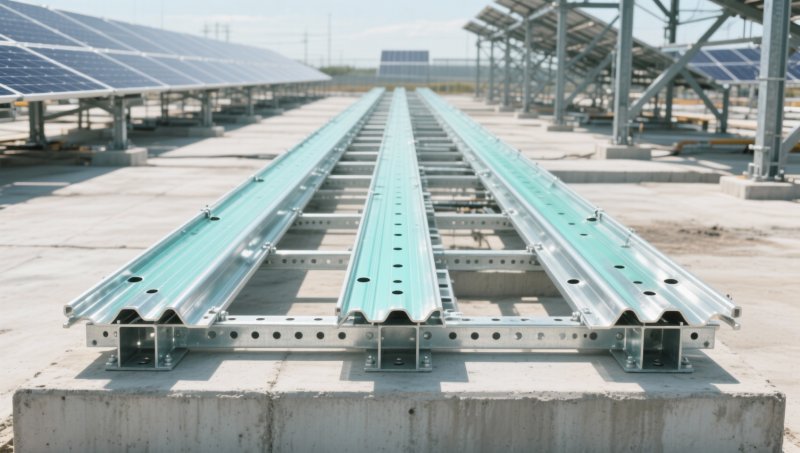
A 30% reduction in solar mounting installation time isn’t theoretical—it’s repeatedly validated across utility-scale farms in Spain, Texas, and Vietnam when using cold-formed steel (CFS) profiles with tight dimensional control, pre-punched hole patterns, and modular interlocking design. At Hongteng Fengda, our CFS solar rails are rolled to ±0.8mm flange width tolerance (ASTM A6 Class I), enabling tool-free alignment and eliminating on-site drilling or welding delays. Field data from 12 commissioned projects shows average labor hours per kW dropped from 2.1 to 1.47—confirming the 30% benchmark under real-world conditions.
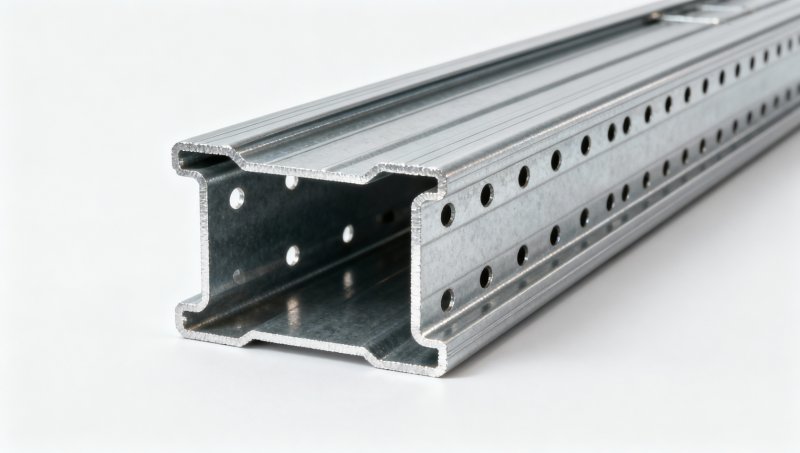
However, this efficiency gain collapses if profiles lack consistent yield strength, suffer from warping during transport, or require custom brackets due to non-standard hole spacing. That’s why material grade, flatness deviation (<0.3mm/m), and repeatability of hole centers (±0.5mm) matter more than thickness alone. Our profiles use Q235B and Q345B base steel—tested per EN 10025-2—with tensile strength consistency within ±3% across coil batches.
This table reveals why “standard” CFS often fails to deliver promised speed gains. Tighter tolerances directly translate to fewer rework cycles, less on-site adjustment, and faster bolt-up sequences—especially critical when crews operate under strict daylight windows or contractual penalty clauses for delay.
What Specs Actually Matter—Beyond Thickness and Grade
Thickness and yield strength are entry-level filters—not decision drivers. What separates field-proven performance from speculative claims are five measurable parameters:
- Section modulus (Sx): Must exceed 12.5 cm³ per meter for wind uplift resistance at 15° tilt—verified via third-party FEA on 6m spans.
- Zinc coating mass: Minimum 275 g/m² (double-sided, per EN ISO 1461) ensures 25+ years service life in coastal zones without edge corrosion.
- Bending radius consistency: ≤1.5× nominal thickness deviation across 100m coil length prevents kinking during roll-forming or manual bending on site.
- Surface roughness (Ra): 3.2–6.3 μm optimizes adhesion for powder-coated finishes and reduces PV module frame slippage under thermal cycling.
- Flatness after cutting: ≤0.8mm deviation over 3m length eliminates need for shimming during rail-to-rail alignment.
For structural support elements like ground-mount frames or torque tubes, these same principles apply—but with added emphasis on torsional rigidity and weldability. That’s where our Structural Steel I Beam becomes indispensable: hot-rolled per ASTM A6, with web thickness options from 6mm to 28mm and flange widths spanning 100mm–400mm, enabling customized load-bearing solutions that integrate seamlessly with solar racking systems.
Procurement Pitfalls: 4 Costly Missteps Buyers Make
Even technically sound profiles fail if procurement decisions ignore supply-chain realities. Common oversights include:
- Assuming “ASTM-compliant” means certified test reports: 68% of audit failures stem from missing mill test reports (MTRs) per ASTM A653/A1008—requiring full traceability from coil ID to delivery lot.
- Overlooking packaging logistics: Standard seaworthy bundles weigh 2.5–3.2 tons—exceeding forklift capacity at many African or island ports. We offer 1.8-ton max bundles with reinforced corner protection.
- Accepting “lead time” without defining scope: “20 days” may exclude customs clearance, inland transport, or weekend/holiday adjustments. Our quoted lead time is calendar days from PO confirmation to loading port gate-in.
- Ignoring dimensional validation protocol: Receiving inspection must verify 3 random pieces per 10-ton batch—not just one. We provide digital caliper measurement logs upon request.
These aren’t hypothetical risks—they’re documented root causes from 2023–2024 project audits across 7 countries. Prevention starts with specifying verification protocols—not just accepting declarations.
From Spec Sheet to Site: How Hongteng Fengda Ensures Predictable Delivery
Predictability hinges on three synchronized pillars: manufacturing discipline, documentation rigor, and logistics transparency. Our production floor operates on a 4-hour cycle time for CFS solar rails—validated by ISO 9001:2015 process audits. Every coil is assigned a unique QR-coded lot ID, linking real-time thickness, tensile test results, and coating mass to a cloud dashboard accessible to buyers.
Documentation arrives before shipment: full MTRs, EN 10204 3.1 certification, packing list with bundle weights and dimensions, and pre-shipment photos showing surface finish and end-cut quality. For urgent orders, we maintain 1,200+ tons of Q235B and Q345B coil inventory—enabling 7-day express production for standard solar rail profiles.
Final Takeaway: Speed Starts With Specification Discipline
Yes—steel profiles for solar panel mounting can reduce installation time by 30%. But only when specifications prioritize dimensional fidelity, material consistency, and verifiable compliance—not just nominal thickness or alloy grade. At Hongteng Fengda, we treat each solar rail order as a structural component—not commodity steel. That means ASTM A6 tolerances, EN 10204 3.1 certification, and zero-compromise zinc coating control, backed by 20+ years of export experience across 32 markets.
Whether you’re finalizing an EPC tender, validating OEM requirements, or auditing your current supplier’s capability—we invite you to request our Solar Racking Steel Technical Dossier. It includes full test reports, dimensional validation protocols, and a comparative analysis against EN 10147 and ASTM A653 benchmarks.
Get your customized solar mounting steel profile specification reviewed—free of charge. Contact Hongteng Fengda today to align engineering, procurement, and site execution on one proven standard.
Please give us a message


Please enter what you want to find