In 2026, evaluating can making machine ROI means looking beyond equipment price to total production efficiency, material compatibility, and long-term supply reliability. For buyers comparing carbon pipe, seamless steel tube, API pipe, and welded stainless tubing options in broader industrial sourcing, understanding cost drivers, durability, and project fit is essential to making smarter investment decisions.
Why ROI Analysis in 2026 Is No Longer Just About Purchase Price
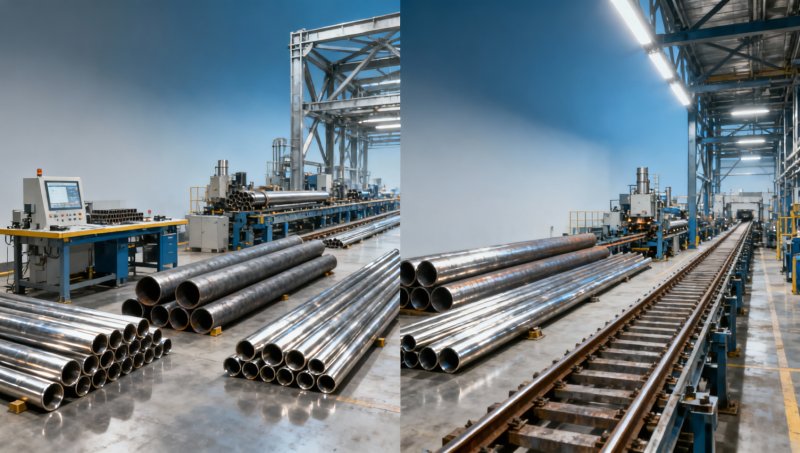
For industrial buyers in the steel sector, ROI analysis has become a broader sourcing discipline rather than a simple equipment payback exercise. In 2026, procurement teams, finance approvers, project managers, and technical evaluators increasingly compare machine investment with upstream and downstream material reliability. That is why discussions around can making machine ROI often expand into steel supply choices, structural performance, compliance, and long-term operating risk.
A realistic investment review usually includes at least 5 core dimensions: initial capital cost, material compatibility, maintenance frequency, production stability, and lead-time reliability. If one of these factors is weak, the apparent savings from a lower purchase price may disappear within 6–18 months. This is especially true for projects that depend on steel components, plant structures, rail guidance systems, or custom profiles with strict dimensional tolerances.
For global buyers, sourcing confidence matters as much as technical data. A supplier that can support ASTM, EN, JIS, and GB aligned production, offer OEM structural solutions, and maintain stable export execution reduces hidden costs in documentation, reinspection, and schedule disruption. Hongteng Fengda operates as a structural steel manufacturer and exporter from China with experience serving North America, Europe, the Middle East, and Southeast Asia, where schedule certainty and specification clarity directly affect project economics.
In practice, the strongest ROI decisions are made when commercial and engineering teams work from the same framework. Instead of asking only “What is the machine price?”, better questions are “What steel grade is required?”, “How stable is the supply over 2–4 production cycles?”, and “What happens if tolerance drift affects assembly or safety performance?” Those questions produce more reliable purchasing outcomes.
What stakeholders usually measure before approving a purchase
- Technical teams focus on dimensional tolerance, material grade consistency, weldability, and compatibility with continuous production conditions.
- Procurement teams compare lead time, MOQ flexibility, export documentation, and replacement supply risk over 3–12 months.
- Finance reviewers examine total landed cost, maintenance burden, and expected return period rather than unit price alone.
- Quality and safety personnel check standards alignment, inspection records, coating condition, and delivery consistency batch by batch.
Which Cost Drivers Most Strongly Affect Steel-Related ROI Decisions?
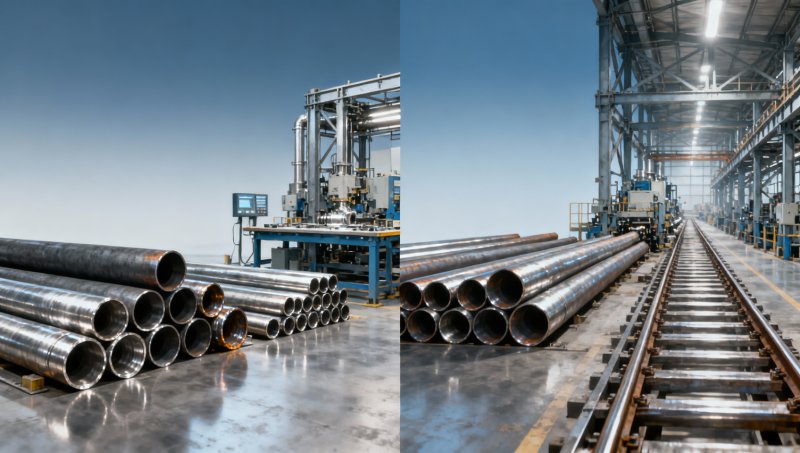
When steel products are part of a manufacturing line, support structure, transport system, or project installation, ROI depends on more than steel tonnage. Buyers should separate direct cost from operating cost. Direct cost includes base material price, processing, coating, packaging, and freight. Operating cost includes wear, replacement intervals, downtime, site handling, and quality rework. Over a 12–24 month period, operating cost can outweigh a small unit-price saving.
Material selection is one of the most overlooked cost drivers. Carbon steel may offer a lower acquisition cost, while alloyed or specialized grades may reduce deformation, wear, or maintenance frequency in heavier-duty applications. For example, if project loads are cyclic, alignment-sensitive, or exposed to moisture and outdoor installation, choosing the right grade and surface condition from the start can reduce replacement events and unplanned shutdowns.
Lead time is another major factor. A nominally cheaper source becomes expensive if delivery slips by 2–3 weeks and delays fabrication or installation. Export buyers often benefit from suppliers with abundant stock, controlled production scheduling, and responsive communication. This is particularly important for distributors, contractors, and project owners who manage milestone-based delivery windows and cannot afford reprocurement under time pressure.
The table below summarizes typical ROI drivers for steel-related industrial purchasing decisions and shows why commercial evaluation should be tied to technical fit, not just quotation comparison.
This comparison shows a common pattern: the cheapest material option is not always the best ROI option. In many steel projects, the most economical decision is the one that balances 3 factors at the same time—specification accuracy, consistent delivery, and lower downstream correction cost.
How Mid-Project Product Selection Affects Payback and Operational Stability
Many buyers discover during technical review that a project needs more than standard beams or channels. Supporting systems, transport paths, bridge handrails, deck handrails, or rail-guided movement components may also influence the final return on investment. In these cases, product integration is valuable because a single supplier can simplify communication, shorten sourcing time, and reduce compatibility risk between structural and guided-load elements.
One relevant example is Rail, which can be used in railway rail applications as well as bridge and deck railing or handrail projects, depending on specification and design intent. Available material options include carbon steel and medium manganese steel, with common models such as U74, U71Mn, PD2, PD3, Q235, 55Q, 50Q, U71, and 45Mn. Typical length ranges are 12m–30m, thickness ranges are 3mm–24mm, and tolerance can be controlled within ±1%.
From an ROI perspective, this type of product matters because dimensional suitability directly affects installation speed and operating safety. Technical parameters such as rail height of 134–170mm, head width of 68–73mm, and bottom width of 114–150mm are not just catalog figures. They influence alignment, load transfer to sleepers or supports, rolling smoothness, and long-term service conditions. If the selected section does not match the use case, hidden costs appear quickly in field modification and maintenance.
For buyers comparing solutions, stock depth and export responsiveness are also practical advantages. Common specifications include 4kg/m, 8kg/m, 12kg/m, 15kg/m, 18kg/m, 22kg/m, 24kg/m, 30kg/m, 38kg/m, 43kg/m, 50kg/m, and crane rail types such as QU70, QU80, QU100, and QU120. Surface options such as oil, black, galvanized, and painted finishes can be selected according to storage duration, transport conditions, and installation environment.
Why these parameters matter for project economics
- A 12m–30m length range can reduce joint count in some projects, which may lower site welding or connection time.
- A ±1% tolerance target helps technical teams control fit-up consistency across repeated installations or replacement batches.
- Multiple finish options allow procurement teams to match corrosion exposure and logistics needs without unnecessary over-specification.
- ISO9001-2008 and ISO14001:2004 alignment supports buyers who need documented process control and environmental management references.
Typical selection checkpoints for engineers and buyers
Before approval, many teams use a 4-step review: confirm application scenario, verify load and dimensional fit, match coating or finish to the environment, and check delivery schedule against the project milestone. This process is simple, but it prevents one of the most common purchasing mistakes in steel sourcing: selecting a specification that looks acceptable on paper but creates avoidable costs after arrival.
What Should Procurement, Quality, and Finance Teams Compare Side by Side?
A strong procurement decision needs a shared comparison model. Purchasing may prioritize cost, engineering may prioritize compliance, and finance may prioritize payback period. The most effective way to align these departments is to compare solutions across measurable criteria rather than subjective supplier claims. In steel projects, 6 checkpoints are especially useful: grade, dimensional range, tolerance, standards alignment, lead time, and support for customized processing.
The next table is designed for procurement teams evaluating standard structural steel supply against more application-specific steel components. It helps users identify when a lower initial quotation may still carry higher total project risk.
The right side of the table reflects how experienced importers and project teams actually buy. It is not about paying more for the sake of caution. It is about preventing the 3 most expensive failures in steel sourcing: wrong specification, unstable supply, and delayed delivery to site or production line.
A practical 6-point procurement checklist
- Confirm applicable standard references such as ASTM, EN, JIS, or GB based on destination market and project documents.
- Check dimensional tolerances and whether the supplier can hold repeatability across multiple batches.
- Verify finish condition for indoor storage, marine transport, or outdoor installation exposure.
- Ask for realistic lead-time windows such as 7–15 days for stocked items or 2–4 weeks for scheduled production.
- Review export packing and shipping documentation to avoid customs delays and handling damage.
- Assess OEM support if your project requires non-standard lengths, drilling, punching, or tailored profiles.
This checklist is especially useful for distributors, engineering contractors, and multinational buyers who need to balance technical acceptability with commercial efficiency.
Common Mistakes That Reduce ROI in Steel Sourcing Projects
The first mistake is evaluating steel only by headline price. A lower quote may exclude coating, tighter tolerances, special packing, or export documentation. Once these items are added later, the price gap narrows. Worse, if materials arrive with dimensional issues or incomplete paperwork, the real loss is not the steel itself but the disruption to installation, labor scheduling, and customer delivery commitments.
The second mistake is assuming one grade or profile fits every application. In reality, a project may involve structural support, rolling guidance, rail transmission, or railing applications with different stress behavior and safety expectations. Choosing based on habit rather than use condition often leads to over-specification in one area and under-specification in another. Both outcomes hurt ROI because they either waste budget or create avoidable operational risk.
The third mistake is underestimating delivery discipline. A project manager may accept a supplier’s nominal lead time without checking whether that estimate includes production, inspection, packing, and export release. In international steel purchasing, the real timeline often has 4 stages: technical confirmation, production scheduling, QC and packing, and shipment coordination. Missing even one stage can shift a project window by 1–3 weeks.
The fourth mistake is treating quality control as a final-step activity. In well-managed sourcing, QC starts before order release with grade confirmation, dimension review, and standards mapping. It continues during production and ends with shipment verification. This approach helps quality managers and safety teams reduce claims, protect installation integrity, and avoid disputes over responsibility once goods are on site.
FAQ for buyers and evaluators
How should buyers estimate ROI when exact operating data is not available?
Use a scenario-based model. Compare at least 3 items: purchase cost, expected maintenance or replacement interval, and schedule risk. Even if you do not have exact field data, you can still compare likely outcomes over 12 months, 24 months, and one major project cycle. This is often enough to identify whether a cheaper option may actually raise total cost.
What delivery window is generally realistic for exported steel products?
The answer depends on stock availability and customization. Stocked items may move in about 7–15 days, while scheduled or customized production often takes 2–4 weeks before shipment arrangements. Buyers should confirm whether the quoted period includes inspection, packaging, and export documentation.
Which documents matter most for technical and commercial approval?
In most projects, buyers should at least confirm product specification, material grade, dimensional data, applicable standards, and inspection-related documents suitable for the transaction. If the order supports a regulated project or infrastructure installation, the approval workflow may also require closer review by quality and safety teams before shipment release.
When does customized structural steel create better ROI than standard supply?
Customization often improves ROI when it reduces site processing, lowers waste, or shortens installation time. Examples include cut-to-length supply, OEM profiles, pre-processed components, or specification matching for special support and guidance systems. If customization removes one site operation step, the savings can be meaningful even when unit price is slightly higher.
Why Global Buyers Work With a Structured Steel Export Partner
For importers and project teams, the best supplier is not simply the one with a broad catalog. It is the one that can align product specification, manufacturing discipline, and export execution in a predictable way. Hongteng Fengda supports this model by supplying structural steel products such as angle steel, channel steel, steel beams, cold formed steel profiles, and customized structural steel components for international construction, industrial, and manufacturing projects.
This matters because ROI in 2026 is tied to supply continuity. A partner with modern manufacturing facilities, strict quality control, and familiarity with ASTM, EN, JIS, and GB frameworks can help buyers reduce sourcing uncertainty. That support is valuable for technical evaluators checking compliance, for procurement managers controlling total cost, and for finance teams looking for predictable delivery and fewer post-purchase claims.
Global buyers also need practical responsiveness. Stable production capacity, dependable lead times, and support for standard or OEM supply are critical when a project spans multiple product categories or repeated purchase cycles. For distributors and project owners, this reduces the risk of switching suppliers midstream, which often increases approval work, logistics complexity, and quality variation.
If you are evaluating can making machine ROI in a broader industrial sourcing context, or comparing steel solutions for structural, transport, or guided-load applications, the next step should be a specification-based discussion rather than a price-only inquiry. Clear technical inputs lead to better commercial outcomes.
What you can discuss with us
- Product selection based on application, load condition, and installation environment.
- Specification confirmation including grade, size range, tolerance, and surface finish.
- Delivery planning with estimated production cycle, stock status, and export preparation steps.
- Customized structural steel or OEM processing for project-specific requirements.
- Standards and certification alignment for ASTM, EN, JIS, GB, or project document matching.
- Quotation communication, sample support discussion, and batch supply planning for repeated orders.
If your team needs a more reliable basis for investment approval, sourcing comparison, or project execution, contact us with your drawings, grade requirements, target market standards, and delivery window. We can help you review parameters, compare suitable steel solutions, estimate lead times, and build a sourcing plan that supports both technical performance and commercial ROI.
Please give us a message


Please enter what you want to find