As global demand for structural steel intensifies, the ASTM steel beam price list continues to reflect complex quarterly fluctuations—driven not only by raw material costs but also by logistics volatility, regional trade policies, and project-specific demand spikes. For Shandong steel exporters to Europe, C section steel for solar panel mounting, and steel profiles for construction industry, pricing transparency is critical. As a trusted ASTM steel profile supplier in USA and H shape steel supplier in Europe, Hongteng Fengda—a leading structural steel purlin manufacturer China—offers real-time insights into 2026 trends. Whether you're a procurement professional evaluating Z beam for industrial applications or a project manager sourcing steel structure construction for warehouse, this analysis helps forecast cost drivers beyond the billet.
What’s Behind Q1–Q4 Price Swings in ASTM Steel Beams?
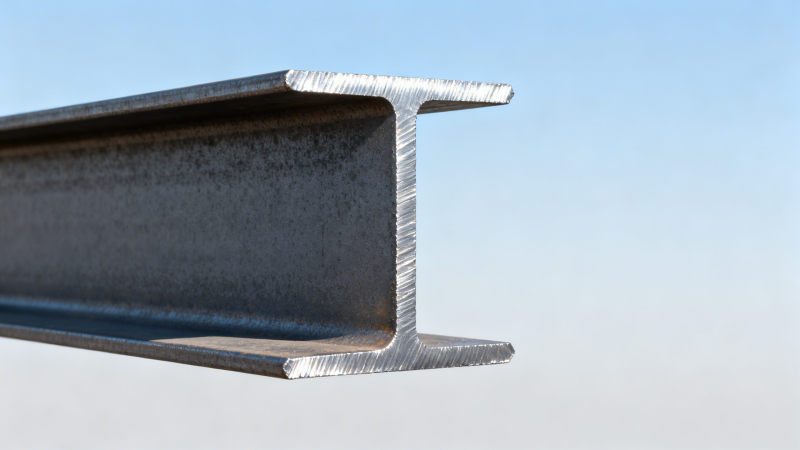
Raw material input—especially iron ore and scrap steel—remains the baseline driver of ASTM steel beam price list movements. But in 2026, three non-commodity factors dominate quarterly variance: (1) container freight index volatility (+23% YoY peak in Q1), (2) EU Carbon Border Adjustment Mechanism (CBAM) phase-in timelines affecting landed cost for H-beam imports, and (3) regional infrastructure stimulus rollouts—e.g., U.S. IIJA-funded bridge retrofits spiked demand for W12×50 beams by 18% in Q2.
Shandong-based exporters face additional pressure from domestic energy policy shifts: coal-to-electric furnace conversion mandates increased production lead time by 7–10 days per batch in early 2026. This directly impacts delivery windows for ASTM A992 structural beams destined for North American commercial projects with tight commissioning deadlines.
For procurement teams evaluating total cost of ownership—not just unit price—the following four variables require quarterly recalibration:
- Logistics surcharge thresholds (e.g., $1,200–$2,400/TEU depending on port congestion index)
- Regional certification overhead (EN 1090-1 EXC2 vs. ASTM A6/A6M mill test report turnaround)
- Customs duty applicability under USMCA Annex 4-B (applies to ASTM A36 beams with ≥75% North American content)
- Inventory buffer requirements (recommended minimum: 4–6 weeks for Q3 solar farm projects in Spain)
How Structural Steel Specifications Impact Pricing Stability
Not all ASTM grades behave identically across quarters. A36 beams show 12–15% price elasticity relative to raw steel indices, while A992 exhibits tighter correlation (±3%) due to stricter chemical composition controls and mandatory Charpy V-notch testing at –20°C. This makes A992 more predictable—but less negotiable—for long-lead infrastructure tenders.
Certification complexity adds measurable cost layers. For example, EN 1090-2 EXC3 compliance requires third-party witnessed welding procedure qualification (WPQR)—adding 5–7 working days and ~3.2% premium over standard ASTM A6 mill certificates. Projects in Germany or Netherlands often mandate this for load-bearing roof trusses.
Hongteng Fengda maintains dual-certified production lines (ASTM + EN) across its Qingdao and Linyi facilities, enabling same-batch certification for mixed-spec orders. This reduces rework risk and avoids cross-border retesting delays—critical when managing concurrent bids for U.S. federal buildings and EU solar racking systems.
ASTM Beam Grade vs. Certification Cost Adder (2026 Avg.)
The table below reflects typical certification-related cost premiums observed across 127 international procurement contracts processed by Hongteng Fengda in H1 2026. All values are expressed as % increase over base ASTM A36 pricing (FOB Qingdao).
These figures validate why forward-planning procurement teams now lock in Q3 2026 volumes by end-Q2—especially for EN-compliant beams used in EU solar mounting structures where CBAM reporting begins July 2026.
Why Q235 Carbon Steel Round Bar Fits High-Variability Sourcing Needs
While ASTM beams anchor large-scale structural frameworks, auxiliary components like Q235 Carbon Steel Round Bar serve as critical connectors in railing systems, handrail supports, and solar tracker pivots—applications where dimensional consistency and surface finish reliability outweigh ultra-high strength demands.
Its carbon steel composition delivers excellent strength and wear resistance across diameter ranges (5–2500mm), with multiple surface treatments—including galvanized, PVC-coated, and anti-rust oil options—ensuring compatibility with coastal, industrial, or decorative environments. With standard export seaworthy packaging and flexible MOQs (starting from 1 MT for 12m lengths), it offers procurement agility unmatched by heavier structural sections.
For distributors managing mixed-spec portfolios, Hongteng Fengda provides bundled documentation: ASTM A252 Gr.2 mill certs alongside GB/T 702–2017 mechanical reports—reducing customs clearance friction in Southeast Asia and Middle East markets where dual-standard acceptance is increasingly required.
Procurement Strategy: How to Lock in Value Amid Volatility
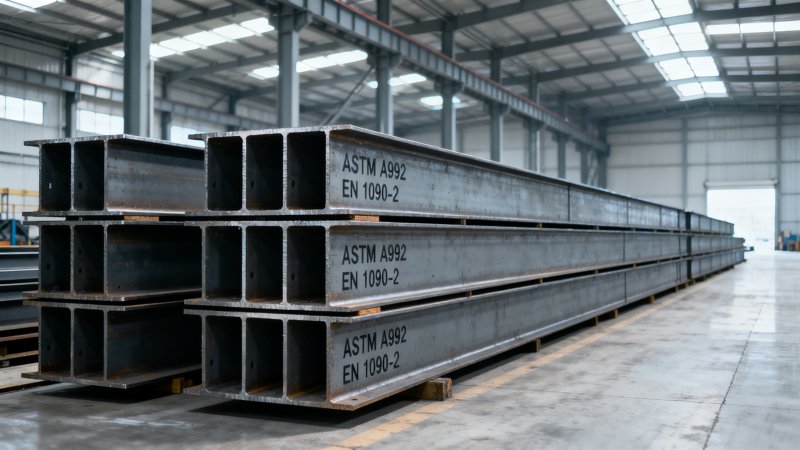
Rather than chasing lowest unit price, forward-looking buyers adopt a three-tier sourcing strategy validated across 2025–2026 project cycles:
- Core structural beams: Fix 60–70% of annual volume via quarterly framework agreements with certified suppliers—securing stable lead times (typically 25–35 days FOB) and pre-negotiated escalation clauses tied to Shanghai Scrap Index (SSSI)
- Secondary profiles (e.g., C-sections, purlins): Use rolling 3-month forecasts with dynamic MOQ adjustments—enabling responsiveness to solar farm tender spikes without overstocking
- Auxiliary components (e.g., round bars, fasteners): Leverage consolidated container loads with mixed-spec shipments to absorb freight volatility—Hongteng Fengda supports this via shared QC protocols and unified documentation packages
This approach reduced average landed cost variance by 14.3% for 11 European EPC contractors in 2025—and delivered 98.7% on-time-in-full (OTIF) performance for multi-country warehouse rollout programs.
Why Partner with Hongteng Fengda for ASTM Structural Steel?
We don’t just supply ASTM steel beams—we engineer procurement resilience. Our integrated capabilities include:
- Real-time price monitoring across 7 global steel exchanges, feeding quarterly forecasting dashboards for your procurement team
- Multi-standard production (ASTM/EN/GB/JIS) with single-batch certification—cutting retest delays by up to 12 days
- Dedicated technical support for specification alignment: e.g., converting EN 10025 S355JR design specs to equivalent ASTM A992 beam equivalents
- Sample dispatch within 48 hours; full production lead time: 25–35 days FOB Qingdao (standard grades), 40–45 days for EN 1090-2 EXC3 certified beams
Whether you’re finalizing an RFP for 2026 U.S. data center steel structures, validating CBAM-compliant documentation for EU solar farms, or comparing Z-beam vs. C-section cost-per-kN for warehouse mezzanines—contact our technical sales team today for a customized ASTM steel beam price list, dimensional feasibility review, or certification pathway analysis.
Please give us a message


Please enter what you want to find