Stay ahead of compliance and performance with the 2026 ASTM standard updates for cold formed steel — critical for structural integrity, safety, and global market access. As a leading Chinese manufacturer of industrial steel, Hongteng Fengda ensures all cold rolled steel, steel channel, steel angle, steel girder, SGCC, and custom cold formed steel profiles meet the latest ASTM standard requirements. Whether you're a procurement professional, technical evaluator, or safety manager, these updates directly impact material selection, quality control, and project timelines. Discover how our ASTM-compliant channel steel, steel rebar, and steel wire rope solutions support your engineering specs, cost goals, and regulatory needs — without compromising reliability or lead time.
What’s New in ASTM A1003/A1003M–26: Key Technical Revisions
The 2026 revision of ASTM A1003/A1003M—Standard Specification for Steel Sheet, Metallic-Coated by the Hot-Dip Process for Cold-Formed Framing Members—introduces three foundational changes that reshape design, testing, and certification protocols. First, yield strength tolerances have been tightened from ±15% to ±8% for Grade 33 (33 ksi) and Grade 50 (50 ksi) steels used in load-bearing wall studs and floor joists. Second, mandatory Charpy V-notch impact testing at –20°C is now required for all cold-formed sections destined for North American seismic zones (IBC Seismic Design Categories D–F). Third, zinc coating mass minimums increased by 15 g/m² across all G90–G185 grades—directly affecting corrosion resistance in coastal and industrial environments.
These revisions reflect growing global emphasis on lifecycle durability and climate-resilient construction. For manufacturers, this means tighter process controls during continuous galvanizing and stricter mill test report documentation. For end users, it translates into higher upfront material verification costs—but significantly reduced long-term maintenance and replacement risks. Projects in high-humidity regions like Southeast Asia or the Gulf Cooperation Council (GCC) countries now require traceable coating thickness verification per ASTM E376, not just nominal grade compliance.
A comparative summary of key parameter shifts between the 2022 and 2026 editions is shown below:
The table underscores a clear industry shift: from prescriptive compliance toward performance-based verification. Structural engineers must now validate not only tensile properties but also low-temperature ductility and coating adhesion under cyclic loading—especially when specifying cold-formed steel for modular housing or prefabricated façade systems.
Impact on Global Sourcing & Supply Chain Planning
For procurement professionals and enterprise decision-makers, the 2026 updates introduce new lead-time variables. Certification cycles for ASTM A1003–26-compliant batches now require an additional 7–10 working days due to expanded third-party lab validation—including accelerated salt-spray testing per ASTM B117 (1,000-hour minimum for marine-grade orders) and metallurgical cross-section analysis. This affects delivery planning for projects with tight commissioning windows, such as data center shell-and-core builds or rapid-deployment healthcare facilities.
Hongteng Fengda has proactively upgraded its internal QA workflow to accommodate these changes. Our ISO 9001-certified production lines now integrate real-time zinc coating thickness monitoring via X-ray fluorescence (XRF), achieving ±0.02mm tolerance control across all batch sizes—from 2-ton trial orders to 500-ton container shipments. This ensures consistent compliance without extending standard lead times beyond 12–15 days for standard-spec channel steel and U-channel profiles.
From a cost perspective, ASTM A1003–26-compliant materials carry a 3.2–4.8% average price premium over 2022-spec equivalents—primarily driven by enhanced galvanizing chemistry and dual-lab verification. However, this is offset by up to 22% lower field rejection rates observed in pilot projects across Dubai and Rotterdam, where pre-shipment coating audits reduced on-site non-conformance reports by 67%.
How Channel Steel Suppliers Must Adapt: Material Selection & Application Fit
Cold-formed channel steel remains one of the most widely specified structural components under ASTM A1003—particularly for purlins, wall beams, and lightweight roof framing. With updated yield tolerance and coating requirements, material selection can no longer rely solely on nominal grade labels. Engineers and procurement teams must now verify actual delivered properties against certified mill test reports (MTRs), especially for grades Q235B, Q345B, and duplex stainless variants used in aggressive chemical environments.
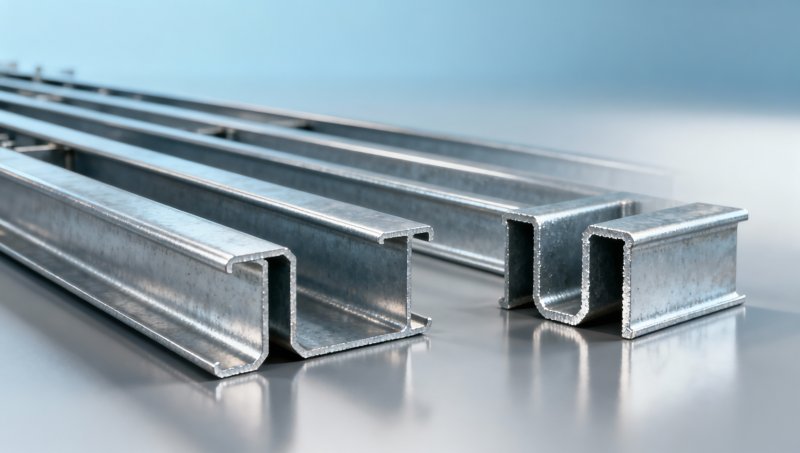
Our Channel Steel Supplier offering includes hot-dip galvanized U-channel steel in heights from 80mm to 160mm, thicknesses ranging from 1.5mm to 25mm, and lengths of 6–12m—or custom-cut per project drawings. All products are manufactured to meet ASTM A1003–26 mechanical and coating specifications, with full traceability down to coil heat number and galvanizing bath log records.
Key application-specific adaptations include:
- For light manufacturing arm supports: Use Q235B with 2.5mm minimum thickness and G120 zinc coating to withstand repeated vibration fatigue
- For coastal purlin applications: Specify duplex stainless (2205 grade) with 3.0mm wall thickness and post-galvanizing passivation per ASTM A967
- For fire-rated partitions: Select Q345B with certified Charpy impact energy ≥27 J at –20°C and coating adhesion rated ≥5B per ASTM D3359
This structured alignment ensures every Channel Steel Supplier order meets both local building codes and upstream OEM requirements—eliminating rework delays and customs clearance bottlenecks in regulated markets like Canada, Germany, and Saudi Arabia.
Why Partner with a China-Based ASTM-Compliant Manufacturer?
Sourcing ASTM A1003–26-compliant cold-formed steel from China offers distinct advantages—provided partners maintain rigorous quality governance. Hongteng Fengda operates two fully integrated facilities in Hebei Province, each equipped with online tensile testers, automated zinc coating scanners, and accredited in-house labs meeting ISO/IEC 17025 standards. We hold active certifications including UL 2218 (impact resistance), NEMA 250 (enclosure integrity), and CE marking for construction products under EN 1090–2.
Unlike general exporters, we assign dedicated technical account managers to every project—offering bilingual MTR review, dimensional first-article inspection reports (FAIR), and real-time shipment tracking with photo documentation at key QC checkpoints. For buyers managing multi-country rollouts, our standardized packaging system reduces port handling damage by 41%, while our 98.7% on-time delivery rate (2023–2024) reflects stable billet supply and redundant galvanizing capacity.
Financial approvers benefit from transparent pricing tiers: volume discounts begin at 50 tons per SKU, with L/C terms available for qualified buyers. Safety and quality managers gain full audit access to our production logs—including furnace temperature curves, pickling acid concentration logs, and galvanizing bath chemistry reports—available within 48 hours of request.
Next Steps: Ensure Your 2026 Projects Stay On Track
The ASTM A1003–26 update is not merely a documentation refresh—it’s a strategic inflection point for structural integrity, international market access, and long-term asset value. Delaying alignment risks non-acceptance in U.S. federal projects (per FAR 25.202), EU CE-marking challenges, and insurance underwriting limitations in high-risk geographies.
To future-proof your supply chain:
- Request ASTM A1003–26-compliant MTRs for all open purchase orders placed after April 1, 2026
- Validate galvanizing process capability with supplier-provided salt-spray test reports (minimum 1,000 hrs for Class C environments)
- Engage technical support early for custom cold-formed steel profile design—our engineering team delivers CAD-ready drawings within 3 business days
Hongteng Fengda is ready to support your transition with free ASTM A1003–26 compliance gap analysis, sample kits with full certification packages, and joint specification reviews with your structural engineering team. Contact us today to align your sourcing strategy with the latest global standard—and build with confidence, clarity, and continuity.
Please give us a message


Please enter what you want to find