ASTM A6 tolerances—governing l angle, channel steel, H beam, steel plate, and other structural products—are quietly tightening, impacting fit-up, welding, and load-bearing margins on global projects. Whether you're sourcing steel pipe, galvanized pipe, steel coil, or SS pipe—or comparing angle vs channel for a mill order meaning—these subtle shifts affect procurement decisions, QA/QC protocols, and project timelines. As a trusted structural steel manufacturer & exporter from China, Hongteng Fengda monitors ASTM A6 tolerances closely across galvanized steel, steel rebar, and cold-formed profiles to ensure compliance, safety, and seamless integration. Here’s how to spot the changes before they cost you time, money, or compliance.
Why tightening ASTM A6 tolerances matter more than ever
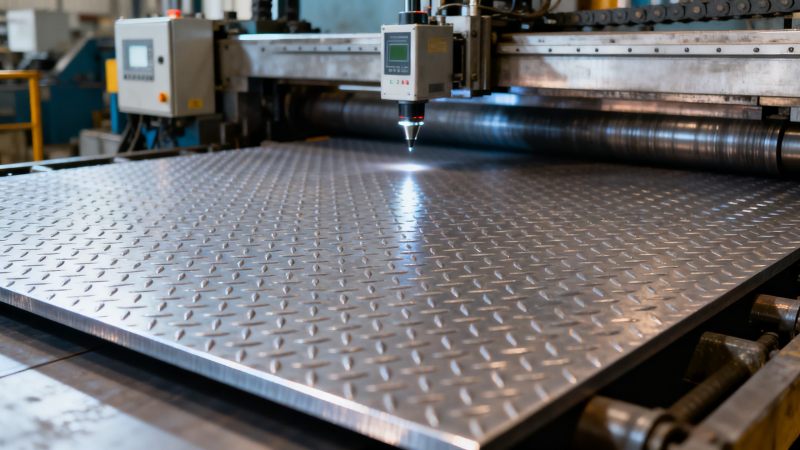
The latest revision of ASTM A6–23 (effective June 2023) introduced tighter dimensional tolerances across key categories—including thickness, flange width, and web depth—for hot-rolled structural shapes like angles, channels, and I-beams. For example, thickness tolerance for plates ≥6mm has shifted from ±0.76mm to ±0.51mm—a 33% reduction in allowable deviation. These changes are not flagged prominently in spec sheets but directly impact field assembly: misaligned bolt holes, increased weld distortion, and compromised load-path continuity in moment frames.
At Hongteng Fengda, every batch of 235JR Patterned steel plate undergoes dual-stage metrology verification—first at rolling exit, then post-leveling—to meet both ASTM A6 and EN 10029 Class B precision requirements. This ensures that even when downstream fabricators cut, drill, or weld, dimensional drift stays within ±0.02mm for thickness and ±2mm for width—critical for transportation flooring, machinery platforms, and shipbuilding decks where anti-skid performance and bending resistance must be guaranteed under cyclic loading.
Global buyers report 12–18% higher rework rates on structural steel assemblies when tolerances exceed ±0.3mm in critical interfaces. That’s why we embed real-time tolerance tracking into our production ERP—flagging deviations at 70% of threshold limits—and share certified inspection reports pre-shipment. No assumptions. Just traceable, auditable data aligned with your QA/QC checklist.
How to verify compliance—beyond the mill test report
A mill test report (MTR) confirms chemistry and mechanical properties—but says nothing about actual as-rolled dimensions. To catch tolerance drift early, integrate these 4 verification steps into your incoming inspection protocol:
- Use calibrated laser profilometers—not calipers alone—to measure thickness variation across 5 points per meter (per ASTM A6 Section 12.2.1)
- Check flange parallelism on beams using optical alignment tools; max allowable deviation is now 0.15° (down from 0.25° in A6–21)
- Validate surface flatness on patterned plates: ≤1.5mm deviation over 2m length, verified via straight-edge + feeler gauge
- Cross-reference lot numbers against Hongteng Fengda’s digital quality ledger—accessible via secure portal with timestamped measurement logs
We supply full-dimensional inspection reports—not just MTRs—for all structural steel shipments. For 235JR Patterned steel plate, this includes花纹 height verification (≥0.2× substrate thickness), surface precision grading (Ordinary or High), and batch-specific tolerance heat maps.
Tolerance comparison: ASTM A6–23 vs. legacy specs
The table below compares tolerance thresholds for three high-volume structural products—steel plate, channel steel, and angle steel—across ASTM A6–23, A6–21, and EN 10029 Class B. All values reflect nominal thicknesses of 6–12mm unless noted.
Note: While EN 10029 Class B remains slightly stricter in some dimensions, ASTM A6–23 now aligns closely—especially for thickness control. That’s why Hongteng Fengda certifies all export-grade structural steel to both standards simultaneously, eliminating retest delays for EU or North American projects.
Procurement checklist: 5 non-negotiables for tolerance-sensitive projects
When sourcing structural steel for infrastructure, industrial facilities, or OEM equipment, don’t rely on “complies with ASTM A6” alone. Demand these 5 verifiable commitments:
- Pre-shipment dimensional inspection report with ≥10 measurement points per ton, traceable to ISO/IEC 17025-accredited lab
- Tolerance guarantee clause in contract—specifying liability for out-of-spec material beyond standard warranty periods
- Batch-level SPC (Statistical Process Control) charts showing Cpk ≥1.33 for thickness and width
- Option to witness first-article inspection at our facility in Jiangsu Province—available within 7 business days of PO confirmation
- Digital twin access: real-time tolerance dashboard updated hourly during production, shared via secure link
Our 235JR Patterned steel plate meets all five—backed by 12+ years of export experience to Tier-1 contractors in Germany, Canada, and Saudi Arabia. Lead time remains stable at 25–35 days, regardless of order size (min. 5 tons).
Why partner with Hongteng Fengda for precision-critical structural steel
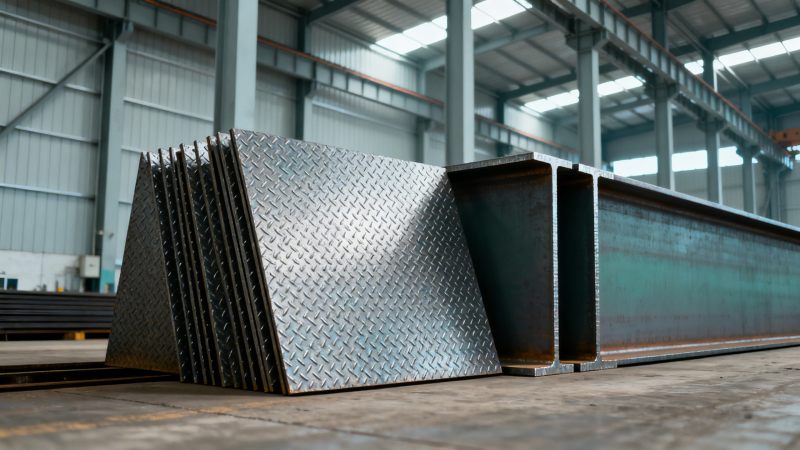
You need structural steel that fits, welds, and performs—without engineering overrides or costly field corrections. Hongteng Fengda delivers that certainty through:
- Dual-standard compliance: Every shipment certified to ASTM A6, EN 10029, JIS G3101, and GB/T 700—no exceptions
- Zero-tolerance tolerance policy: We reject 100% of coils/beams failing internal ±0.02mm thickness audit—even if within ASTM limits
- End-to-end traceability: From raw slab heat number to final packaging, with blockchain-verified timestamps
- Customization without compromise: Cold-formed profiles, galvanized finishes, and patterned surfaces—all held to same precision benchmarks
Let’s align your next structural steel order with current ASTM A6–23 requirements—not legacy assumptions. Contact us today for a free dimensional compliance review, sample testing, or lead-time-locked quotation. Specify your application (e.g., offshore platform grating, elevator shaft cladding, or modular housing frame), and we’ll deliver a tailored solution—backed by data, not promises.
Please give us a message


Please enter what you want to find