Many corrosion problems in 304L stainless steel pipe do not appear during installation but emerge much later under real service conditions. For after-sales maintenance teams, understanding these delayed warning signs is essential to preventing leaks, downtime, and costly replacements. This article explains why late-stage corrosion happens, what conditions trigger it, and how to identify risks before damage spreads.
Why 304L Stainless Steel Pipe Can Corrode Late
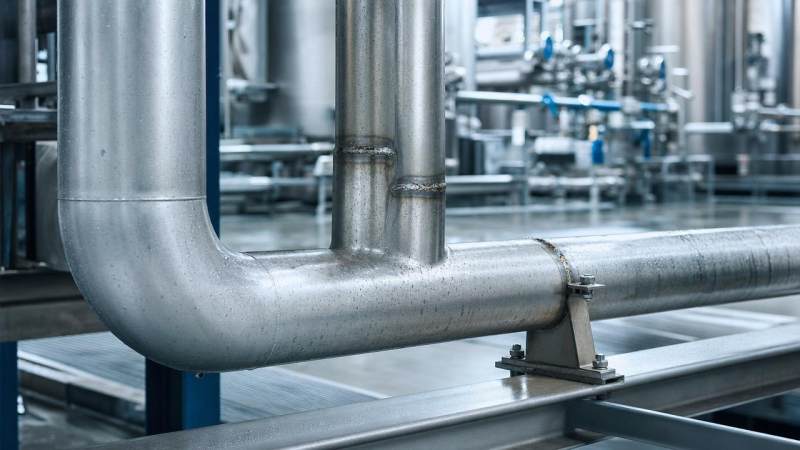
304L stainless steel pipe is widely selected for its low carbon content, weldability, and balanced corrosion resistance in many steel-related industrial systems.
However, corrosion resistance is not the same as corrosion immunity. The passive chromium oxide film can weaken over time under aggressive service conditions.
That delay creates risk. A pipe may look acceptable at delivery, during fabrication, and even after commissioning, yet hidden attack may already be developing.
In many steel systems, delayed damage appears where moisture, chloride deposits, weld discoloration, or stagnant media remain undetected for months or years.
Because 304L stainless steel pipe often works in humid, chemical, outdoor, and mixed-metal environments, late corrosion must be assessed as a lifecycle issue.
Basic Corrosion Mechanisms Behind Delayed Damage
The most common late-stage problems in 304L stainless steel pipe are usually localized, not uniform. That makes them harder to detect early.
Pitting corrosion
Pitting starts at weak spots in the passive film. Chlorides, deposits, or surface contamination often trigger tiny cavities that grow deeper with time.
Crevice corrosion
This occurs in tight gaps near gaskets, clamps, supports, lap joints, or threaded areas. Oxygen depletion inside the crevice accelerates local attack.
Stress corrosion cracking
When tensile stress combines with chloride exposure and elevated temperature, cracks may form unexpectedly, even if the surface appears relatively clean.
Galvanic corrosion
If 304L stainless steel pipe contacts more active metals in a wet environment, electrochemical differences can accelerate attack at connection points.
Weld-related corrosion
Poor pickling, heat tint, rough weld profiles, and trapped residues can reduce corrosion resistance near welds, where later leakage often begins.
Service Conditions That Trigger Problems After Installation
Most delayed failures come from actual operating conditions rather than from the base material alone. Environment, fabrication, and maintenance all matter.
- Chloride-bearing water, sea air, cleaning agents, or process chemicals
- Intermittent wet-dry cycles that concentrate salts on pipe surfaces
- Insulation systems that trap moisture against the metal
- Dead legs, low flow sections, and stagnant process zones
- Surface iron contamination from carbon steel handling tools
- High operating temperature combined with residual stress
Even a strong product choice can underperform if design details allow water retention or if cleaning leaves corrosive residues behind.
This principle also applies across steel applications. In rail-related structures, durability depends on matching material, environment, and surface condition carefully.
For example, Rail products for railway rail, bridge railings, or deck handrails require proper finish selection, dimensional control, and dependable standards compliance.
Typical options include carbon steel or medium manganese steel, with lengths from 12m to 30m, thickness from 3mm to 24mm, and finishes such as oil, black, galvanized, or painted.
The broader lesson is clear: steel performance in service depends not only on specification, but on realistic exposure, fabrication quality, and maintenance planning.
Warning Signs That Often Appear Too Late
The challenge with 304L stainless steel pipe is that visible symptoms may lag behind actual damage. Early signs are often subtle and easy to dismiss.
If these signs appear, the issue may already extend beneath the surface. Waiting for obvious wall loss often means repair costs rise sharply.
Industry Relevance for Steel Systems and Long-Term Operation
In the steel industry, long-term reliability matters as much as initial strength. Pipe corrosion affects schedules, safety margins, fluid control, and maintenance budgets.
304L stainless steel pipe is common in water treatment, food processing, chemical support lines, construction services, and fabricated steel assemblies.
Its value remains high because it offers good formability, welding performance, and broad availability. Still, wrong environmental assumptions can reduce service life.
- Delayed corrosion can interrupt plant uptime unexpectedly.
- Replacement work often affects nearby structural steel and supports.
- Leak events may damage insulation, coatings, and connected equipment.
- Post-failure analysis usually costs more than preventive inspection.
For global steel sourcing, quality consistency also matters. Material traceability, surface protection, and fabrication control influence corrosion performance after delivery.
Hongteng Fengda, a structural steel manufacturer and exporter from China, supports international projects with reliable steel products, customized solutions, and stable quality control.
With production aligned to ASTM, EN, JIS, and GB standards, dependable steel supply helps reduce sourcing risk across construction and industrial applications.
Typical Scenarios Where 304L Stainless Steel Pipe Requires Extra Attention
Some applications are more likely to reveal late corrosion because operating conditions are variable, wet, warm, or difficult to inspect regularly.
These scenarios do not mean 304L stainless steel pipe is unsuitable. They indicate where preventive controls and better inspection timing are most useful.
Practical Measures to Reduce Late Corrosion Risk
Preventing delayed corrosion starts before installation and continues through operation. Small improvements can significantly extend the service life of 304L stainless steel pipe.
- Control surface cleanliness during storage, cutting, welding, and transport.
- Avoid cross-contamination from carbon steel tools, dust, and contact surfaces.
- Remove weld heat tint properly by pickling, passivation, or approved finishing methods.
- Design systems to minimize crevices, water traps, and stagnant flow zones.
- Review chloride exposure from process fluids, washdowns, and atmospheric sources.
- Inspect insulation condition regularly where hot stainless pipe runs are enclosed.
- Use scheduled visual checks before leaks, stains, or cracks become severe.
Where exposure is unusually severe, material selection may need reassessment. In some conditions, a higher alloy grade performs better than 304L stainless steel pipe.
Operational Next Steps for Better Corrosion Control
A useful next step is to map every 304L stainless steel pipe section by environment, temperature, weld density, and chloride exposure.
Then rank locations by delayed-corrosion probability. Supports, insulation terminations, drains, fittings, and splash zones should move to the front of the list.
Document visual changes over time. Comparing stains, deposits, and local roughness across inspection intervals helps detect corrosion before structural loss increases.
For new steel projects, combine realistic service analysis with qualified fabrication and stable product supply. That approach lowers failure risk across the full operating lifecycle.
When 304L stainless steel pipe is selected, maintained, and inspected with service conditions in mind, it remains a practical and dependable solution for many industrial steel applications.
Please give us a message


Please enter what you want to find