As the 2026 structural steel market evolves, buyers are comparing prefab structural steel, structural steel for construction, and cost benchmarks like I beam weight per foot to improve project planning. From angle iron for shelving to sourcing from a reliable stainless steel sheet supplier, global demand is shifting toward quality, compliance, and supply stability. This outlook highlights the trends, risks, and sourcing priorities shaping steel procurement decisions.
The clearest takeaway for 2026 is this: structural steel demand is expected to remain resilient, but buying conditions will stay more selective than many project owners expect. Price will still matter, yet procurement teams, engineers, and decision-makers are increasingly prioritizing supply continuity, standards compliance, fabrication readiness, and total project risk. For buyers in construction, industrial manufacturing, and infrastructure, the real question is no longer just “Where is the lowest steel price?” but “Which supplier can help us control schedule, quality, and lifecycle cost?”
That shift matters because structural steel is no longer evaluated only as a commodity. Whether the requirement is steel beams for a commercial building, channel steel for industrial framing, or custom profiles for OEM production, the 2026 market will reward buyers who compare technical fit, lead time reliability, export capability, and certification support alongside basic tonnage cost.
What will define the 2026 structural steel market most?
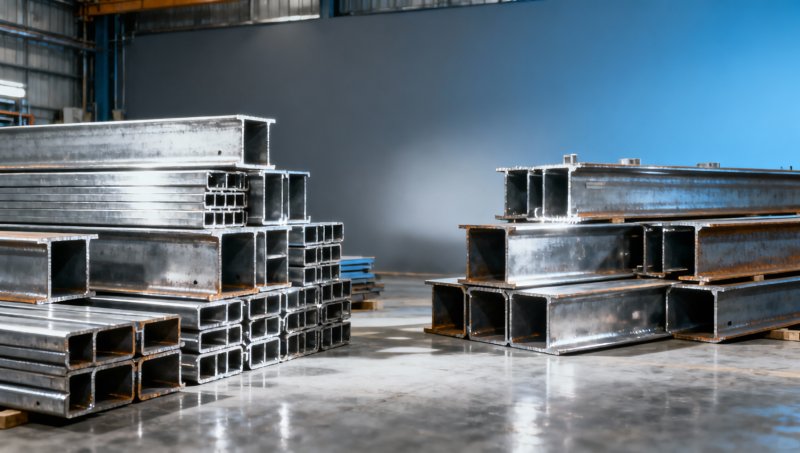
Several forces are likely to shape the structural steel market outlook in 2026.
First, project demand should remain fundamentally supported by urban construction, energy infrastructure, industrial upgrades, warehousing, transport projects, and equipment manufacturing. Even where property markets soften in some regions, public infrastructure, industrial replacement cycles, and export-driven manufacturing can keep structural steel consumption active.
Second, buyers will remain cautious about volatility. Raw material costs, freight rates, exchange-rate changes, and regional policy shifts can still affect steel pricing. That means many purchasers will move toward phased buying, contract-based supply planning, and supplier diversification instead of relying on spot purchases alone.
Third, compliance and traceability will become more important. For global buyers, products meeting ASTM, EN, JIS, and GB standards are easier to evaluate, approve, and integrate into multi-country projects. This is especially important for technical evaluators, quality managers, and project owners who need consistency across repeated orders.
Fourth, fabricated and prefabricated solutions will gain attention. Buyers are increasingly interested in prefab structural steel because it can reduce site labor, shorten construction schedules, and improve installation predictability. In 2026, this will be a practical advantage, not just a design preference.
What are buyers really comparing when sourcing structural steel in 2026?
Search behavior around terms like prefab structural steel, structural steel for construction, and I beam weight per foot shows that most readers are trying to answer one of three practical questions: how much will it cost, will it work for the intended application, and can the supplier deliver reliably?
For procurement teams, the comparison usually includes:
- Product category fit: angle steel, channel steel, steel beams, cold formed steel profiles, or custom structural components
- Weight and cost calculation: section dimensions, theoretical weight, freight efficiency, and installed cost
- Standards and tolerances: whether the steel meets required mechanical and dimensional specifications
- Processing capability: cutting, punching, welding preparation, galvanizing, and OEM fabrication
- Lead time reliability: consistency of production scheduling and export coordination
- Risk control: inspection, quality documentation, packaging, and after-sales response
This means suppliers that only compete on headline price may struggle to win higher-value projects. A low quote loses attractiveness quickly if it creates hidden costs through dimensional inconsistency, weak packaging, delayed shipment, or incomplete documentation.
For example, when buyers check I beam weight per foot, they are often not looking for theory alone. They are estimating freight cost, load-bearing suitability, structural design impact, and cost per installed meter or foot. In other words, technical data supports commercial decisions.
Where are the biggest risks in steel procurement next year?
In 2026, the biggest sourcing risks are likely to come from mismatch rather than outright shortage. Many projects do not fail because steel is unavailable; they fail because the supplied product, documentation, schedule, or finishing condition does not match the project requirement.
Key risks include:
- Specification mismatch: wrong grade, section tolerance, coating, or standard interpretation
- Lead time slippage: especially when procurement starts late or depends on multiple subcontractors
- Price-only decisions: which can increase rejection rates, rework, and replacement cost
- Weak export support: incomplete documents, poor loading plans, or communication delays
- Inconsistent quality across batches: a major issue for distributors and repeat industrial users
For this reason, many experienced buyers are moving toward suppliers with stable production capacity, strict QC systems, and international export experience. For companies sourcing from China, that often means evaluating not just mill capability but also whether the manufacturer can support project-specific customization, inspection requirements, and predictable delivery windows.
A manufacturer with broad structural steel capability can also help buyers consolidate sourcing. For instance, a project may require angle steel for support framing, channel steel for mechanical structures, beams for primary load-bearing use, and custom formed components for installation efficiency. Managing these categories through one qualified partner often reduces coordination cost and quality variation.
How should project teams evaluate structural steel suppliers beyond price?
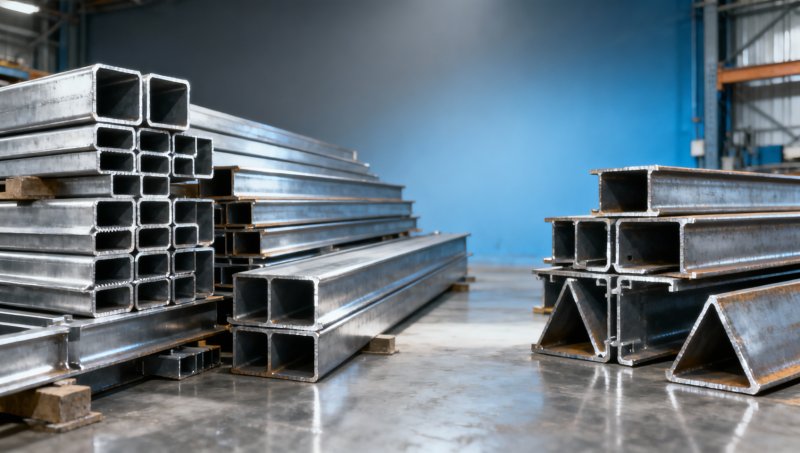
For engineers, purchasers, project managers, and commercial reviewers, a practical supplier evaluation model in 2026 should include five dimensions.
1. Standards compliance
Confirm whether the supplier can deliver to ASTM, EN, JIS, or GB standards as required. Ask for test reports, mill certificates, and tolerance control details. This helps technical and quality teams reduce approval risk.
2. Production and customization capability
Check whether the supplier can provide standard sections and OEM solutions. This is important when the project involves non-standard profiles, prefabricated assemblies, or value-added processing.
3. Delivery reliability
Capacity means little if delivery is unstable. Review realistic production cycles, port arrangements, packaging methods, and shipment experience to your region.
4. Communication and documentation
Fast response, clear drawings, accurate quotations, and complete export documents directly affect procurement efficiency. This is especially important for distributors, international buyers, and project-based orders.
5. Total cost, not just unit price
A better supplier may lower total project cost through fewer claims, lower scrap, reduced delays, and easier installation. That is often more valuable than a small difference in price per ton.
For global construction and industrial buyers, manufacturers such as Hongteng Fengda are competitive when they combine stable structural steel production, customized solutions, and compliance with major international standards. That combination is increasingly relevant in a market where schedule certainty and sourcing confidence are critical.
In some projects, procurement teams also need complementary steel products for lifting, movement, support, or harsh-environment applications. In these cases, it can be useful to review products such as Galvanized Steel Wire Rope for cranes, elevators, mining, marine use, pile-driving, railways, and photovoltaic or fencing systems. Buyers should compare rope construction options such as 6X7+FC, 6X19+IWR, and 8x19S+FC, diameter ranges from 1.0 mm to 22 mm, tensile strength from 1470 MPa to 1960 MPa, and coating choices including plain, electro galvanized, and hot dipped galvanized. For corrosion-sensitive environments, zinc coating class and certifications like ISO 9001, ABS, DIN, EIPS, and GB/T 20116-2008 can significantly affect durability and safety performance.
Why prefab and processed steel solutions are gaining share
Prefab structural steel is gaining attention because it solves real project problems. Labor availability is uncertain in many regions, on-site installation windows are tighter, and project owners want faster commissioning. As a result, pre-cut, pre-drilled, pre-assembled, or project-specific steel packages are often easier to justify than raw material-only purchases.
The main benefits include:
- Shorter installation time on site
- Better dimensional consistency
- Lower field labor cost
- Reduced material waste
- Simpler project coordination
This trend is especially relevant for industrial buildings, warehouses, equipment support frames, utility structures, and export-manufactured assemblies. In these use cases, a structural steel supplier is expected to support both manufacturing and project execution, not simply deliver standard stock.
That is why many buyers in 2026 will favor suppliers that can provide a combination of beams, angle steel, channels, cold formed sections, and customized components with dependable lead times. This model aligns better with modern project delivery than fragmented sourcing.
What should different decision-makers focus on in 2026?
Procurement managers should focus on supplier stability, contract terms, and total landed cost.
Engineers and technical evaluators should verify section suitability, compliance standards, and fabrication accuracy.
Quality and safety teams should prioritize traceability, inspection consistency, and coating or material performance in actual service conditions.
Project managers should evaluate how steel sourcing affects the installation schedule, sequencing, and site efficiency.
Business decision-makers and financial approvers should look at cost predictability, supply risk exposure, and the long-term value of working with a capable manufacturing partner.
Distributors and resellers should pay close attention to repeat-order consistency, packaging quality, and the supplier’s ability to support mixed product demand across markets.
These priorities are different, but they point to the same conclusion: in 2026, the best structural steel sourcing decisions will come from balancing technical compliance, delivery confidence, and commercial value.
2026 structural steel market outlook: practical conclusion for buyers
The 2026 structural steel market is likely to remain active, but buyers should expect continued pressure on margins, schedules, and risk control. Demand will support the market, yet procurement success will depend less on chasing the lowest initial quote and more on selecting suppliers that can deliver compliant products, stable lead times, and practical support for project execution.
For companies buying structural steel for construction, industrial manufacturing, or distribution, the most useful approach is to compare suppliers through a total-value lens: product range, standards compliance, customization ability, export reliability, and consistency over time. Buyers who do that will be better positioned to control costs, reduce sourcing risk, and keep projects moving in 2026.
In short, the outlook is not simply about whether steel prices rise or fall. It is about whether your sourcing strategy is strong enough to turn market uncertainty into project certainty.
Please give us a message


Please enter what you want to find