When comparing Z section steel and C purlin for structural applications, technical buyers need to look beyond shape alone.
Load distribution, span capability, connection efficiency, and material utilization all affect project performance and cost.
This guide explains how Z section steel is being evaluated today against C purlin under changing construction demands.
Faster installation, longer spans, lighter structures, and stricter standards are reshaping how steel profiles are selected worldwide.
Why the comparison between Z section steel and C purlin is becoming more important
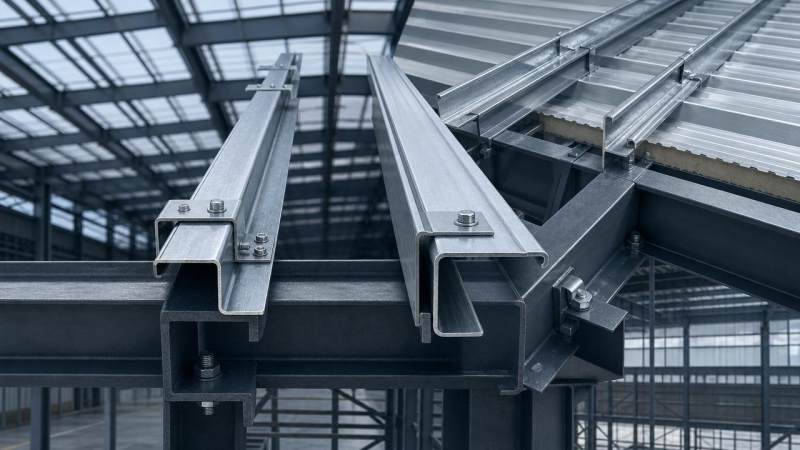
Steel building systems are moving toward optimized sections rather than oversized components.
That shift makes Z section steel a frequent topic in warehouses, workshops, agricultural buildings, and industrial expansions.
C purlin remains widely used because it is familiar, simple, and easy to detail.
However, more projects now require better span efficiency, lower dead load, and stronger continuity at overlapping joints.
In that context, Z section steel often enters evaluation for roofs and wall framing where performance per ton matters.
What current project signals reveal about profile selection
Recent project decisions show a clear trend toward engineering-based section comparison.
Selection is less about habit and more about total structural efficiency.
- Longer roof spans are pushing demand for sections with better overlapping performance.
- Material cost pressure is increasing interest in lighter, optimized cold formed profiles.
- Faster erection schedules favor components that reduce connection complexity.
- International standards are encouraging tighter tolerance and predictable load behavior.
- Export projects often compare Z section steel and C purlin using lifecycle cost, not unit price only.
These signals matter because the wrong section choice can increase steel usage, installation time, and reinforcement requirements.
The technical factors driving the Z section steel decision
The main reasons behind this shift can be summarized through practical engineering factors.
Z section steel is especially valued where continuity across supports can reduce peak moments.
That can improve structural economy without sacrificing strength.
Load path and span behavior matter more than profile shape
Many evaluations begin with geometry, but real performance depends on load path and support conditions.
Z section steel performs well in multi-span arrangements because lapped joints can create stronger continuity.
C purlin may be suitable for simpler, single-span, or lightly loaded framing zones.
When wind uplift, roof slope, and spacing increase, the comparison becomes more technical.
How the comparison affects cost, fabrication, and system design
The choice between Z section steel and C purlin influences more than member strength.
It also changes fabrication planning, connection detailing, transport efficiency, and site sequencing.
- Using Z section steel can reduce overall tonnage in long-run roof systems.
- Using C purlin can simplify repetitive production for smaller conventional structures.
- Connection hardware demand may differ depending on lapping strategy and support spacing.
- Transport stacking and packaging should be reviewed for cold formed section geometry.
In some industrial structures, secondary framing works together with primary members such as I Shaped Beams.
That integration matters because purlin selection should match the stiffness, support points, and load transfer strategy of the main frame.
For industrial structure support, hot rolled beam solutions in carbon steel often complement cold formed members.
Options include grades such as Q235, Q345, SS400, A36, and S235 series under JIS, ASTM, DIN, GB, and EN standards.
Common beam dimensions range from 6 to 12 meters in length with flange widths from 100mm to 400mm.
When secondary members are compared carefully, the primary frame can be optimized more effectively.
What to check first before choosing Z section steel
Several decision points should be reviewed before finalizing the profile.
- Span length and number of continuous supports
- Roof slope, uplift load, and local climate exposure
- Section thickness, coating, and corrosion environment
- Bolt layout, overlap length, and connection accessibility
- Compatibility with main steel frame tolerances
- Regional code requirements and accepted test data
If these items are not aligned, theoretical savings may disappear during fabrication or erection.
Where C purlin still makes practical sense
C purlin is still a valid option in many projects.
It works well in shorter spans, edge members, wall systems, and layouts needing straightforward detailing.
It can also be preferable where site crews want less orientation risk during rapid installation.
The best result often comes from matching each profile to its actual structural role.
How changing project requirements are influencing future steel profile choices
The market is not moving toward one profile only.
It is moving toward more selective use of each section based on measurable outcomes.
Z section steel is likely to gain more attention in projects focused on long spans, reduced weight, and integrated roof engineering.
C purlin will remain relevant where simplicity, short spans, and standardization are prioritized.
The most useful next step is a project-based comparison, not a generic preference
A good decision starts with real span data, loading conditions, support spacing, and code requirements.
That approach shows whether Z section steel offers measurable benefits in your structure.
It also reveals where C purlin remains the more efficient and practical choice.
For global construction and industrial projects, Hongteng Fengda supplies structural steel products with stable quality, international standard compliance, and customized support.
Review section dimensions, steel grade, tolerances, and connection details early to reduce sourcing risk and improve final performance.
If needed, compare Z section steel and related structural members as a full framing system before placing orders.
Please give us a message


Please enter what you want to find