Choosing the right wire mesh sizes is essential for safer site fencing, especially in projects where security, visibility, and durability directly affect daily operations. In steel-intensive construction and industrial environments, fence performance is no longer judged only by whether it marks a boundary. It is now closely linked to access control, worker protection, equipment safeguarding, and long-term maintenance costs. Understanding how wire mesh specifications affect impact resistance, opening size, rigidity, and service life helps create fencing systems that are practical, compliant, and easier to manage from planning through installation.
Why wire mesh sizes are becoming a more critical safety decision
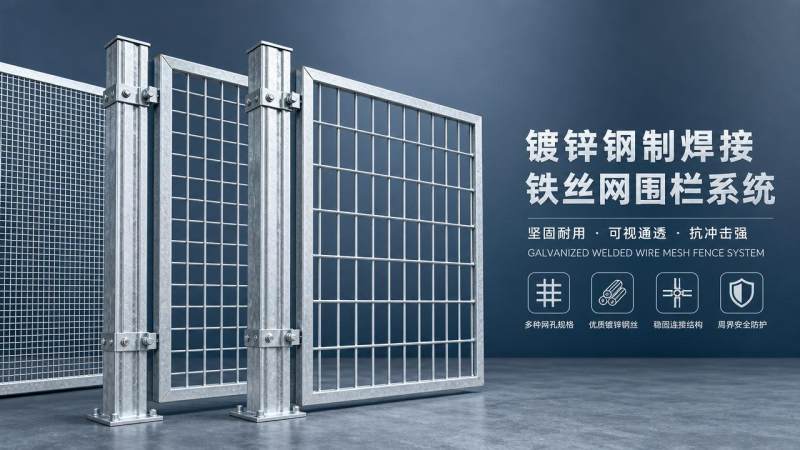
Across construction sites, logistics yards, utility projects, and temporary industrial zones, fencing requirements have changed. Higher movement of people and vehicles, stricter safety inspections, and greater exposure to weather and theft risks all increase the need for better-performing wire mesh fencing. A fence that uses unsuitable mesh openings or inadequate wire diameter may look acceptable at first but can fail under repeated loading, accidental impact, or attempted intrusion.
This shift matters in the steel industry because fencing decisions increasingly involve material strength, coating quality, and fabrication consistency. Site fencing is part of a broader structural safety system, and selecting the correct wire mesh size now supports both operational reliability and project efficiency. Smaller openings can improve anti-climb performance, while heavier wire sections often enhance rigidity. However, overspecifying every area can raise cost and weight unnecessarily. The trend is moving toward balanced selection based on actual site conditions.
The strongest trend signal: performance-based site fencing is replacing one-size-fits-all choices
A clear market signal is the move away from generic fence panels toward performance-based selection. Instead of buying the same wire mesh configuration for every perimeter, more projects are segmenting fencing by risk level. Main gates, public-facing edges, equipment storage zones, and internal work areas often require different mesh sizes and frame strengths.
This change is driven by practical outcomes. Tight wire mesh openings can reduce footholds and improve safety near public access points. Medium openings may preserve airflow and visibility around active construction sections. Heavier gauge welded mesh is often preferred where repeated relocation, wind load, or mechanical contact is expected. In short, the market is recognizing that fence design should reflect function, not habit.
Key factors pushing this change
What different wire mesh sizes mean for site fencing performance
When evaluating wire mesh for site fencing, size should be understood as a combination of opening dimensions, wire diameter, panel format, and steel quality. These factors work together. A larger opening with thick wire may still perform better than a smaller opening made from weak material. That is why specification reviews should focus on total fence behavior rather than a single number.
- Small mesh openings: Better anti-climb behavior, stronger barrier perception, improved containment of debris in active work zones.
- Medium mesh openings: A practical balance for many construction perimeters, offering visibility, ventilation, and moderate security.
- Large mesh openings: Useful where airflow and low weight matter more, but often less suitable for high-risk perimeter control.
- Heavier wire diameter: Typically improves stiffness and resistance to deformation during transport and use.
- Protective coating: Galvanized or coated finishes help preserve wire mesh performance in rain, humidity, and coastal environments.
For many steel-related applications, weld integrity and material consistency are equally important. Quality-controlled steel inputs reduce the chance of weak points at panel intersections and improve long-term reliability. In some manufacturing chains, raw material quality from products such as Wire Rod plays an important supporting role in maintaining stable forming and welding outcomes for mesh-based components and related steel products.
How these changes affect site operations, budgets, and compliance
The impact of wire mesh selection reaches beyond the fence line. On active sites, poor mesh sizing can create hidden costs through panel replacement, unstable sections, repair labor, and delays after inspection issues. By contrast, well-matched wire mesh fencing can reduce intervention frequency and support smoother movement planning around entry points, pedestrian channels, and equipment zones.
Compliance is another major factor. Safety rules may not always prescribe a single mesh opening, but they often require secure segregation, controlled access, and durable barriers. If a fence deforms easily or allows unsafe climbing opportunities, it may fail practical compliance even if it appears adequate on paper. This makes material selection, panel design, and installation spacing a joint decision rather than separate tasks.
- Better-fit mesh sizes can reduce unauthorized access and perimeter weak points.
- Higher rigidity can lower maintenance events in windy or high-traffic areas.
- Appropriate visibility through the mesh can support monitoring and on-site supervision.
- More durable steel fencing can improve lifecycle value even when the initial cost is higher.
The specification points that deserve the closest attention now
Several specification points deserve closer review before finalizing any wire mesh fence design. These are the areas where performance differences usually become visible after installation:
- Opening size versus risk level: Match tighter mesh with public-facing, higher-security, or anti-climb zones.
- Wire diameter and panel weight: Ensure the fence can withstand handling, wind, and accidental impact.
- Steel grade consistency: Stable material properties support reliable welding and structural behavior.
- Coating system: Consider galvanized or equivalent protection based on local climate and project duration.
- Connection details: Clamps, posts, base systems, and bracing often determine whether the mesh performs as intended.
- Supply quality: Consistent steel sourcing helps maintain dimensional accuracy and predictable installation.
For steel product supply chains, this is where experienced manufacturing support matters. Producers with modern facilities, stable process control, and compliance with standards such as ASTM, EN, JIS, and GB are better positioned to provide dependable inputs for fencing and structural applications. Material reliability is especially valuable when projects require repeat orders or mixed specifications.
A practical way to judge the right wire mesh choice for the next project phase
A useful approach is to assess wire mesh needs in phases rather than selecting one universal option. Early-stage groundworks may prioritize rapid installation and relocation. Mid-stage structural work may require stronger segregation around equipment and materials. Final-stage public interface areas may call for tighter mesh and improved appearance. This phased method aligns fence performance with changing site exposure.
It is also worth checking whether upstream steel materials are suitable for downstream forming demands. For example, carbon steel products with good formability and weldability, including selected grades associated with Wire Rod, can support manufacturing consistency in a wide range of industrial and building material applications.
What to do next if safer site fencing is now a priority
The best next step is to review fencing plans through a performance lens. Start by identifying the highest-risk perimeter sections, the expected service duration, exposure conditions, and installation frequency. Then compare wire mesh options based on opening size, wire thickness, coating, and support structure rather than price alone. This creates a clearer balance between safety, durability, and budget control.
For projects that depend on reliable steel supply, it is equally important to work with partners that understand both product standards and application demands. Hongteng Fengda, as a structural steel manufacturer and exporter from China, supports global construction and industrial needs with stable production, strict quality control, and customized steel solutions. When site fencing performance matters, material consistency and dependable delivery can make the difference between a fence that simply exists and one that actively supports safer operations.
In today’s environment, wire mesh selection is no longer a minor detail. It is a visible safety decision, a cost-control decision, and a project execution decision. Reviewing mesh size choices now can help prevent future failures, improve fence service life, and strengthen overall site protection from the ground up.
Please give us a message


Please enter what you want to find