The stainless steel 304 sheet price can vary significantly depending on surface finish, order volume, thickness, and processing requirements. For industrial and construction sourcing, finish is often a hidden cost driver. This article explains how finish changes the stainless steel 304 sheet price and what to review before confirming an order.
Why finish matters in stainless steel 304 sheet pricing
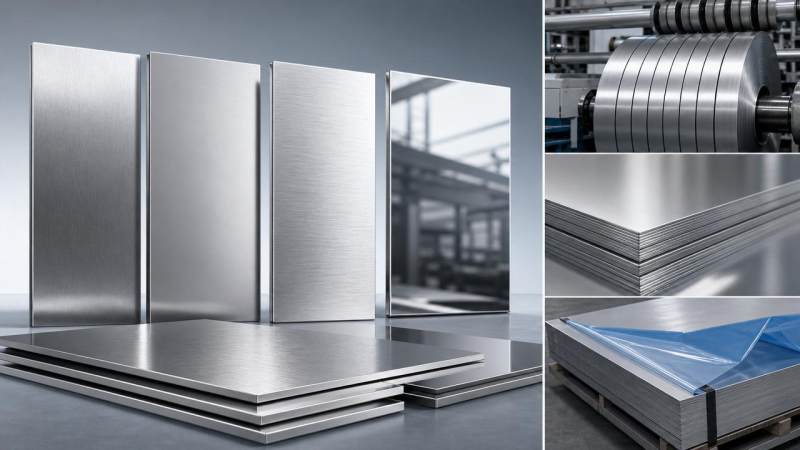
Surface finish affects more than appearance. It changes production steps, polishing time, inspection standards, protective packaging, and scrap rates during fabrication.
That is why the stainless steel 304 sheet price for one finish can differ noticeably from another, even when thickness and sheet size stay the same.
A standard 2B finish usually costs less than brushed, mirror, or patterned material. Extra grinding, film protection, and tighter flatness expectations all add value and cost.
In export trade, finish also affects freight efficiency. Highly decorative sheets often need stronger interleaving, better pallets, and stricter handling to prevent scratches.
Use this checklist before comparing quotations
A usable quotation should not list only grade and size. To compare the stainless steel 304 sheet price accurately, check every item below.
- Confirm the exact finish code, such as 2B, BA, No.4, HL, mirror, or embossed, because each finish uses different processing routes and polishing labor.
- Verify sheet thickness tolerance, since tighter tolerance can increase rolling control requirements and directly influence the stainless steel 304 sheet price.
- Check whether PVC protective film is included, because decorative finishes usually require thicker film and cleaner application conditions before shipment.
- Review width and length carefully, as non-standard dimensions may reduce yield from mother coils and increase cutting loss or edge trimming waste.
- Ask about surface inspection criteria, because premium visual standards for visible-use panels raise sorting time and rejection rates.
- Compare quantity by finish, not just total tonnage, since mixed finish orders may reduce production efficiency and limit bulk pricing.
- Clarify whether slitting, shearing, leveling, or laser cutting is included, because processing services can outweigh base material differences.
- Request packaging details for export, especially for polished surfaces, because wooden cases, paper interleaving, and moisture control add measurable cost.
How common finishes affect cost
2B finish: the reference point
2B is commonly used as the baseline when discussing stainless steel 304 sheet price. It offers a smooth, practical surface for fabrication, tanks, cladding bases, and industrial parts.
Because the process is standardized, supply is usually broad and pricing is more competitive. If appearance is not the main priority, 2B is often the most cost-efficient option.
BA finish: brighter surface, higher care
BA, or bright annealed, has a more reflective surface than 2B. It is often selected for decorative panels, appliances, and applications needing a cleaner visual result.
The stainless steel 304 sheet price for BA is usually higher due to process control, appearance sorting, and more demanding packaging during storage and transport.
No.4 and hairline: decorative but practical
No.4 and hairline finishes require mechanical polishing. These finishes are common in elevators, interior panels, equipment covers, and architectural trim.
Polishing belts, labor hours, directional grain consistency, and defect control all raise the stainless steel 304 sheet price compared with basic mill finishes.
Mirror and embossed: premium finish categories
Mirror sheets need additional polishing passes and stricter defect screening. Embossed sheets add texturing steps and can involve lower production speed.
These finishes usually sit at the higher end of the stainless steel 304 sheet price range, especially when visual uniformity is required across multiple panels.
Application differences that change buying priorities
Industrial fabrication
For tanks, enclosures, ducts, and machine parts, function often matters more than decorative appearance. In these cases, 2B or BA may provide the best value.
It is smarter to compare weldability, flatness, and thickness consistency first, then judge whether the stainless steel 304 sheet price fits the fabrication route.
Architectural and visible-use panels
For façades, lift panels, storefront elements, or interior trim, finish quality becomes central. Small scratches, grain mismatch, or reflection distortion can cause rework.
Here, the stainless steel 304 sheet price should be evaluated together with packaging standard, film quality, and visual acceptance criteria.
Structural support and hybrid steel projects
Some projects combine stainless sheets with carbon steel structural members. In these cases, total material planning matters more than looking at one sheet quote alone.
For support framing in lightweight roofing or wall systems, related profiles may also be needed, such as Z-beam. This Z-shaped steel profile is available in materials including Q235B, Q345B, S275, S355, A36, and A572, with thickness from 6-25mm and length from 2-12m or customized.
Options such as galvanized coated or perforated specifications can support wall beams, purlins, brackets, and light manufacturing structures. Combining stainless cladding decisions with structural steel planning often improves cost control across the whole package.
Commonly ignored cost risks
Ignore finish direction at your own risk. Hairline or brushed sheets need grain alignment, and reversing direction during installation can create visible mismatch.
Overlook protective film quality and damage may appear before installation. Replacing scratched decorative sheets usually costs more than the original price difference.
Treat all quotations as equal and hidden exclusions become a problem. One supplier may include PVC, export pallets, and inspection, while another may not.
Focus only on the lowest stainless steel 304 sheet price and production consistency may suffer. Batch-to-batch color tone and polish uniformity can vary if control is weak.
Miss the link between thickness and finish quality and the final part may deform. Thin polished sheets can show waviness more easily during fabrication or installation.
Practical steps to control the final price
- Standardize your finish requirement in writing, including code, film, grain direction, and acceptance standard before requesting quotes.
- Group demand by finish and size to improve production efficiency and negotiate a better stainless steel 304 sheet price.
- Ask for photos, sample pieces, or coil source information when appearance consistency matters across multiple shipments.
- Compare total landed cost, not just ex-works value, especially for polished or mirror sheets requiring stronger export protection.
- Match finish to function. Avoid paying for decorative polishing if the sheet will be hidden, painted, or heavily fabricated later.
Conclusion
The stainless steel 304 sheet price varies by finish because finish changes labor, process complexity, inspection level, packaging, and risk of damage.
A reliable decision starts with clear finish definitions, realistic application needs, and full quotation comparison. When these points are checked carefully, cost becomes easier to predict and quality becomes easier to secure.
For better results, prepare a specification list covering finish, thickness, dimensions, film, processing, and packaging before requesting the next quotation. That step alone can make the stainless steel 304 sheet price comparison far more accurate.
Please give us a message


Please enter what you want to find