Choosing between standard plate and high strength steel plate is not just a material selection issue. It is a business decision that affects structural performance, transport weight, fabrication time, lifecycle cost, and project risk. In most cases, standard plate remains the practical choice for routine loads and cost-sensitive applications. But when weight reduction, higher load capacity, longer spans, harsh service conditions, or design efficiency matter, high strength steel plate can deliver clear advantages. For decision-makers in construction, industrial equipment, and manufacturing, the key is knowing when those advantages outweigh the higher material price.
This guide explains the real-world situations where high strength steel plate makes more sense than standard plate, what questions buyers should ask before switching, and how to evaluate the total project impact rather than focusing only on price per ton.
When does high strength steel plate make the most business sense?
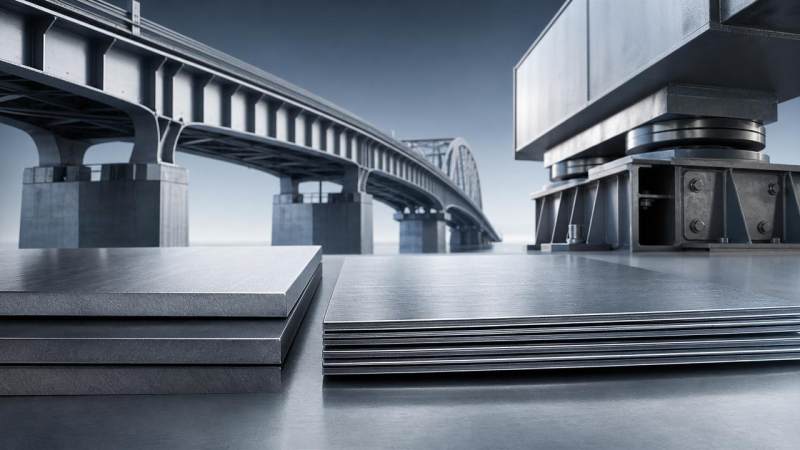
The core search intent behind this topic is practical decision support. Buyers are not simply asking what high strength steel plate is. They want to know when it creates measurable value and when it does not. That usually means comparing it against standard plate in terms of cost, weight, safety margin, fabrication, compliance, and procurement risk.
For enterprise decision-makers, the answer is straightforward: use high strength steel plate when stronger mechanical performance allows you to reduce thickness, lower structural weight, improve load-bearing capacity, or extend service life in a way that offsets the higher unit price. If those benefits are minor or irrelevant to the project, standard plate is often the better commercial choice.
In other words, the right comparison is not material cost alone. It is total installed value. A higher-strength plate may reduce steel consumption, welding volume, transportation cost, crane load, and support requirements. In some projects, those savings are significant enough to improve both budget control and execution speed.
Standard plate vs. high strength steel plate: what is the real difference?
Standard steel plate is widely used because it is versatile, familiar to fabricators, and usually more affordable upfront. It is suitable for general building structures, secondary components, basic supports, tanks, machine frames, and applications where loads are moderate and section size is not a major constraint.
High strength steel plate offers higher yield strength and tensile strength than standard grades. That means engineers can often achieve the same structural function with less material, or achieve greater performance using the same dimensions. The result may include lighter structures, better resistance to heavy loads, and improved structural efficiency.
However, stronger is not automatically better. Some high strength grades may require more attention in welding procedures, forming processes, or low-temperature service verification. The commercial value appears when the project actually benefits from the added performance. That is why application context matters more than broad claims.
Use it when reducing structural weight creates downstream savings
One of the strongest reasons to choose high strength steel plate is weight reduction. In bridges, heavy equipment, transport structures, offshore modules, lifting systems, and large-span building frames, reducing dead load can create savings throughout the project.
Lighter structures may need smaller foundations, less reinforcement, lower transport cost, and easier installation. This is especially valuable in export projects, modular construction, and remote-site delivery, where logistics are a major cost driver. Even if the steel itself costs more per ton, the total delivered and installed cost may decrease.
For example, when a design team can reduce plate thickness without compromising strength, they may lower the total tonnage required. That can affect not only raw material consumption but also handling, storage, erection time, and crane planning. For large-volume projects, these secondary savings can be commercially important.
Use it when load demands are high and section size must be controlled
Some projects cannot simply use thicker standard plate because dimensional limits, clearance requirements, or weight restrictions make that impractical. In these cases, high strength steel plate becomes a design enabler.
This is common in industrial plants, heavy machinery bases, crane components, mining equipment, pressure-related structural parts, and support members exposed to concentrated loads. If the structure must carry more force without becoming larger or heavier, a higher-strength material may be the most efficient solution.
Decision-makers should pay attention to this point in space-constrained environments. If increasing section size creates interference with mechanical systems, transport dimensions, or architectural layouts, switching to a stronger plate may be more cost-effective than redesigning the whole assembly.
Use it when long spans or fatigue performance matter
High strength steel plate is often considered for bridges, platforms, large industrial frames, and dynamic load structures where long spans or repeated stress cycles are part of the design challenge. In these applications, reducing self-weight while maintaining strength can improve overall performance.
Fatigue-sensitive structures deserve special evaluation. Repeated loading from traffic, vibration, lifting operations, or machinery movement can shorten service life if the design is not optimized. While material strength alone does not solve all fatigue issues, high strength steel plate can support a more efficient structural design when combined with proper detailing and fabrication quality.
For buyers, this means the question should not be “Is higher strength available?” but “Will higher strength improve service performance enough to justify the switch?” In long-life infrastructure or mission-critical industrial structures, that answer is often yes.
Use it when lifecycle cost matters more than purchase price
Many procurement teams still compare materials mainly by per-ton cost. That approach can miss the bigger financial picture. High strength steel plate should be evaluated on lifecycle economics, not only initial purchase price.
If a stronger plate helps reduce maintenance, improve durability, extend replacement intervals, or lower failure risk, it may produce better long-term value. This is particularly relevant for structures exposed to heavy use, difficult maintenance access, or expensive downtime. In those situations, reliability has direct monetary value.
Industries such as infrastructure, energy, industrial manufacturing, and engineered steel structures increasingly make material decisions based on total cost of ownership. A cheaper plate that leads to heavier assemblies, more welding, or shorter service life may be less competitive over time.
When standard plate is still the better option
Standard plate remains the right choice for many projects. If loads are moderate, weight is not a major issue, fabrication simplicity matters more than material optimization, and the project is highly price-sensitive, standard plate often delivers the best balance.
This includes routine structural supports, general building applications, non-critical fabricated parts, and projects where local fabrication capacity is optimized for conventional grades. If no meaningful reduction in tonnage, dimensions, or maintenance can be achieved, using high strength steel plate may add complexity without producing enough return.
Decision-makers should also be cautious when the supply chain for specialized grades is less stable than for common plate. Reliable lead times, certification, and technical support are essential. A theoretically better material does not help if it disrupts project execution.
What questions should buyers ask before specifying high strength steel plate?
The best sourcing decisions come from structured evaluation. Before switching from standard plate, buyers should ask several practical questions.
First, will higher strength reduce total steel tonnage or component thickness in a meaningful way? Second, will that reduction lower transport, welding, installation, or foundation costs? Third, are fabrication partners equipped to process the selected grade correctly? Fourth, does the project require compliance with ASTM, EN, JIS, or other standards that affect grade selection and documentation?
Fifth, what is the operational environment? If the structure will face low temperatures, heavy dynamic loads, corrosion exposure, or strict safety requirements, the plate must be evaluated beyond basic strength values. Finally, is the supplier able to provide stable quality, traceability, and consistent delivery for the required volume?
These questions matter because the success of high strength steel plate depends on execution. The material itself may be superior, but poor specification alignment or weak supplier control can eliminate the expected benefit.
How fabrication and downstream materials influence the decision
Material selection should never happen in isolation. The decision to use high strength steel plate affects welding procedures, cutting parameters, forming limits, and the compatibility of surrounding structural materials. For example, if the main structure is optimized for higher-strength plate, related reinforcement and support elements should also be evaluated for overall system efficiency.
In reinforced concrete and composite construction, coordination between steel plate structures and reinforcement materials is also important. For projects involving foundations, beams, columns, walls, and slabs, buyers often review complementary products such as Rebar to ensure the full structural package meets design and compliance targets.
Available in grades such as HRB335, HRB400, and HRB500, with applications across civil engineering construction, bridges, roads, railways, tunnels, dams, and public facilities, this type of reinforcement supports broader project integration. Decision-makers benefit when they source from manufacturers that understand both plate performance and the surrounding structural system, because that reduces coordination risk and improves specification consistency.
How to make a smarter sourcing decision
A smart sourcing process starts with engineering intent and ends with commercial validation. Buyers should begin by identifying whether the project goal is weight reduction, higher load capacity, longer span, durability improvement, or lifecycle cost optimization. Once the main goal is clear, it becomes easier to judge whether high strength steel plate provides real value.
Next, compare options using a total project model rather than a simple material quote. Include tonnage, fabrication complexity, weld volume, transport cost, erection efficiency, maintenance expectations, and schedule impact. In many cases, the most expensive line item per ton is not the most expensive choice overall.
Supplier selection is equally important. A qualified structural steel manufacturer should offer international standard compliance, stable production capacity, reliable documentation, and responsive technical support. For global buyers, especially those managing construction or industrial procurement across multiple markets, supplier consistency can be as important as the material grade itself.
Manufacturers with broad structural steel capabilities can often help buyers compare standard and high-strength options more effectively. This includes reviewing angle steel, channel steel, beams, cold formed profiles, and customized structural components together instead of evaluating each item in isolation. That broader view often reveals where upgraded material performance truly creates value and where standard specifications are sufficient.
Final decision rule: choose performance where it pays back
The simplest rule is this: choose high strength steel plate when its higher performance creates measurable project-level benefits. Those benefits may come from lower weight, better load efficiency, reduced steel usage, easier installation, improved durability, or lower lifecycle cost. If the project does not gain from those advantages, standard plate is usually the better choice.
For business decision-makers, the goal is not to buy the strongest material available. It is to buy the most commercially effective material for the real operating conditions, design objectives, and execution constraints of the project. That is the difference between material selection and strategic procurement.
When evaluated correctly, high strength steel plate can be a powerful tool for improving structural efficiency and reducing total project risk. But the best results come from matching the grade to the application, validating fabrication readiness, and working with a supplier that can support quality, compliance, and dependable delivery from start to finish.
Please give us a message


Please enter what you want to find