Choosing between L shape mild steel and flat bar depends on load direction, connection needs, and fabrication efficiency.
For structural steel work, the right profile affects strength, waste, labor time, and long-term stability.
This guide explains when L shape mild steel is the better choice, where flat bar still works well, and how to decide with fewer mistakes.
What is L shape mild steel, and why is it different from flat bar?
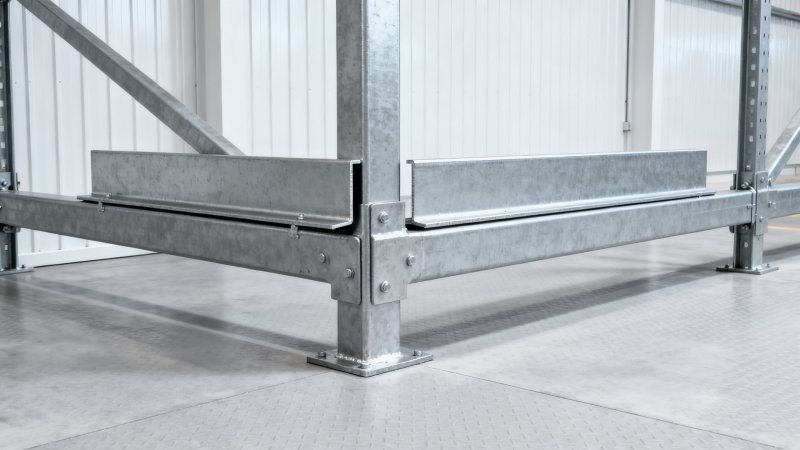
L shape mild steel is an angle section with two legs joined at ninety degrees.
Flat bar is a simple rectangular strip with one main plane and uniform thickness.
This geometric difference changes stiffness, connection options, and load behavior.
L shape mild steel provides strength in two directions, while flat bar mainly performs best in one plane.
That is why angle sections often appear in frames, supports, brackets, edging, and reinforcement details.
Flat bar is more common in straps, base plates, cover plates, and simple joining tasks.
If a design needs corner rigidity or easier bolting to intersecting surfaces, L shape mild steel usually has a clear advantage.
When does L shape mild steel perform better under load?
L shape mild steel is often preferred when the member must resist bending, twisting, or combined forces.
Its right-angle form increases section stiffness compared with a flat strip of similar mass.
This makes it useful for secondary structural parts where moderate strength and low weight must balance.
Common examples include equipment frames, edge supports, stair trims, rack reinforcements, and light platform components.
When the load is eccentric, flat bar may deform more easily because it lacks a perpendicular leg.
L shape mild steel handles these conditions better, especially when one leg can brace the other.
For corner-mounted supports, the angle profile also reduces the need for extra stiffeners.
That can lower fabrication time and reduce total weld length.
Typical load-related situations where angle steel wins
- Bracket arms carrying offset loads
- Frame corners needing better rigidity
- Members exposed to light torsion
- Support details fixed to two surfaces
- Edge reinforcement around panels or openings
How do connection and installation needs affect the choice?
Connection design is one of the strongest reasons to choose L shape mild steel over flat bar.
With two legs, one piece can connect to two intersecting faces without extra formed parts.
This is especially useful in steel frames, supports, guards, shelves, and modular assemblies.
Flat bar usually needs backing plates, gussets, or welded tabs to achieve similar connection flexibility.
That increases cutting, fitting, and inspection work.
Bolted installation can also be simpler with L shape mild steel because hole placement across two legs improves practical fixing options.
On site, fewer added components often means faster alignment and less chance of assembly error.
For projects where schedule matters, profile choice can directly influence labor efficiency.
Mid-project profile coordination matters too
In many steel structure systems, angle sections work alongside channels and cold formed profiles.
For example, C-beam is widely used for purlins, wall beams, light trusses, brackets, and light industrial members.
Available in Q195, Q235, Q345, A36, SS400, and s235jr, it supports ASTM, EN, JIS, and GB aligned projects.
Thickness can range from 1mm to 12mm, with galvanized, powder coated, or black varnish surfaces.
When angle steel is selected for joints and edge stiffening, channel-type members can complement longer-span secondary framing efficiently.
Which applications are most suitable for L shape mild steel?
L shape mild steel is best where both support and connection are needed in one economical section.
It is commonly used in building trims, machine guards, support brackets, frames, transmission towers, and rack systems.
It also works well for door frames, platform edges, solar mounting details, and container reinforcements.
In fabrication shops, L shape mild steel is often chosen for jigs and base supports because it stands more naturally during assembly.
Flat bar is still effective for simple straps, wear strips, and plates where directional stiffness is less important.
The main decision point is whether the part must act like a corner, brace, or stiffener.
If yes, L shape mild steel often delivers better value per kilogram.
Quick application checklist
- Choose angle steel for corners, frames, and brackets
- Choose flat bar for straps, cover pieces, and flat joining parts
- Use angle steel when installation needs two-face fixing
- Use flat bar when profile depth would interfere with clearance
What are common mistakes when comparing L shape mild steel with flat bar?
A common mistake is comparing only thickness and width, while ignoring section geometry.
Two products with similar weight may behave very differently once loaded or welded into a frame.
Another mistake is selecting flat bar because it seems cheaper per ton.
If that choice requires extra gussets, rework, or longer welding, the installed cost may become higher.
Undervaluing corrosion protection is another issue.
Both L shape mild steel and flat bar may need galvanizing, coating, or proper edge treatment depending on the environment.
Designers also sometimes forget about fit-up tolerance.
Angle sections can improve repeatability in corner assemblies, which helps quality control in batch production.
Warning signs during selection
- The member carries offset or multidirectional loading
- The detail connects to two faces
- Extra stiffeners are being added only to support flat bar
- Installation time is becoming more expensive than raw material
How can you decide faster on cost, fabrication, and project efficiency?
The best choice is rarely based on material price alone.
Review total cost using section weight, cutting complexity, hole making, welding length, coating needs, and installation labor.
L shape mild steel often reduces total process steps in medium-duty supports and framed details.
That can shorten production cycles and improve consistency across repeated assemblies.
Flat bar remains attractive for low-complexity parts with direct load paths and minimal connection demands.
Where structures must combine efficiency, moderate rigidity, and simple mounting, L shape mild steel is often the practical winner.
Final recommendation
Choose L shape mild steel when the design needs rigidity, corner support, efficient bolting, or fewer added reinforcement parts.
Choose flat bar when the application is simple, flat, and not sensitive to torsion or two-direction support.
Before ordering, compare the full fabrication route, not just the raw section price.
A reliable structural steel partner can help match angle steel, channel sections, and custom processing to project requirements.
That approach reduces sourcing risk, improves installation efficiency, and supports better long-term performance.
Please give us a message


Please enter what you want to find