Choosing the right section can directly affect strength, installation efficiency, and total project cost. For technical evaluators comparing framing options, understanding when a Z-beam offers better load distribution, easier lapping, and improved material efficiency is essential. This article explains where Z-beam profiles perform best in light steel framing and what selection factors matter most in practical structural applications.
What makes a Z-beam different in light steel framing?
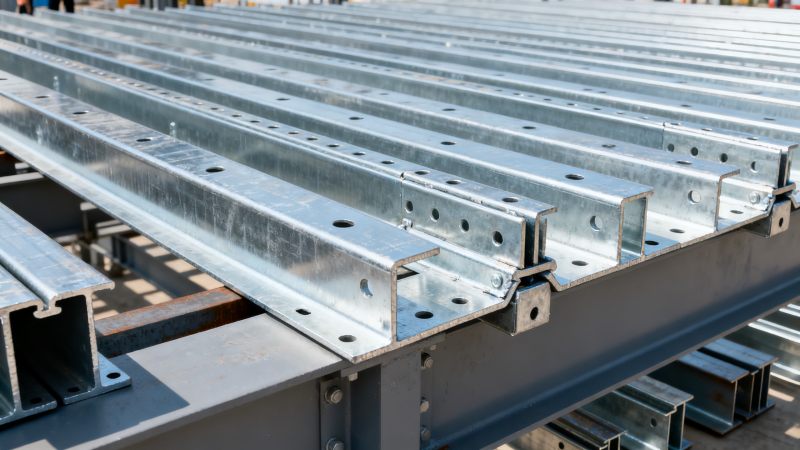
In light steel framing, the term Z-beam usually refers to a Z-shaped cold formed steel member used as a purlin, girt, secondary support, or wall framing component. Compared with symmetric sections, a Z-beam has offset flanges that create practical advantages in overlap connections, nesting during transport, and efficient spanning under directional roof and wall loads.
For technical evaluation teams, the main question is not whether a Z-beam is universally better, but whether it is the better choice for a specific structural layout. In many industrial and commercial buildings, the answer depends on span continuity, fastening details, uplift exposure, and the balance between material weight and required stiffness.
Why engineers and buyers often compare Z-beam with other framing sections
- A Z-beam can be lapped over interior supports, which helps improve continuity and often reduces peak bending moments compared with simple-span arrangements.
- Its shape allows nested packing, which can lower freight volume and improve loading efficiency for export projects.
- It is widely produced in cold formed steel, making it suitable for projects where lighter sections, controlled tolerances, and repeatable fabrication are required.
- It performs well in roof purlin and wall girt systems where load direction and support spacing are predictable.
A structural steel manufacturer with both standard production and OEM capability can help determine whether a Z-beam should be specified as a stock section or customized by thickness, lip geometry, hole pattern, and coating. That flexibility matters when projects must comply with ASTM, EN, JIS, or GB-related procurement requirements.
When is a Z-beam the better choice than C-section or hot rolled beam?
The strongest case for selecting a Z-beam appears in light steel framing systems that need continuity, repetitive installation, and efficient use of steel. It is especially useful when the frame uses multiple supports and the design benefits from lapped purlins or girts instead of isolated single spans.
The table below helps technical evaluators compare where a Z-beam stands against common alternatives in practical steel framing decisions.
This comparison shows that a Z-beam is usually preferred when the structural member functions as a repeating secondary element rather than a primary heavy-load beam. It becomes less attractive when the framing demands very high concentrated load resistance or when the layout is too irregular to benefit from repeated lapped spans.
Typical situations where a Z-beam becomes the better choice
- Multi-bay industrial roofs where purlins run continuously over several rafters and overlap at supports.
- Pre-engineered steel buildings where installation speed and repetitive geometry improve field productivity.
- Export projects where container utilization matters and nested packing helps reduce logistics cost.
- Projects that need a balance between structural efficiency and lower dead load on the main frame.
Which performance factors should technical evaluators check first?
When reviewing a Z-beam proposal, technical evaluators should avoid selecting by shape alone. The real decision comes from the relationship between section dimensions, thickness, span, support spacing, load combinations, and connection details. Inadequate review often leads to either overdesign or serviceability problems such as excessive deflection.
Key checks before approval
- Confirm whether the member is acting as a simply supported or lapped continuous Z-beam, because the structural behavior is different.
- Verify gravity load, wind suction, local point load, and maintenance load assumptions.
- Check flange width, web depth, lip details, and steel thickness against both strength and deflection limits.
- Review bolt hole accuracy, overlap length, and anti-corrosion treatment, especially in humid or coastal exposure.
- Match the design basis to the project standard, such as ASTM, EN, JIS, or GB-related documentation requirements.
For global buyers, supplier capability is part of technical performance. A manufacturer that handles angle steel, channel steel, steel beams, cold formed profiles, and customized structural components can usually coordinate dimensional consistency more effectively across a full framing package. This reduces interface risk between secondary framing and main steel members.
In some projects, evaluators also compare secondary framing with adjacent steel systems used elsewhere in the structure. For example, infrastructure and plant layouts may involve support interfaces near rail-related steel components. In such mixed-use supply planning, buyers may also source Rail products for railway rail or railing applications, with available grades such as U74, U71Mn, PD2, PD3, BNbRE, Q235, 55Q, 50Q, U71, and 45Mn, plus lengths from 12 m to 30 m and tolerance control of ±1%.
Although that product serves different applications from a Z-beam, this kind of combined sourcing can be practical when a project requires both structural framing and related steel components under one procurement workflow. It is particularly useful for evaluation teams that need coordinated quality records, export documentation, finish options such as black, oil, galvanized, or painted surfaces, and stable delivery planning.
How does a Z-beam improve installation efficiency and material use?
A Z-beam often earns its place not only in structural calculations but also in site operations. For contractors and procurement teams, reduced installation time can be as important as section capacity. The offset flange geometry supports lapped construction at supports, which can reduce the need for heavier isolated members while maintaining system performance.
The following table highlights the practical benefits that frequently influence real-world light steel framing decisions.
The practical value of a Z-beam increases when the supplier can pre-punch holes, maintain stable thickness control, and deliver repeatable lengths. Hongteng Fengda’s manufacturing focus on structural steel products and customized cold formed profiles is relevant here because many buyers need more than raw steel; they need framing components aligned with installation logic, documentation, and lead-time discipline.
Where installation benefits can be lost
- If overlap zones are not detailed clearly, site crews may reverse orientation or misplace bolt locations.
- If corrosion protection is mismatched to the environment, replacement cost can outweigh initial section savings.
- If the framing layout includes too many irregular bays, the repetition advantage of the Z-beam may disappear.
What selection criteria matter most during procurement?
For technical evaluators, procurement is where engineering intent must become manufacturable steel. A Z-beam that looks acceptable on a drawing may still create problems if tolerances, coating, testing scope, or packaging are not aligned with the project environment. The best procurement decisions combine structural checks with supplier execution checks.
Use the following selection guide as a practical checklist before final approval or RFQ release.
This table shows why the better choice is rarely decided by unit price alone. A lower-cost Z-beam can become expensive if inconsistent punching, poor coating control, or unclear documentation causes site delays. For overseas buyers, dependable lead times and standard-compliant production often carry more value than a small upfront price reduction.
Common procurement risks
- Assuming all Z-beam profiles from different suppliers are dimensionally interchangeable.
- Ignoring serviceability criteria and focusing only on yield strength.
- Not checking whether punched holes align with the actual erection sequence.
- Overlooking packaging quality for long-distance sea transport.
How should buyers weigh cost against alternatives?
A Z-beam should not be selected simply because it is lighter or commonly used. It should be selected because it lowers total project burden in a measurable way. For technical evaluators, cost comparison must include fabrication, transport, installation, and the consequences of overdesign or underperformance.
A realistic cost framework
- Material cost: compare not just kilogram price, but total steel usage across the framing layout.
- Fabrication cost: pre-punching, cutting accuracy, and section customization affect unit economics.
- Logistics cost: nested Z-beam packing can reduce shipping volume compared with bulkier section arrangements.
- Installation cost: simpler repetitive erection can reduce labor hours in large projects.
- Lifecycle cost: corrosion protection, replacement frequency, and maintenance access should be reviewed.
In many steel building packages, the Z-beam becomes cost-effective when the project has repetitive bays and enough scale to benefit from optimized secondary members. In a small or irregular structure, however, a C-section or another profile may be simpler to coordinate. That is why supplier-side technical support is valuable during quotation review, especially when alternative section proposals are still open.
FAQ: what do technical evaluators usually ask about Z-beam selection?
Is a Z-beam always better for roof framing?
No. A Z-beam is often better for continuous purlin systems, but not always for every roof framing scheme. If the building has unusual geometry, heavy point loads, or limited overlap possibilities, another section may be more practical. The decision should be based on loading, support arrangement, deflection limits, and connection detailing.
What span conditions make a Z-beam attractive?
A Z-beam is most attractive in multi-span arrangements where lapping over supports improves structural continuity. These conditions are common in industrial sheds, warehouses, workshops, and pre-engineered steel buildings. It is less beneficial when members act only as short, isolated simple spans.
What should be checked before approving a supplier quotation?
Check the steel grade, dimensional tolerances, coating specification, punching details, overlap logic, applicable standard, packaging method, and promised lead time. For export procurement, also confirm inspection documentation and whether the supplier can support standard and custom structural steel components within the same project schedule.
Can a Z-beam help reduce sourcing risk?
It can, if sourced from a manufacturer with stable production capacity and strong quality control. The profile itself does not remove risk, but a supplier experienced in international structural steel export can reduce inconsistency in fabrication, documentation, and delivery. That matters for buyers working across North America, Europe, the Middle East, and Southeast Asia.
Why work with a structural steel manufacturer that supports both standard and custom framing?
Technical evaluators often face a familiar problem: the design intent is clear, but available market sections do not fully fit the project. That gap creates redesign, delays, or cost escalation. Working with a structural steel manufacturer and exporter that can supply angle steel, channel steel, steel beams, cold formed profiles, and customized structural components gives buyers more room to optimize the final framing package.
Hongteng Fengda supports global construction, industrial, and manufacturing projects with standard specifications and OEM solutions. For buyers assessing a Z-beam application, that means support can extend beyond one profile to include coordinated framing supply, quality control aligned with common international standards, and planning around stable production and delivery schedules.
What you can discuss before ordering
- Parameter confirmation for section depth, flange size, thickness, and overlap arrangement.
- Product selection between Z-beam, C-section, channel, or other steel framing members.
- Expected lead time, production planning, and export packing details.
- Custom hole patterns, length requirements, and coating specifications.
- Documentation related to ASTM, EN, JIS, or GB-based procurement requirements.
- Sample support, quotation comparison, and combined sourcing for related structural steel items.
If your team is evaluating whether a Z-beam is the better choice for light steel framing, share the design loads, span layout, corrosion environment, and required standards early. That allows a more accurate review of section options, customization feasibility, delivery timing, and cost trade-offs before procurement risk increases.
Please give us a message


Please enter what you want to find