For business decision-makers, choosing high strength steel tubing is not just a technical upgrade—it can be a smart financial strategy. When projects demand lighter structures, higher load capacity, and long-term durability, the right steel solution helps reduce material waste, transportation costs, and maintenance expenses. Understanding when this investment delivers real value is key to improving project efficiency and protecting your bottom line.
When does high strength steel tubing deliver a real financial advantage?
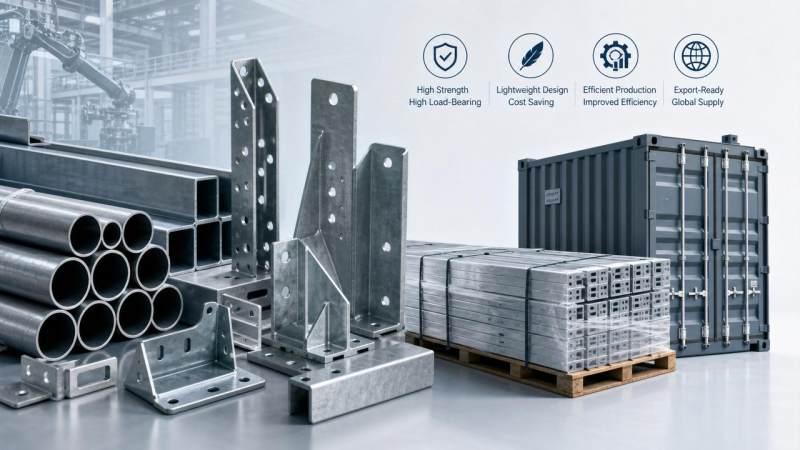
The answer depends on total project economics, not simply the purchase price per ton. High strength steel tubing often costs more upfront than conventional tubing, but that premium can be offset when the design allows lower section weight, fewer support members, easier transportation, faster installation, or lower lifecycle maintenance. For business decision-makers in construction, industrial fabrication, and equipment manufacturing, the financial case becomes strongest when performance gains translate into measurable operational savings.
In the steel industry, cost control is rarely about buying the cheapest material. It is about selecting steel that fits the load path, fabrication method, corrosion environment, and project schedule. A poor material choice can create hidden costs through overdesign, rework, freight inefficiency, inspection delays, and premature service issues. High strength steel tubing makes financial sense when it reduces those downstream costs more than it increases initial procurement spending.
Global buyers also face another layer of risk: supply reliability. A theoretically optimal specification has limited value if the supplier cannot maintain dimensional consistency, international standard compliance, or dependable lead times. That is why sourcing decisions should consider manufacturing capability, quality control discipline, export experience, and customization support alongside the material grade itself.
- Use high strength steel tubing when structural efficiency can reduce steel consumption without compromising safety or compliance.
- Use it when freight, lifting, and installation costs are significant enough that lower weight creates a measurable budget advantage.
- Use it when durability, fatigue resistance, or service life improvements can lower maintenance or replacement frequency.
- Use it when project timelines are tight and a more optimized structural design can simplify assembly or reduce member count.
What decision-makers should compare before approving a tubing upgrade
Before moving from standard structural tubing to high strength steel tubing, procurement teams and engineering leaders should compare more than yield strength. The practical value comes from the relationship between mechanical performance, fabrication implications, compliance requirements, and delivered cost. The table below summarizes the most important evaluation points when building a business case.
This comparison shows why the cheapest line item can be the most expensive decision. If the project can lower tonnage, shorten installation, or avoid future maintenance events, high strength steel tubing may improve the full financial picture even when the material invoice is higher.
Common situations where the premium is justified
Not every project benefits equally. The strongest return appears in applications where every kilogram matters or where structural efficiency improves the entire project chain. For example, modular buildings, long-span support frames, transport equipment, machinery bases, energy infrastructure, and export-oriented fabricated assemblies often gain from lighter but stronger tube structures.
- Projects with strict freight budgets, especially international shipments where container utilization affects landed cost.
- Structures with repetitive loading where fatigue behavior and stiffness-to-weight ratio influence long-term performance.
- Applications with limited installation access, where lighter members reduce crane size, labor intensity, or assembly time.
- OEM programs that need dimensional repeatability and standard-compliant supply across multiple batches.
How to calculate the true cost of high strength steel tubing
A reliable procurement decision should be built around total cost of ownership rather than simple price comparison. This means combining direct and indirect cost drivers. In many cases, the financial benefit does not come from the tubing alone, but from the system-level reduction in steel weight, welding length, logistics intensity, and future service interventions.
A practical cost review should include the following categories:
- Material purchase cost by grade, thickness, and section size.
- Weight reduction potential after engineering redesign.
- Fabrication cost changes, including cutting, welding, forming, and inspection.
- Freight, loading, unloading, and on-site lifting costs.
- Maintenance exposure over the operating life of the asset.
- Risk cost related to delivery delay, nonconformity, or inconsistent quality.
The next table can help a buyer assess where high strength steel tubing creates financial value and where the premium may not be justified.
For many decision-makers, this exercise changes the conversation. Instead of asking, “Is the steel more expensive?” the better question becomes, “Does the project become more economical after design, fabrication, freight, and service factors are included?”
Which applications are most likely to benefit from high strength steel tubing?
Application fit is critical. High strength steel tubing is not automatically the best choice for every frame, support, or fabricated part. It makes the most sense where engineering optimization creates tangible value. In global construction and industrial supply chains, the main beneficiaries are often projects that combine structural demand, export logistics, and lifecycle expectations.
Construction and infrastructure
In building structures, bridges, temporary works, and modular units, stronger tubing can lower dead load and simplify erection. This is especially relevant for projects with long spans, rooftop structures, platform systems, and prefabricated assemblies where lifting efficiency and transport weight affect the budget.
Industrial equipment and machinery
Machine frames, conveyor systems, support racks, and material handling equipment can benefit when weight reduction improves mobility or energy use. Buyers should still verify weldability, dimensional tolerance, and fatigue requirements before changing material specifications.
OEM and export fabrication
For OEM buyers sourcing from China, the financial logic often includes stable batch production and lower sourcing risk. Hongteng Fengda supports standard specifications and customized structural steel components, which is important for buyers who need repeated deliveries across multiple projects or product series. Consistent quality and dependable lead times can protect margins just as much as the material selection itself.
In some projects, buyers also compare carbon steel tubing decisions with stainless solutions in adjacent system components. For corrosive or hygiene-sensitive environments, a separate material path may be needed for plates, covers, or fabricated accessories. For example, 316L Stainless Steel Plate is commonly considered in chemical processing, food industry equipment, medical equipment construction, ship parts, and transport-related components where corrosion resistance matters more than simple structural strength alone.
That product category is also valued for properties associated with 316L stainless steel, including tensile strength of at least 520MPa, yield strength of at least 275MPa, elongation around 55% to 60%, and resistance to sensitization in welded sections. While it is not a substitute for every high strength steel tubing application, it shows how professional buyers often build mixed-material solutions based on exposure conditions, fabrication method, and service life priorities.
What technical and compliance issues should procurement teams verify?
A strong commercial decision must still pass technical validation. Procurement teams should align material selection with design codes, fabrication procedures, and end-market compliance expectations. In cross-border sourcing, this usually means checking whether the supplier can work to ASTM, EN, JIS, or GB requirements depending on destination market and project specification.
- Confirm the target mechanical properties, dimensional tolerances, surface condition, and inspection scope before quotation approval.
- Check whether the tubing will be welded, bent, machined, or galvanized after production, since downstream processing affects grade suitability.
- Review traceability and test documentation requirements if the project involves regulated sectors or public infrastructure.
- Align packing, marking, and shipping details with the import market to reduce customs and receiving issues.
Hongteng Fengda’s role in this process is practical rather than abstract. As a structural steel manufacturer and exporter from China, the company supplies angle steel, channel steel, steel beams, cold formed steel profiles, and customized structural steel components. This matters because many projects do not buy tubing in isolation. They buy a package of structural products that must work together, arrive on time, and meet project documentation needs.
A simple procurement checklist
Before issuing a purchase order for high strength steel tubing, decision-makers should request a structured review covering:
- Required standards and grade equivalency for the destination market.
- Expected quantity, rolling schedule, and shipping window.
- Fabrication operations after delivery, including welding or forming limits.
- Inspection documents, mill test expectations, and any third-party verification needs.
- Packaging, labeling, and export logistics details to reduce handling damage and receiving delays.
Common mistakes buyers make when evaluating high strength steel tubing
One of the most common mistakes is comparing only the material price without redesigning the structure. If the geometry stays unchanged, the buyer may pay more without capturing the weight-saving benefit. Another mistake is assuming that higher strength always means lower total cost. In reality, fabrication complexity, code restrictions, or over-specified performance can erode the expected savings.
A third issue is supplier mismatch. Buyers sometimes specify advanced material but source from vendors that cannot maintain consistency across batches or cannot support custom dimensions and delivery planning. For export projects, this can create schedule pressure that easily outweighs any material-level savings.
- Do not approve high strength steel tubing without engineering validation of the optimized design.
- Do not ignore fabrication capability, especially if welding procedures or cold forming are critical.
- Do not separate technical selection from logistics planning; landed cost often changes the conclusion.
- Do not treat all suppliers as equal when consistency, standards compliance, and lead time stability matter.
FAQ: how buyers usually assess high strength steel tubing
Is high strength steel tubing always more economical for large projects?
No. It becomes more economical when the project can convert higher material strength into lower total tonnage, fewer parts, reduced transport cost, or lower lifetime maintenance. Large volume alone does not guarantee savings. The design and delivery model must support the upgrade.
What should procurement teams ask suppliers first?
Start with grade availability, compliance standards, size range, dimensional tolerance control, and lead time. Then review whether the supplier can support OEM requirements, bundled structural steel supply, export packing, and documentation. These points often matter more than unit price when the project schedule is tight.
Can high strength steel tubing reduce freight cost in export business?
It often can, especially when the redesign reduces overall shipment weight or improves container loading efficiency. The effect depends on route, shipment volume, section length, and whether freight is charged mainly by weight or container count. Buyers should model landed cost rather than assume savings.
How do international standards affect purchasing decisions?
Standards shape the acceptable grade, testing method, tolerances, and documentation. For projects serving North America, Europe, the Middle East, or Southeast Asia, alignment with ASTM, EN, JIS, or GB may affect approval and downstream fabrication. Early confirmation avoids expensive resourcing and delay.
Why many global buyers work with an experienced structural steel exporter
A good steel supplier does more than ship material. The right partner helps buyers match specification to application, balance cost with performance, and reduce execution risk. For enterprises managing construction, industrial, or manufacturing projects across regions, stable production capacity and quality consistency are essential to budgeting accuracy.
Hongteng Fengda supports international buyers with structural steel products and customized solutions for global projects. Its capabilities in angle steel, channel steel, steel beams, cold formed profiles, and customized structural components are useful for buyers who want a coordinated supply approach rather than fragmented sourcing. With modern manufacturing facilities and strict quality control, the focus is on helping partners control costs, reduce sourcing risk, and keep project schedules predictable.
Why choose us for your next steel sourcing decision?
If you are evaluating whether high strength steel tubing makes financial sense for your project, the most productive next step is a specification-based discussion. We can help review section selection, standard requirements, fabrication implications, and delivery planning before you commit to a purchase strategy.
- Confirm mechanical and dimensional requirements for your target application and market standard.
- Compare conventional and high strength steel tubing options from a total-cost perspective.
- Discuss OEM or customized structural steel solutions for assemblies, profiles, and related components.
- Check production capacity, lead time expectations, export packing, and documentation needs before ordering.
- Request support for quotation review, sample planning, certification alignment, and project-based delivery schedules.
For business decision-makers, the best steel choice is the one that improves project economics without increasing avoidable risk. If you share your drawings, application scenario, required standards, and delivery destination, we can help you assess whether high strength steel tubing is the right investment and build a sourcing plan that supports cost control, compliance, and reliable execution.
Please give us a message


Please enter what you want to find