Choosing the right hot rolled steel plate supplier is critical for procurement teams managing cost, quality, lead time, and project risk. A reliable partner should offer consistent material performance, compliance with international standards, stable production capacity, and responsive export support. For buyers sourcing structural steel globally, understanding what separates a dependable supplier from an ordinary trader can help prevent delays, quality disputes, and budget overruns while ensuring smoother project execution.
Why supplier reliability matters more than the quoted price
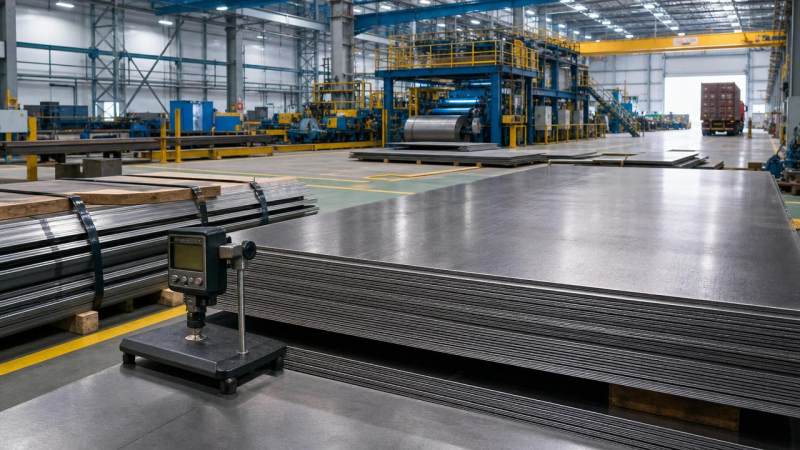
For procurement managers, the lowest offer is rarely the safest decision. A hot rolled steel plate supplier affects project schedules, fabrication accuracy, inspection results, and final installation quality.
Hot rolled steel plate is widely used in steel structures, machinery frames, bridges, pressure-related components, and industrial platforms. Small deviations in grade, thickness, or flatness can create costly downstream problems.
A reliable hot rolled steel plate supplier does not only sell material. It helps buyers confirm standards, manage documentation, coordinate production, and reduce risks across international supply chains.
Key risks when the wrong supplier is selected
- Material certificates do not match the ordered grade, creating inspection delays and possible rejection at the project site.
- Thickness tolerance, surface condition, or dimensional accuracy fails to meet fabrication requirements, increasing cutting and rework costs.
- Delivery promises are based on trading inventory, not controlled production capacity, causing schedule uncertainty.
- Export documents are incomplete, leading to customs issues, payment delays, or difficulties with project traceability.
How to evaluate a hot rolled steel plate supplier before ordering
Procurement teams should evaluate a hot rolled steel plate supplier through measurable criteria, not only through price lists. The table below summarizes practical checkpoints for international buyers.
This evaluation approach helps buyers compare suppliers on operational reliability. A dependable hot rolled steel plate supplier should provide evidence, not vague promises.
Manufacturer or trader: what is the real difference?
A trader may be useful for small spot purchases, but complex projects often require deeper control. A manufacturer-exporter can better coordinate grade selection, production timing, processing, and documentation.
Hongteng Fengda operates as a structural steel manufacturer and exporter from China, supplying angle steel, channel steel, steel beams, cold formed profiles, and customized steel components.
What technical details should procurement teams confirm?
A professional hot rolled steel plate supplier should guide buyers through technical confirmation before purchase orders are finalized. Clear specifications reduce misunderstanding between engineering, procurement, and fabrication teams.
Important details include steel grade, thickness range, plate size, surface condition, flatness, edge condition, tolerance, inspection level, and packaging method. These details directly affect usability.
Common specification points for hot rolled steel plate sourcing
The following table can help buyers prepare inquiries for a hot rolled steel plate supplier and avoid incomplete quotations that are difficult to compare.
When these points are documented early, quotations become clearer. The buyer can compare not just unit price, but total delivered value and risk exposure.
How reliability appears in standards, certificates, and traceability
A reliable hot rolled steel plate supplier understands that documents are part of the product. For international procurement, documentation can decide whether material is accepted or delayed.
Mill test certificates, heat numbers, packing lists, loading photos, and inspection reports help connect physical steel plates with order requirements. This traceability is essential for audits.
Standards commonly discussed in global steel procurement
- ASTM standards are often used for North American projects and require clear grade and mechanical property confirmation.
- EN standards are frequently required in European markets, especially for structural steel applications and CE-related documentation.
- JIS standards remain important for projects connected to Japanese specifications or Asian industrial supply chains.
- GB standards are widely used in Chinese manufacturing and can be matched with international equivalents when engineering approval allows.
Hongteng Fengda supplies structural steel products according to major international standards including ASTM, EN, JIS, and GB, helping buyers align material specifications with project requirements.
Which applications require closer supplier control?
Different applications place different demands on a hot rolled steel plate supplier. Structural projects usually focus on strength, weldability, tolerance, and predictable delivery.
Manufacturing projects may place more emphasis on cutting performance, surface condition, batch consistency, and compatibility with downstream machining or forming processes.
Application-driven selection checklist
Buyers can use application scenarios to decide how much technical support and quality verification they need from a hot rolled steel plate supplier.
A supplier that understands application requirements can suggest practical alternatives when one grade, thickness, or plate size creates unnecessary cost or delay.
How complementary structural steel products support project sourcing
Many buyers sourcing plate also need beams, channels, angles, purlins, or cold formed profiles. Consolidating these items with one reliable partner can simplify coordination.
For lightweight roof systems, wall beams, brackets, mechanical columns, and light manufacturing arms, Hongteng Fengda can also supply Z-beam in Z-shaped steel profiles.
Available material options include Q235B, Q345B, Q420C, Q460C, SS400, SS540, S235, S275, S355, A36, A572, G50, and G61.
Typical thickness is 6–25mm, with lengths from 2 to 12m or customized. Options include mill edge, slit edge, perforated design, and galvanized coating.
Why combined sourcing can reduce procurement complexity
- Buyers can align steel grades and certificates across plate, beams, and formed profiles for the same construction project.
- Shipping schedules can be coordinated to reduce split deliveries and improve site material management.
- Customized components can be discussed together with standard structural steel, reducing drawing revision cycles.
What service process should a dependable supplier follow?
A trustworthy hot rolled steel plate supplier should have a clear workflow from inquiry to after-sales support. Process visibility helps procurement teams report internally.
When each step is transparent, buyers can manage internal approval, finance planning, inspection coordination, and project delivery with fewer surprises.
Common misconceptions when choosing a hot rolled steel plate supplier
Some procurement mistakes repeat across markets because teams focus on short-term price while underestimating technical and logistical risks. These misconceptions can be avoided.
Misconception 1: all plates with the same grade are interchangeable
Grade names matter, but they are not the whole story. Thickness tolerance, heat treatment status, standard version, and inspection documentation can differ between suppliers.
Misconception 2: a cheap unit price means lower project cost
Lower price may hide extra cutting loss, delayed delivery, insufficient packaging, or documentation problems. Total cost includes freight, rework, inspection, and schedule impact.
Misconception 3: export experience is not important
Export experience matters because steel shipments require accurate documents, stable packaging, port coordination, and quick communication when vessel schedules change.
FAQ for global buyers comparing steel plate suppliers
How do I know if a hot rolled steel plate supplier is reliable?
Check whether the supplier can confirm standards, provide mill test certificates, explain tolerance requirements, show export document experience, and give realistic lead times before payment.
What information should I provide for an accurate quotation?
Provide steel grade, standard, thickness, plate size, quantity, destination port, inspection needs, packaging requirements, and application. Drawings are useful for cut-to-size orders.
Can one supplier handle both standard and customized structural steel?
Yes, if the supplier has manufacturing coordination and engineering communication capability. Hongteng Fengda supports standard specifications and OEM structural steel solutions for global projects.
Why should I avoid making decisions only by price?
Price is important, but it must be reviewed with quality control, documentation, tolerance, lead time, packaging, and after-sales response. Poor coordination can cost more later.
Why choose Hongteng Fengda for structural steel sourcing?
Hongteng Fengda supports buyers who need more than a basic hot rolled steel plate supplier. We provide structural steel manufacturing, export coordination, and customized project support.
Our product range includes angle steel, channel steel, steel beams, cold formed steel profiles, and customized structural components for construction, industrial, and manufacturing applications.
With modern manufacturing facilities and strict quality control, we help procurement teams reduce sourcing risk, control cost, and maintain dependable lead times across global markets.
If you are comparing suppliers, contact us with your grade, standard, thickness, quantity, destination, delivery schedule, and certification requirements. We can assist with parameter confirmation, product selection, customized solutions, sample support, lead time review, and quotation communication.
Please give us a message


Please enter what you want to find