When sourcing welded stainless tubing, buyers should look beyond price and verify weld integrity, surface finish, dimensional accuracy, and corrosion performance. Whether you also compare seamless steel tube, API pipe, or corrosion-resistant pipe options, understanding the right inspection points helps reduce project risk, control costs, and ensure reliable performance in industrial, construction, and fluid pipe applications.
Why welded stainless tubing inspection matters before you place an order
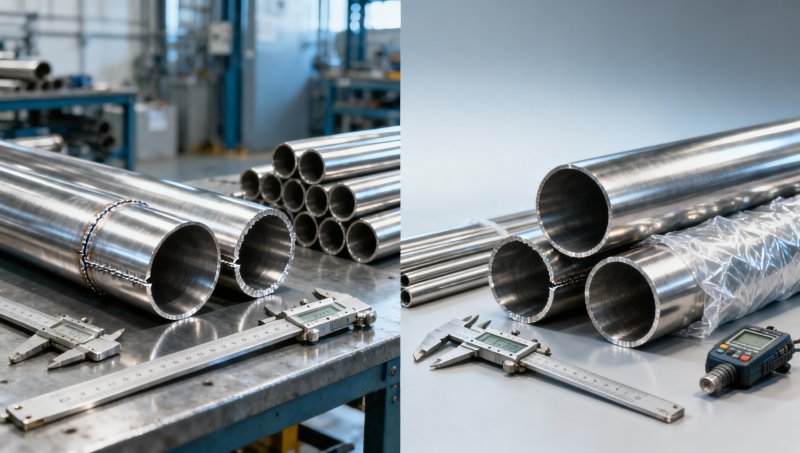
In the steel industry, welded stainless tubing is widely selected because it balances cost, availability, and workable performance. For procurement teams, project managers, operators, and quality inspectors, the main issue is not simply whether the tube is welded, but whether the tube is suitable for the actual service condition. A lower purchase price can quickly turn into a higher total project cost if the material fails after 6–12 months of exposure to moisture, chemicals, pressure fluctuation, or repeated cleaning cycles.
For many buyers, the risk starts at the quotation stage. Two suppliers may both offer 201, 304, or 316 welded stainless tubing, yet the final product can differ in weld consistency, wall tolerance, pickling quality, and packaging protection. These differences affect fabrication yield, installation speed, welding rework, and later maintenance. In construction, industrial fluid transfer, light manufacturing, and equipment frames, even a tolerance shift of ±0.2 mm can influence fitting compatibility and alignment.
Technical evaluators usually focus on corrosion resistance, dimensional accuracy, and weld zone soundness. Commercial evaluators, however, also need to review lead time, inspection documentation, export packing, and replacement risk. Financial approvers tend to ask a different question: can the lower-cost offer still control lifecycle cost over 2–5 years? This is why a practical inspection checklist is more useful than a generic product description.
For global buyers working with Chinese steel manufacturers and exporters, the most effective approach is to combine material review, process review, and shipment review. Hongteng Fengda supports this logic by supplying structural steel products and customized solutions with controlled production processes, stable capacity, and quality checks aligned with common international standards such as ASTM, EN, JIS, and GB. That matters when your project schedule leaves little room for material disputes.
What can go wrong if the inspection focus is too narrow?
Many buyers only check material grade and outer diameter. In practice, at least 5 checkpoints should be reviewed before approval: weld appearance, internal bead condition, surface finish, dimensional tolerance, and corrosion-related suitability. If only one or two of these are checked, the tubing may pass incoming inspection but still create field problems during bending, cutting, polishing, or fluid service.
- Poor weld fusion can cause leakage or crack initiation under vibration or intermittent pressure.
- Uneven wall thickness can reduce consistency when using compression fittings or automated fabrication equipment.
- An inconsistent surface finish can trap contaminants in food-adjacent or clean-process applications.
- Improper passivation or weak surface protection during transport may lead to staining before installation.
What to check first: 6 key quality points for welded stainless tubing
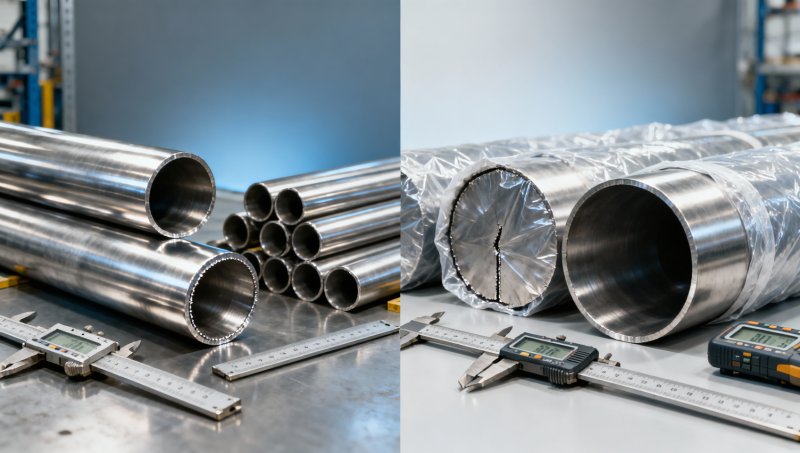
If you need a fast decision framework, start with 6 key quality points. These are practical checks that can be reviewed through samples, mill documentation, dimensional reports, and visual inspection. They apply to many sourcing cases, whether the tubing is intended for architectural use, light structural fabrication, industrial conveying, or general fluid pipe systems.
The first point is weld integrity. The weld seam should be continuous and uniform, without obvious undercut, burn-through, overlap, or sharp discontinuity. On precision-sensitive projects, buyers often request a sample cut section to observe the fusion area. The second point is dimensional accuracy, including outside diameter, wall thickness, straightness, and length. For fit-up efficiency, the acceptable range should be confirmed before production, not after arrival.
The third point is surface condition. Stainless tubing may be supplied in mill finish, polished, pickled, or passivated condition depending on the application. The fourth point is material traceability. The fifth is corrosion suitability, especially when chloride exposure, outdoor moisture, or cleaning chemicals are present. The sixth is packing and shipment protection, because surface damage often occurs in the final 7–30 days of logistics rather than during manufacturing.
The table below summarizes a practical buyer-side inspection method. It is useful for sourcing teams, QA staff, and project engineers who need a quick review matrix before mass order confirmation.
This matrix helps convert a technical discussion into a procurement decision. It also prevents a common mistake: approving tubing by grade name alone. In many real projects, the difference between smooth execution and costly delay is not the alloy label, but whether the tubing arrives within the agreed tolerance range, with traceability records and protective packing intact.
How to organize the inspection in 3 stages
A reliable welded stainless tubing review usually works best in 3 stages. Stage 1 is pre-order confirmation, where the buyer and supplier lock the grade, dimensions, finish, standard reference, and quantity. Stage 2 is in-process or pre-shipment review, often based on photos, reports, or third-party inspection if required. Stage 3 is arrival inspection, where visual condition, quantity, markings, and random dimensional checks are verified.
For project buyers with strict deadlines, this staged method reduces surprise. It is also easier for finance and commercial teams because inspection milestones can be connected to payment terms, such as deposit, pre-shipment balance, or document release. When the tubing is part of a larger steel package, this method helps coordinate with beams, channels, plates, or fabricated components arriving in the same shipment.
Welded vs seamless and how related steel products fit the project decision
Not every project needs seamless tube, and not every welded stainless tubing order should be judged by pressure-pipe logic alone. The right selection depends on operating pressure, appearance requirements, corrosion environment, fabrication method, and budget control. For low to moderate pressure applications, structural use, visible installations, and many fabricated systems, welded stainless tubing can be the practical choice if quality control is clear.
Seamless steel tube is often preferred where higher pressure, more demanding mechanical stress, or certain regulatory requirements are involved. API pipe is usually assessed for specific energy-sector or pipeline-related contexts. Corrosion-resistant pipe can describe a broader category that includes different alloys, coatings, or stainless grades. Procurement teams should avoid comparing these products by name only; compare them by function, risk level, and lifecycle requirement over the service period.
In many projects, tubing is only one part of the total steel package. Structural elements such as channels, beams, and cold formed profiles may be purchased at the same time for support frames, brackets, roof members, wall beams, or machine structures. In that situation, buyers often gain efficiency by working with a supplier that can coordinate multiple steel categories under one quality control and export process.
For example, if your project combines stainless tubing with support members for construction or light manufacturing, you may also need Channel Steel Supplier options. Typical channel steel selections may include Q195, Q235B, Q345B, 201, 304, or 316 according to project scope, with thickness from 1.5 mm to 25 mm, height from 80 mm to 160 mm, and common lengths of 6–12 m. Applications often cover construction, automobile manufacture, purlin systems, wall beams, lightweight roofs, brackets, mechanical columns, and light manufacturing arms.
A practical comparison for buyers and engineers
The following comparison table is useful when technical teams and procurement teams need a shared decision basis. It does not replace project standards, but it helps narrow the choice before final specification approval.
This comparison helps different stakeholders speak the same language. Operators focus on usability, quality teams focus on consistency, procurement focuses on price and delivery, and decision-makers focus on risk. A supplier with broader steel product capability can simplify the sourcing path by reducing the number of vendors, documents, and logistics interfaces the project must manage.
When structural compatibility affects tubing procurement
Tubing decisions often influence support design. If your welded stainless tubing will be mounted on channel frames or galvanized support members, dimensional consistency becomes more important. For example, section tolerance on U channel steel may be controlled around thickness ±0.02 mm and height ±2 mm in a defined product range. That level of control helps reduce field modification, especially in prefabricated installations or repeated production runs.
Where corrosion exposure is strong, buyers may also consider galvanized structural supports, duplex grades, or 304/316 stainless options in adjacent steel components. Coordinating these material choices early can prevent galvanic or maintenance issues later. It also makes budgeting clearer because the project team can compare the cost impact of one combined steel package rather than making isolated purchasing decisions.
How to evaluate standards, tolerances, lead time, and supplier capability
Once the tubing type is selected, the next decision is supplier evaluation. In B2B steel sourcing, buyers usually need to assess 4 areas together: manufacturing capability, quality control, standards compliance, and delivery reliability. Looking at only one of these can create hidden risk. A supplier may quote quickly but still struggle with document consistency, production scheduling, or export packaging for mixed steel orders.
Standards matter because they create a common language for material and dimensional expectations. Depending on the project, buyers may refer to ASTM, EN, JIS, or GB requirements, along with customer drawings and internal QA procedures. For related structural products, buyers may also request common market certifications or inspection support such as ISO-oriented quality systems and third-party review arrangements where required by the contract.
Lead time should be discussed in ranges, not assumptions. A stock-based requirement may move much faster than a custom-grade or special-finish order. Typical export planning often includes 7–15 days for sample or approval coordination, followed by 2–6 weeks depending on production scope, quantity, and whether mixed structural steel items are combined in one shipment. For project managers, this planning window is critical because tubing delays often affect the work of other trades.
Hongteng Fengda’s positioning as a structural steel manufacturer and exporter is relevant here because many international buyers do not purchase a single steel item in isolation. They need standard specifications, OEM support, stable output, and dependable lead times across angle steel, channel steel, beams, cold formed profiles, and customized components. That integrated supply approach can reduce sourcing fragmentation and make project execution more predictable.
A 4-step supplier review checklist
- Confirm material grade, dimensions, finish, quantity range, and end-use environment before quotation comparison.
- Request sample photos, dimensional records, and document format confirmation, especially for recurring or export-sensitive orders.
- Review production and packing capability for both tubing and related structural steel products if combined shipment is planned.
- Align payment, inspection, and shipment milestones so the commercial process supports quality control rather than bypassing it.
This 4-step process is especially useful for distributors, EPC contractors, fabricators, and overseas project buyers. It prevents late-stage surprises such as mismatched documentation, unsupported customization, or unprotected mixed loading that damages finished stainless surfaces during transit.
Common procurement mistakes that increase total cost
The most common mistake is treating welded stainless tubing as a commodity with no meaningful quality spread. Another mistake is specifying a premium grade without checking whether the service condition really requires it. A third mistake is separating tubing procurement from structural steel procurement even when both products must fit one installation schedule. These errors can increase handling time, approval cycles, and rework cost more than the original material savings justify.
A better approach is to compare offers on a total-value basis: grade suitability, measurable tolerance, finish requirement, documentation support, shipment protection, and lead-time reliability. For decision-makers reviewing budget control, this gives a more realistic picture than unit price alone. It also helps financial teams explain why one quote is more economical over the full project cycle.
FAQ and next-step sourcing advice for global buyers
Before finalizing a welded stainless tubing supplier, buyers usually have a few recurring questions. These questions often come from different departments: engineering asks about suitability, purchasing asks about cost and lead time, QA asks about inspection, and management asks about supply risk. Addressing them early can shorten the decision cycle by 1–2 rounds of internal review.
The answers below are written for real procurement use rather than theory. They also apply when your tubing purchase is part of a broader steel sourcing package that includes channels, beams, cold formed sections, or custom structural components.
If your project is still in the comparison stage, use these points as a shortlist tool. If the specification is already fixed, use them as a verification checklist before issuing the purchase order.
How do I know whether welded stainless tubing is suitable for my project?
Start with 3 questions: what medium or environment will the tubing face, what mechanical load or pressure will it see, and what surface requirement is needed. If the application is architectural, general industrial, fabricated support, or moderate service fluid transfer, welded stainless tubing is often a practical option. If the application involves higher pressure or stricter code-driven conditions, seamless alternatives may need to be reviewed.
What should I ask for before approving mass production?
Ask for the grade, dimension range, tolerance agreement, finish requirement, sample confirmation, inspection method, marking format, and packing method. In most export orders, 6 key items should be aligned before production: material, size, finish, quantity, documents, and delivery schedule. If the order includes mixed steel products, confirm loading sequence and surface protection as well.
How long does delivery usually take?
Delivery depends on stock status, customization level, and shipment complexity. For many export-oriented steel orders, buyers should plan in ranges rather than fixed promises: sample or drawing confirmation may take 7–15 days, production may take 2–6 weeks, and sea transit adds additional time based on destination. Mixed structural steel shipments may require extra coordination but can reduce total procurement workload.
Why work with a structural steel manufacturer and exporter instead of several separate traders?
When a project includes tubing plus support steel, using one capable supply partner can simplify technical communication, reduce document gaps, and improve shipment coordination. Hongteng Fengda serves buyers across North America, Europe, the Middle East, and Southeast Asia with structural steel products and customized solutions. That model supports stable production, consistent quality control, international standard alignment, and more dependable lead-time management for multi-item orders.
Why choose us for your steel sourcing discussion?
If you are comparing welded stainless tubing, structural sections, or mixed steel packages, we can help you review parameters before you commit. You can discuss grade selection, dimensional tolerance, corrosion environment, sample requirements, standard references, packing method, and shipment planning. We also support conversations around OEM needs, bundled structural steel supply, and project-based delivery coordination.
Contact us when you need practical support on product selection, quotation comparison, certification-related document preparation, sample arrangements, or lead-time evaluation. For buyers who want to reduce sourcing risk while controlling cost, an early technical and commercial review is often the fastest way to avoid the wrong material decision.
Please give us a message


Please enter what you want to find