Selecting the right U Channel Steel is critical for frame support performance, load distribution, and long-term structural reliability. For technical evaluation, the decision goes beyond simply matching a nominal size. Section dimensions, steel grade, tolerance control, coating options, fabrication method, and compliance with ASTM, EN, JIS, or GB standards all affect how U Channel Steel performs in real structures. A careful review helps reduce installation problems, prevent overdesign, and maintain cost efficiency across construction and industrial applications.
When U Channel Steel is used for frame support, it often serves as an essential load-carrying or alignment component in platforms, equipment frames, wall bracing systems, machinery bases, rack structures, and secondary steel assemblies. Because frame conditions vary widely, a structured method of comparison is more reliable than choosing by habit or price alone. The following guide explains what to verify before specification, ordering, and fabrication.
Why a Structured Review Matters for U Channel Steel
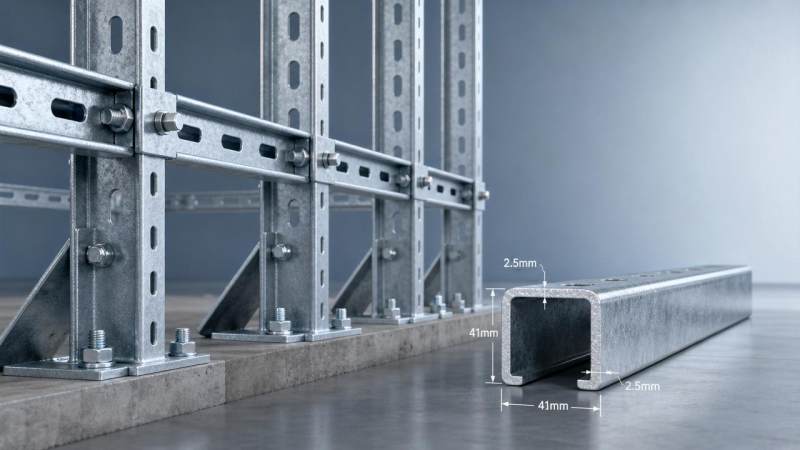
U Channel Steel may look simple, but small differences in flange width, web thickness, corner radius, steel chemistry, or straightness can change the final frame behavior. A channel that appears acceptable on paper may create welding fit-up issues, excessive deflection, uneven bolt alignment, or coating failure after exposure. Using a clear selection process improves consistency from design to installation.
A structured review also supports better sourcing decisions. In global projects, the same U Channel Steel designation may be supplied under different national standards, with different dimensional series and tolerances. Comparing equivalent grades, testing records, and production capability is essential if the frame support system must meet a specific performance target, service life, or inspection requirement.
Core Points to Check Before Selecting U Channel Steel
Use the following points to evaluate U Channel Steel for frame support applications. These checks are practical for design review, supplier comparison, and pre-order confirmation.
- Confirm the exact section size, including web height, flange width, web thickness, flange thickness, and theoretical weight, because similar channel names may differ across standards.
- Check the load path in the frame and verify whether the U Channel Steel will resist bending, local bearing, torsion, or combined forces under service conditions.
- Match the steel grade to strength and weldability needs, especially when the frame support includes field welding, repeated loading, or cold-forming during fabrication.
- Review manufacturing tolerances for straightness, twist, length accuracy, and squareness, since poor dimensional control can slow assembly and affect alignment quality.
- Verify compliance with ASTM, EN, JIS, or GB standards and request mill test documentation to confirm chemistry, mechanical properties, and traceability.
- Assess the corrosion environment and choose untreated, painted, galvanized, or other protective finishes based on indoor, outdoor, marine, or humid exposure.
- Evaluate connection details early, including hole placement, weld size, edge distance, and access for tools, because channel geometry affects practical fabrication.
- Compare hot rolled and cold formed options if weight, thickness consistency, surface finish, or cost efficiency matters for the specific frame support design.
- Check availability of custom cut lengths or prefabricated processing to reduce on-site work, material waste, and schedule risks in large or repetitive installations.
- Review supplier capacity and delivery reliability, since stable lead times and repeatable quality are just as important as the nominal U Channel Steel specification.
Section Dimensions and Structural Behavior
The first technical filter is geometry. U Channel Steel selection should begin with section modulus, moment of inertia, and radius of gyration in relation to the actual frame support loads. If the channel works as a horizontal member, deflection control may be as important as ultimate strength. If it acts as a vertical support or stiffener, local buckling and connection bearing should receive more attention.
Do not rely only on nominal depth. Two channels with similar height can behave differently because of flange thickness and web proportion. For vibration-sensitive frames, stiffness consistency becomes even more important. This is why dimension tables, tolerances, and section property charts should be reviewed together.
Material Grade and Standard Matching
U Channel Steel is available in multiple material grades, and standard equivalency should be checked carefully rather than assumed. For example, an EN structural grade and a GB structural grade may show similar yield strength, but differences in chemical composition, impact requirements, or delivery condition can affect welding response and low-temperature service performance.
This is also where broader project material coordination matters. In some frame assemblies, channels are combined with other carbon steel products such as shafts, braces, pins, or machined connectors. Where wear resistance or additional bar stock is needed for support accessories, products like 45# Carbon Steel Round Bar may be specified alongside structural sections, provided the design review clearly separates structural and mechanical material requirements.
How U Channel Steel Selection Changes by Application
Building Frame Support
For building-related frame support, U Channel Steel is commonly used in secondary framing, lintel support, platform edges, wall framing reinforcements, and equipment anchoring structures. The key checks are load combination, deflection limit, corrosion exposure, and connection compatibility with bolts or welded plates.
Where architectural visibility matters, surface finish and dimensional uniformity become more important. If the channel remains exposed, coating quality, edge condition, and straightness should be reviewed before shipment.
Industrial Equipment Frames
Industrial equipment supports often impose concentrated loads, dynamic vibration, and repeated maintenance contact. In this setting, U Channel Steel should be evaluated for fatigue-sensitive details, local stiffening needs, and practical fit-up with machinery bases, anchor points, and service clearances.
It is also useful to verify whether the support frame requires machining, drilling, or welded brackets after delivery. That affects steel grade choice, tolerance expectations, and pre-fabrication scope.
Outdoor Infrastructure and Utility Frames
For outdoor supports such as cable frames, utility brackets, access structures, and small platform systems, corrosion protection becomes a primary issue. Galvanized U Channel Steel is often preferred where moisture, salts, or temperature swings are expected.
In these applications, drainage detail should not be ignored. Poor orientation or blocked cavities can trap water and shorten coating life. Hole placement, venting requirements, and galvanizing process compatibility should be confirmed before fabrication.
Storage, Rack, and Modular Systems
When U Channel Steel is used in storage frames or modular support systems, repeatability is essential. Uniform hole spacing, cut length accuracy, and straightness directly affect assembly speed. Slight variation across batches can create cumulative misalignment in repetitive structures.
Because these systems are often cost-sensitive, there is a temptation to select the lightest possible section. However, impact loads, accidental misuse, and long-term deformation should still be considered in the design margin.
Commonly Overlooked Issues That Affect U Channel Steel Performance
Ignoring Twist and Straightness
Even when the material grade is correct, poor straightness or residual twist can make U Channel Steel difficult to install in frame support assemblies. This often leads to field correction, oversized holes, or forced welding, all of which reduce accuracy and may introduce hidden stress.
Assuming Standard Equivalence Without Verification
A common sourcing error is treating all similar grades as interchangeable. Equivalent yield strength alone does not guarantee the same fabrication performance or inspection acceptance. U Channel Steel should be checked against the project standard, not only the supplier's nearest grade option.
Underestimating Corrosion Conditions
Frame support systems located near coastlines, chemical environments, or high-humidity interiors require more than a basic painted surface. If U Channel Steel protection is selected only by initial cost, maintenance frequency and early replacement risk can rise sharply.
Overlooking Connection Geometry
A channel may satisfy section strength requirements but still perform poorly if bolts, clips, or welds are difficult to access. Flange width, corner radius, and welding clearance should be checked together with the section drawing before final approval.
Focusing Only on Unit Price
Lower-cost U Channel Steel can become more expensive if dimensional variation causes fabrication delays, rework, or coating defects. Total installed cost should include quality consistency, document support, packaging, and delivery reliability.
Practical Steps for Better Execution
- Prepare a section schedule listing required U Channel Steel sizes, material grades, finish, length, quantity, and reference standard for each frame location.
- Request section property tables, mill test certificates, and tolerance information before approval, especially for projects involving mixed international standards.
- Review shop drawings to confirm hole positions, weld preparations, support orientation, and coating notes before cutting or galvanizing begins.
- Specify packing, marking, and traceability requirements to avoid confusion between multiple U Channel Steel sizes during transport and installation.
- If the assembly uses bars, pins, or wear-related accessories, align procurement details early so all steel components arrive with compatible specifications and timing.
Reliable supply is especially important for repeat or export projects. Hongteng Fengda, as a structural steel manufacturer and exporter from China, supports global construction and industrial applications with channel steel, angle steel, beams, cold formed profiles, and customized structural steel components. With production aligned to ASTM, EN, JIS, and GB requirements, the focus is on stable quality, practical customization, and dependable lead times for international delivery.
FAQ About U Channel Steel for Frame Support
How do I choose between hot rolled and cold formed U Channel Steel?
Hot rolled U Channel Steel is often preferred for heavier structural duty and broader standard section ranges. Cold formed sections may offer lighter weight, more precise thin-wall geometry, and cost advantages in certain secondary framing applications. The right choice depends on load, thickness, fabrication needs, and standard compliance.
Is galvanized U Channel Steel always necessary outdoors?
Not always, but outdoor exposure usually requires a defined corrosion protection system. In low-corrosion environments, painting may be acceptable. In humid, coastal, or utility applications, galvanized U Channel Steel often provides better long-term value.
What documents should be requested from a supplier?
At minimum, request material test certificates, section dimensions, applicable standard references, tolerance data, and coating information if relevant. For critical frame support work, ask for traceability and pre-shipment inspection records as well.
Final Selection Approach
The best U Channel Steel choice for frame support is rarely the result of one variable alone. A dependable decision combines section geometry, structural demand, steel grade, corrosion strategy, tolerance control, and supplier execution. Reviewing these points in a consistent sequence improves technical accuracy and reduces avoidable project risk.
Before placing an order, confirm the exact U Channel Steel standard, size series, finish, fabrication details, and delivery documents required for the project. A disciplined review at the beginning is the most effective way to secure strong frame performance, smooth installation, and long-term structural reliability.
Please give us a message


Please enter what you want to find