Buying a tin can production line may seem straightforward, but many buyers overlook critical factors such as output stability, compatibility with metal packaging equipment, material suitability, and long-term operating costs. For companies sourcing tin can production line solutions alongside products like coil coated steel or Cold Rolled Steel Sheet in Coil, avoiding common purchasing mistakes is essential to improving efficiency, controlling risk, and protecting investment value.
Why do buyers make mistakes when selecting a tin can production line?
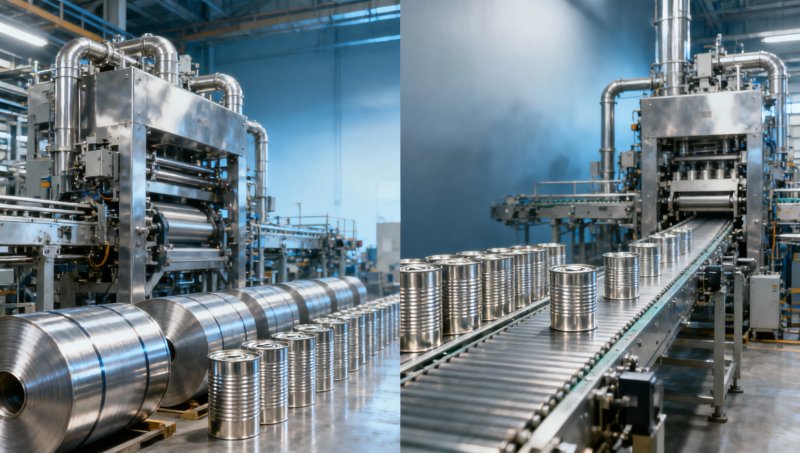
In the steel and metal packaging supply chain, many purchasing errors happen before technical discussion even starts. Buyers often compare quotations line by line, but they do not compare the full production logic behind the line. A lower initial price may hide weaker frame rigidity, limited speed stability, or poor compatibility with downstream sealing and coating equipment. In practical terms, these issues usually appear after installation, not before payment.
Another common problem is treating all can line projects as standard equipment orders. In reality, a tin can production line is a system project involving steel structure support, material feeding, forming accuracy, utility planning, and operator workflow. For medium-output projects, even a deviation of ±0.5 mm in feeding or forming alignment can affect seaming quality, scrap ratio, and maintenance frequency over 2–3 shifts of daily operation.
This matters to different decision makers in different ways. Technical evaluators focus on machine stability and tolerance control. Procurement teams focus on unit cost and lead time, often within 4–8 weeks of project approval. Finance teams care about total cost of ownership over 3–5 years, not just the purchase contract. Project managers care about installation windows, commissioning sequence, and production ramp-up risk.
For buyers working with steel-intensive projects, the same discipline used in structural steel sourcing should also guide line procurement: verify standards, confirm materials, assess manufacturing capability, and map the full application scenario. Companies such as Hongteng Fengda, with experience in structural steel manufacturing and export, understand how material consistency, fabrication control, and dependable delivery directly affect industrial project outcomes.
The 4 early warning signs before you place an order
- The supplier only discusses line speed, but does not explain stability at continuous operation intervals such as 8 hours, 16 hours, or 24 hours.
- The quotation does not clearly define included units, utility requirements, wear parts, or commissioning scope.
- There is no clear statement about compatibility with raw material specifications, coating systems, or downstream can handling equipment.
- The supplier cannot explain quality control checkpoints, inspection documents, or common international standards used by export customers.
Which buying mistakes create the highest long-term cost?
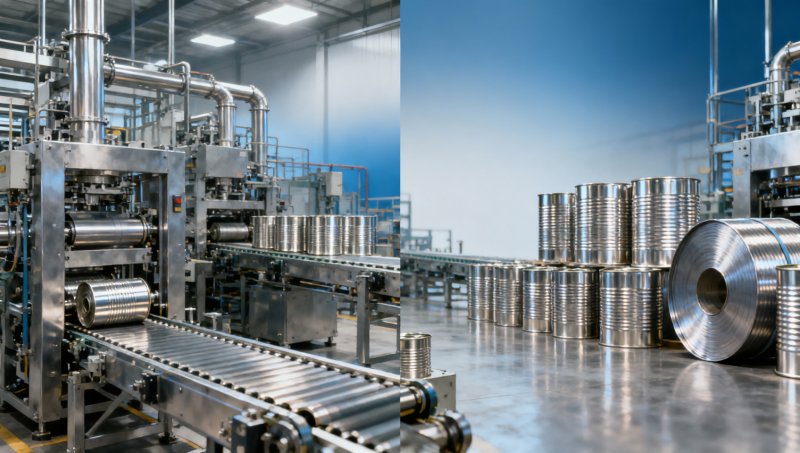
The most expensive mistake is buying a production line that matches the requested speed on paper but fails in real operating conditions. This usually happens when buyers ignore material behavior, line integration, and maintenance access. A line rated for a target output may still lose efficiency if operators need frequent adjustment every 30–60 minutes, or if die changeover takes 2 hours instead of 20–40 minutes.
A second major mistake is failing to define the steel input correctly. Can production performance is closely linked to the consistency of sheet flatness, thickness range, and surface condition. When buyers source packaging-related systems together with industrial steel materials, they should review whether the supplier understands broader steel application requirements. This is where cooperation with an experienced Chinese structural steel exporter can support risk control across the project chain.
For example, in projects that also involve construction support, workshop structures, or material handling systems, selecting reliable steel products is part of operational planning. At the material stage, buyers may also evaluate Cold Rolled Steel Coil for related fabrication or steel structure applications. Typical available grades include Q355, Q345B, Q345C, Q420, Q460, and 16Mo3, with thickness ranges commonly specified from 0.1 mm to 300 mm depending on application needs.
A third mistake is underestimating service response and spare-part planning. For export projects across North America, Europe, the Middle East, and Southeast Asia, buyers should ask what wear parts are recommended for the first 6–12 months, what documents are supplied with shipment, and whether the supplier can support standard compliance discussions based on ASTM, EN, JIS, or GB references when relevant.
Comparison of common buying mistakes and their practical impact
The table below helps procurement, engineering, and finance teams compare frequent selection mistakes against the risks that appear during installation and operation.
The key lesson is simple: the wrong line rarely fails because of one dramatic defect. It usually underperforms through many small gaps in specification, materials, service scope, and daily maintainability. These hidden losses can become more expensive than the original equipment price difference.
What should procurement and engineering teams verify before buying?
A disciplined evaluation process reduces risk for almost every stakeholder. Before confirming a tin can production line order, buyers should align 5 core dimensions: target output, material range, product specification, utility conditions, and after-sales support. If any one of these remains vague, quotation comparison becomes misleading because suppliers may be pricing different technical scopes.
For steel-related industrial projects, material support around the line is also important. Structural bases, equipment frames, storage racks, and workshop modifications often require dependable steel supply with standard-compliant quality. Hongteng Fengda supports global construction and industrial customers with angle steel, channel steel, steel beams, cold formed steel profiles, and customized structural steel components, helping buyers coordinate material planning with equipment implementation.
When evaluating material options for project integration, buyers should look at grade, dimensions, surface condition, and applicable standards. For instance, the previously mentioned product range may cover lengths from 4 m to 12 m, widths from 0.6 m to 3 m, and both hot rolled and cold rolled specifications. This matters when a project combines machinery installation with steel framework, load-bearing beams, trusses, or curtain wall support components.
A practical purchasing review should include both factory capability and documentation capability. It is not enough that the supplier can manufacture. The supplier should also communicate drawing confirmation, quality inspection points, packaging method, export handling, and delivery planning. In most overseas projects, even a 7–15 day delay in one supporting steel component can affect line installation sequencing.
A 6-point pre-order checklist
- Define can type, diameter range, height range, and target output per hour or per shift.
- Confirm raw material type, thickness tolerance, surface finish, and compatibility requirements.
- Check utilities: power supply, compressed air, plant layout, and operator space.
- Ask for acceptance criteria covering speed, defect rate, training scope, and test conditions.
- Review export documents, packing standards, and expected lead time milestones from production to shipment.
- Prepare a spare-part and maintenance plan for the first 6–12 months of operation.
Selection matrix for cross-functional teams
The following table is useful when procurement, technical, and management teams need one common decision framework rather than separate assumptions.
This matrix prevents a common decision trap: one team approves on price, another approves on technical promise, but nobody checks whether the whole solution fits the plant, the material, and the project timeline. A structured review keeps the purchase commercially viable and operationally practical.
How do standards, steel materials, and project support affect the final result?
In industrial procurement, performance does not come from machinery alone. It also depends on material consistency, installation support, and compliance readiness. Buyers in construction, manufacturing, and industrial processing often manage linked purchases at the same time: production equipment, steel structures, custom steel components, and export documentation. Weakness in one area can delay the whole project by 2–4 weeks or create costly rework on site.
That is why suppliers with strong steel manufacturing systems can add practical value beyond product catalogues. Hongteng Fengda operates with modern manufacturing facilities and strict quality control, supplying structural steel products aligned with major international standards such as ASTM, EN, JIS, and GB. For project teams, this means better coordination when workshop support frames, load-bearing members, or custom profiles must be supplied alongside production-line implementation.
From a quality and safety perspective, standards are not just paperwork. They influence inspection language, acceptance expectations, and engineering communication across regions. For example, North American buyers may emphasize ASTM references, European buyers may request EN familiarity, and Asian projects may involve GB or JIS discussion. Clear standard alignment reduces misunderstanding during drawing approval, material substitution review, and inbound inspection.
Material choice also affects durability and cost balance. In steel support applications, buyers often prefer options with moderate strength, balanced mechanical properties, and high cost-effectiveness rather than over-specified grades. In many cases, the right selection helps reduce steel consumption and lower structural self-weight while still meeting load-bearing needs for frameworks, beams, trusses, or support assemblies.
Practical compliance and project coordination points
- Ask which standard system the material and inspection documents will reference before order confirmation, not after production starts.
- Confirm whether supporting steel components are standard sizes or OEM-fabricated parts, because this affects drawing approval and delivery scheduling.
- Check whether surface condition requirements are basic clean finish or blasting and painting according to project requirements.
- For multi-country supply chains, align packaging, marking, and inspection records early to avoid customs or receiving delays.
FAQ: what do serious buyers usually ask before final approval?
How should we compare two tin can production line quotations fairly?
Compare them on the same 5 dimensions: actual output condition, included machine scope, raw material compatibility, commissioning content, and spare-part package. If one quotation includes testing, training, and critical wear parts for the first 6 months while another does not, the lower number is not a true cost comparison.
What delivery period is reasonable for related steel support materials?
The answer depends on specification complexity, quantity, and whether the steel items are standard or customized. In common export practice, buyers should expect time for drawing confirmation, production scheduling, inspection, packing, and shipment coordination. For project planning, it is safer to work with milestone windows rather than one single promised date.
Is lower-strength steel always a bad choice for industrial support structures?
No. The correct choice depends on the load case, design margin, fabrication method, and cost target. In many structural applications, balanced mechanical properties and practical fabricability are more important than simply choosing the highest grade. Over-specification can raise cost without improving the real project result.
What should quality teams inspect first on arrival?
Start with 4 basics: packing condition, quantity and marking, dimensional consistency, and documentation match. Then review surface condition, visible transport damage, and any agreed inspection records. Early inspection is especially important when installation is scheduled within a tight 7–10 day receiving window.
Why work with Hongteng Fengda for steel-related industrial projects?
For buyers trying to avoid costly purchasing mistakes, supplier capability should be measured by reliability, clarity, and coordination support. Hongteng Fengda is a professional structural steel manufacturer and exporter from China, serving global construction, industrial, and manufacturing projects with stable production capacity, consistent quality, and dependable lead times.
Our strength is not limited to supplying steel products. We help project teams connect specification review, material selection, OEM customization, quality control, and export delivery into one workable sourcing process. This is especially valuable when your project includes structural steel frameworks, custom components, or schedule-sensitive installations across multiple departments and approval stages.
If you are evaluating a tin can production line and also need support for related steel materials, workshop structures, or customized structural components, we can discuss application requirements, standards alignment, dimensional ranges, surface treatment options, and delivery planning in a practical way. That gives procurement, engineering, and management teams clearer decision support before they commit budget.
Contact us to discuss product selection, material grades, drawing confirmation, estimated lead time, standard references, sample support, OEM requirements, or quotation details. A focused technical and commercial review at the start of the project can prevent expensive corrections later.
Please give us a message


Please enter what you want to find