Choosing the right structural steel beams for construction is essential for safety, load performance, and project efficiency. Different beam grades offer varying strength, weldability, and cost advantages, making selection a key step for builders and operators. This guide explains how to match beam grades with load requirements while helping global buyers source reliable steel solutions with confidence.
What Users Really Need to Know Before Choosing a Beam Grade
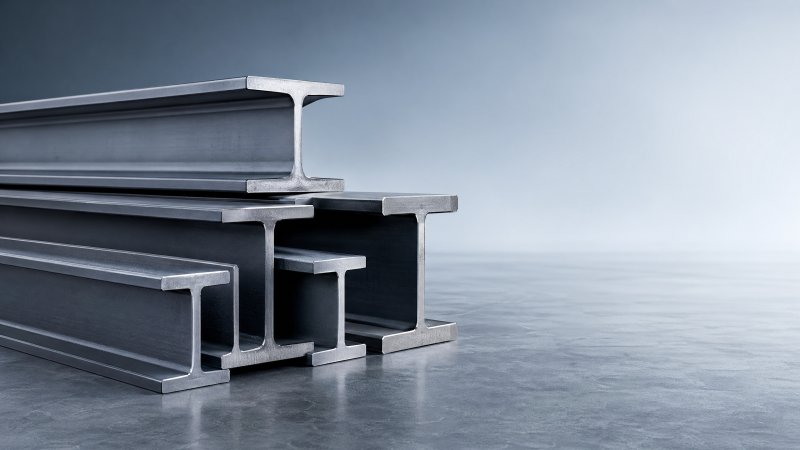
When people search for structural steel beams for construction, they usually are not looking for a textbook definition of steel grades. They want a practical answer to one question: which beam grade is strong enough for the load, safe for the job, and reasonable for the budget. For operators, site users, and project execution teams, the most important issue is not theory alone, but whether the beam will perform reliably in real working conditions.
The short answer is this: the correct grade depends on the load type, span, connection method, fabrication process, code requirements, and service environment. A heavier load does not automatically mean you should choose the highest grade available. In many projects, a standard grade such as A36, S235, SS400, or Q235 may be sufficient. In other cases, higher-strength grades such as Q345, S355, or St52 can reduce section size, lower structural weight, or improve overall efficiency.
For most readers in construction operations, the biggest risk is choosing based only on price or availability. If the grade is too low, deflection, deformation, or safety issues may appear under service loads. If the grade is too high without real need, welding complexity, sourcing difficulty, and cost may increase. A good selection balances mechanical performance, fabrication convenience, and compliance with the project specification.
How Beam Grade Affects Load Capacity in Real Construction Work
Beam grade influences yield strength, tensile strength, ductility, weldability, and sometimes toughness. Among these properties, yield strength is usually the first number engineers and buyers look at because it indicates how much stress the steel can take before permanent deformation begins. A higher yield strength can allow the beam to support more load or achieve the same performance with a lighter section.
However, load capacity is never determined by grade alone. The shape and size of the beam, including flange width, web thickness, and section depth, play a major role. A lower-grade beam with a larger section may perform better than a higher-grade beam with an undersized section. This is why practical beam selection should always consider both material grade and section geometry together rather than treating them as separate decisions.
Operators should also remember that actual loads are not limited to static weight. Construction beams may face moving equipment loads, impact loads, vibration, uneven distribution, and temporary erection stresses. In these situations, a beam that looks acceptable on paper may still require a more suitable grade or better section design to maintain safety, stiffness, and long-term reliability.
Which Common Structural Steel Grades Are Used for Construction Beams
Several beam grades are widely used in global construction markets, and many are equivalent or near-equivalent under different standards. For example, ASTM A36 is common in North America, while S235 and S355 are widely recognized in European projects. SS400 is often used in Japanese and Asian supply chains. Q235 and Q345 are common Chinese structural steel grades with broad use in industrial and commercial construction.
As a practical guide, A36, SS400, Q235, St37, and S235 grades are often selected for general structural work where the loads are moderate and fabrication needs are straightforward. They are valued for stable performance, easy processing, and broad availability. These grades work well for platforms, frames, secondary structures, light industrial buildings, and many standard support systems where extreme strength is not the main requirement.
Q345, S355JR, S235J0, S235J2, and St52 are more suitable when higher strength, improved performance under demanding conditions, or better optimization of member size is required. In many industrial projects, these grades help reduce dead weight and improve design efficiency. That does not mean they are always the best choice, but they become attractive when spans are longer, loads are higher, or the design must control steel consumption more carefully.
How to Match the Beam Grade to the Load Instead of Guessing
A practical way to choose structural steel beams for construction is to start with the actual service conditions. Ask four questions first: What load will the beam carry? Over what span? Will it support static, dynamic, or impact loads? And will the beam be welded, bolted, cut, or modified on site? These answers often narrow the suitable grade range more effectively than simply starting from a steel catalog.
For light to medium duty applications, such as walkways, equipment frames, or ordinary support members, standard grades with proven weldability and easy availability are often enough. In these cases, section size and layout may matter more than moving to a premium grade. If the beam carries concentrated machinery loads, crane-related forces, or heavy industrial floor loads, higher strength grades become more relevant because they can improve load resistance and section efficiency.
Deflection control is another key point. Many users focus only on ultimate strength, but in real operations, excessive bending can create service problems long before a beam reaches failure. Doors may misalign, equipment may vibrate, platforms may feel unstable, and connected members may experience stress. Choosing the right grade should therefore support both strength and stiffness requirements, especially in industrial structures where functional performance matters every day.
Why Weldability, Fabrication, and Tolerance Matter as Much as Strength
On a real project, the best beam is not only the strongest one. It is the one that can be processed, welded, transported, installed, and inspected without creating unnecessary risk. Many construction teams prefer grades with predictable welding behavior and stable forming performance because installation speed and fabrication quality affect the entire schedule. A steel grade that causes rework or connection issues can become expensive even if the material price looks attractive at the start.
This is where product consistency becomes valuable. For example, a hot rolled universal mill beam with controlled dimensions is easier to fit into prefabricated assemblies than a product with unstable web or flange tolerances. Mid-project adjustments consume labor, delay lifting plans, and may affect structural accuracy. For operators and site teams, dimensional control is not a minor specification detail. It directly affects efficiency, safety, and the ease of connection work.
In many industrial structure projects, buyers look for products that support bending, welding, punching, and cutting while remaining economical. A suitable option can be Structural Steel I Beam, which is available in grades such as Q195-Q235, Q345, SS355JR, SS400, A36, ST37-2, S235J0, S235J2, and St52. With thickness from 4.5 mm to 15.8 mm, lengths from 6 to 12 meters, tolerance of ±1%, and compliance with JIS, ASTM, DIN, GB, and EN standards, this kind of beam can serve industrial structure applications while offering flexibility for global sourcing and processing needs.
What Operators Should Check Before Approving a Beam for Site Use
If you are responsible for receiving, handling, or using steel beams on site, grade selection should not stop at the purchase order. You should verify the mill test certificate, grade marking, dimensions, straightness, surface condition, and standard compliance before the beam enters critical use. A correct grade on paper is not enough if the delivered material has dimensional inconsistency, traceability gaps, or visible deformation from transport.
Check whether the supplied beam matches the project drawing in length, web depth, flange width, and thickness. Confirm whether the beam will be welded or bolted in the field, because some adjustments may affect the fabrication method. If a beam is expected to carry repeated operational loads, review not only strength but also toughness and service behavior. This is especially important in industrial environments where steel members are exposed to frequent use and mechanical stress.
It is also wise to ask whether local standards or the client’s technical specification require a specific equivalent grade. A beam sold as “similar to” another grade may not always satisfy formal approval or inspection requirements. Reliable suppliers should be able to provide clear documentation and explain equivalence across ASTM, EN, JIS, and GB systems. This reduces the risk of substitution problems during project audits or third-party inspection.
When Higher Grade Steel Is Worth the Extra Cost
Not every project benefits from upgrading to higher-strength steel, but some do. If a structure has long spans, heavy equipment loading, strict weight limits, or a need to reduce member size, then moving from a basic grade to a stronger one can improve the total project result. In these cases, the higher material cost may be offset by lower tonnage, easier transport, fewer supports, or improved usable space within the structure.
For export buyers and procurement teams, total cost should include more than the beam price per ton. Consider fabrication efficiency, scrap reduction, installation speed, lead time reliability, and compliance risk. A lower-priced beam that arrives late, lacks documentation, or requires extensive rework may cost more overall than a properly specified grade from a dependable manufacturer. This is particularly true for international projects where schedule delays affect multiple contractors.
On the other hand, if the structure is relatively simple and the loading is moderate, standard grades remain a smart and cost-effective choice. They are often easier to source in volume, simpler to process, and fully capable of meeting ordinary building needs. Good beam selection is not about choosing the highest specification available. It is about selecting the right level of performance for the real job conditions.
How Global Buyers Can Reduce Risk When Sourcing Structural Steel Beams
For companies sourcing structural steel beams for construction from overseas, reliability is as important as technical performance. Buyers should evaluate the manufacturer’s production capability, quality control process, export experience, and standard coverage. A supplier that understands ASTM, EN, JIS, and GB requirements is better prepared to support international projects with fewer misunderstandings and faster document handling.
Stable lead times also matter. Construction schedules rarely tolerate uncertainty in steel supply, especially when beams are needed for critical framing stages. Manufacturers with modern production facilities, clear inspection procedures, and established export operations can help reduce sourcing risk. This is particularly valuable for buyers managing projects across North America, Europe, the Middle East, or Southeast Asia, where standard expectations and logistics conditions may differ.
Working with an experienced structural steel manufacturer can also improve customization options. Some projects need non-standard lengths, specific flange or web dimensions, OEM processing, or tailored packing for export. A supplier with the ability to provide customized structural steel components alongside standard beams can simplify procurement and support smoother project execution from fabrication to installation.
Final Decision: Which Grade Fits the Load?
The best grade for a construction beam is the one that safely handles the actual load, suits the fabrication method, complies with the project standard, and supports efficient installation. For general building and light industrial use, grades such as A36, SS400, Q235, St37, and S235 often provide the right balance of performance and cost. For heavier loads, longer spans, and optimized structural designs, higher-strength options such as Q345, S355, or St52 may be the better fit.
The most important takeaway is that beam selection should be based on load conditions and service requirements, not assumptions. Strength matters, but so do stiffness, weldability, tolerance, certification, and supply reliability. When these factors are considered together, buyers and operators can avoid both under-specifying and over-specifying the steel.
If you are comparing structural steel beams for construction, use a practical decision process: define the load, check the span, review the code, confirm fabrication needs, and source from a manufacturer that can document quality and deliver consistently. That approach leads to safer structures, better cost control, and fewer surprises during construction and operation.
Please give us a message


Please enter what you want to find