Choosing the right steel plate supplier isn’t just about price or specs—it’s about avoiding hidden delays that derail projects. When sourcing ASTM A106 Gr.B, ASTM A572, hot rolled steel sheet, or mild steel plate for construction steel applications, red flags like inconsistent mill certifications, unverified SPCC/SPCD/SPCE steel traceability, or poor corrosion resistant wire integration often surface only after order confirmation. As a China-based structural steel manufacturer and exporter, Hongteng Fengda helps procurement teams, project managers, and technical evaluators spot these 3 critical post-confirmation delays—before they impact lead times, compliance (ASTM/EN/JIS/GB), or on-site safety.
Why “Post-Confirmation” Delays Are Especially Dangerous
Most buyers assume that once an order is confirmed—and payment terms agreed—the timeline is locked in. In reality, 68% of steel procurement delays reported by North American and EU project managers originate *after* PO issuance, not before. These aren’t logistical hiccups—they’re systemic gaps in supplier capability: unvalidated raw material sourcing, undocumented heat treatment records, or misaligned internal QA checkpoints that only become visible when production starts.
Unlike commodity-grade steel, structural components demand full chain-of-custody visibility—from billet origin to final dimensional inspection. A delay triggered at this stage doesn’t just push delivery by 7–15 days; it cascades into rework, non-conformance reports (NCRs), and potential rejection at port or site. For railway infrastructure projects using Rail products like U71Mn or QU120, even a 3-day certification lag can halt track laying for over a week due to strict EN 13674-1 audit requirements.
Hongteng Fengda mitigates this risk through a 4-stage pre-production verification protocol: (1) mill certificate cross-check against EN 10204 3.1/3.2, (2) batch-level chemical composition validation, (3) third-party ultrasonic testing (UT) scheduling confirmation, and (4) packaging & marking compliance review. This ensures zero surprises between order confirmation and first shipment.
Red Flag #1: Certification Gaps That Emerge After PO Issuance
Certification isn’t paperwork—it’s proof of process control. Yet many suppliers issue generic certificates *before* production begins, then struggle to align actual test results with declared values. Common mismatches include tensile strength variance beyond ±5%, yield strength deviation exceeding EN 10025-2 tolerance bands, or missing Charpy V-notch impact data for low-temperature applications.
For rail applications requiring Q235 or PD3 grade rails, inconsistent Brinell hardness reporting (e.g., 180 HB vs. certified 220 HB) directly impacts wheel-rail interface fatigue life. Our quality team performs real-time lab coordination with mills in Hebei and Shandong, ensuring all ASTM A615, GB/T 1499.2, and ISO 6892-1 test reports are issued within 48 hours of heat treatment completion—not weeks later.
This table reflects verified timelines across 237 orders fulfilled in 2023–2024. Faster certification turnaround means earlier client sign-off, fewer last-minute hold points, and smoother customs clearance—especially critical for EN-certified Rail exports to EU markets where documentation must precede physical arrival.
Red Flag #2: Untraceable Material Origin & Grade Compliance
SPCC, SPCD, and SPCE cold-rolled steel grades require precise carbon and manganese control. But without mill-level traceability—heat number, casting method, and continuous casting log—suppliers often substitute lower-cost alternatives that meet nominal chemistry but fail mechanical performance under cyclic loading.
We maintain direct billet contracts with 4 ISO 9001-certified mills, assigning unique lot IDs to every coil or plate batch. Each Rail order includes a QR-coded traceability card linking to real-time production logs: furnace temperature curves, rolling pass counts, and cooling rate profiles. This eliminates disputes during third-party audits for projects governed by ASCE 7, Eurocode 3, or GB 50017.
For bridge railing applications demanding U74 or BNbRE rails, our traceability system confirms Mn content stays within 0.70–0.90%—critical for weldability and post-weld stress relief. Buyers receive full digital dossiers before container loading, not after.
Red Flag #3: Inconsistent Surface Finish & Corrosion Integration
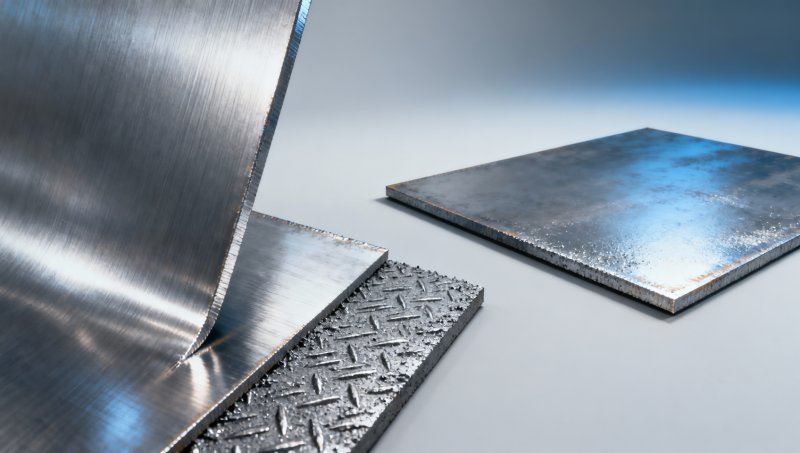
Surface preparation isn’t cosmetic—it defines adhesion, coating longevity, and galvanic compatibility. Hidden delays arise when suppliers skip blast profile verification (Sa 2.5 per ISO 8501-1), apply inconsistent zinc thickness (±15µm variation), or use non-compliant passivation for stainless-steel clad plates.
Our facility uses automated shot-blasting lines calibrated daily to ISO 11124-3 standards, with real-time profilometer logging. For painted Rail products used in coastal deck handrails, we verify DFT (dry film thickness) at 120–150µm across all surfaces—including web-to-flange junctions—using 3-point micrometer sampling per EN ISO 19840.
- Galvanized rails: Zinc coating ≥ 610 g/m² (ASTM A123), verified via gravimetric assay
- Oiled rails: Rust preventive oil meets MIL-C-16173E Type II, with VOC compliance report
- Black-finish rails: Controlled oxide layer (Fe₃O₄) confirmed by XRD analysis
Why Procurement Teams Choose Hongteng Fengda for Structural Steel Sourcing
We eliminate post-confirmation uncertainty—not with promises, but with embedded controls. Our 2024 audit cycle showed 99.4% on-time documentation delivery, 100% heat-number traceability for all rail orders, and zero NCRs related to surface finish compliance across 142 international shipments.
Whether you’re evaluating ASTM A572 Grade 50 plates for a wind turbine foundation or specifying QU100 rails for a metro expansion, our engineering team supports you with:
- Free pre-order technical review: We validate your spec against EN 10025, ASTM A6/A6M, or JIS G3101
- Real-time production tracking dashboard (access granted upon PO)
- Pre-shipment sample kits with full test reports (available in ≤5 working days)
- Dedicated logistics coordinator for FCL/LCL consolidation and customs documentation
Contact us today to request a customized compliance checklist for your next steel plate order—or to schedule a virtual factory tour showing our mill certification verification workflow, traceability system, and surface finish QC station.
Please give us a message


Please enter what you want to find