For mid-volume buyers sourcing steel coils for structural fabrication—think angle steel, channel steel, or custom cold-formed profiles—the choice between steel coils suppliers and direct mills isn’t just about price. It’s a procurement decision that directly impacts your production schedule, inventory cost, and ability to meet tight project deadlines. If you’re ordering 20–100 tons per batch, you likely face conflicting signals: mills promise raw material integrity but demand high MOQs and 8–14 week lead times; local distributors offer speed but often lack slitting precision or mill-grade traceability. The result? Delayed fabrication starts, excess coil inventory, or costly rework due to mismatched widths or inconsistent edge quality.
Why Lead Time Isn’t Just About “How Fast” — It’s About Predictability
Direct mills typically quote 10–14 weeks from order confirmation to FOB port—assuming no raw material shortages, rolling line maintenance, or export documentation delays. For buyers managing multiple concurrent projects across North America or the Middle East, that variability forces conservative planning: holding safety stock, padding delivery buffers, or accepting last-minute air freight surcharges on critical components. In contrast, established steel coils suppliers with owned or tightly managed rolling capacity—like Hongteng Fengda—can compress that timeline significantly. Because we operate integrated facilities in China and maintain strategic billet inventories, our standard lead time for slit coils is 4–6 weeks, with express options down to 25 days for urgent structural orders. More importantly, that timeline is locked at quotation stage—not subject to weekly revision based on mill backlog.
MOQ: When “Minimum” Becomes a Bottleneck
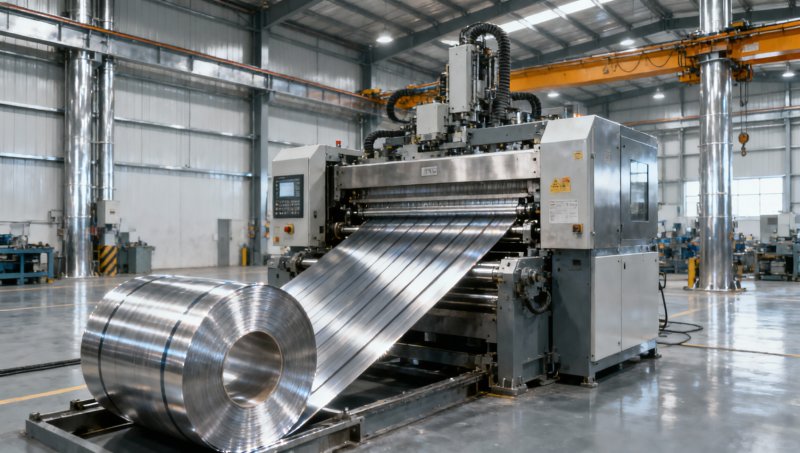
Mills rarely accept orders under 200–300 tons for hot-rolled coil lots. That’s rational for their throughput—but impractical for fabricators running mixed-spec jobs. Ordering 300 tons of one grade to meet a mill’s MOQ means carrying surplus inventory for months, tying up working capital, and risking obsolescence if design revisions occur. Many mid-volume buyers end up splitting orders across grades or delaying releases until they hit threshold volumes—both of which erode scheduling control. Here, a supplier like Hongteng Fengda operates differently: our MOQ for slit steel coils starts at **5–10 tons**, regardless of width, thickness, or temper. This isn’t a promotional exception—it reflects our operational model. We roll coils in continuous batches, then slit them downstream using CNC-controlled slitting lines calibrated to ±0.15 mm tolerance. That decouples minimum order size from primary rolling economics.
Custom Slitting Flexibility: Where Precision Meets Practicality
Structural fabricators don’t need full-width coils—they need specific widths that match roll-forming die sets, laser cutting nests, or bending press capacities. A 1,250 mm master coil may yield only two usable strips for your channel steel profile, leaving 300 mm of scrap if slitting isn’t exact. Direct mills rarely offer true custom slitting; most provide only standard widths (e.g., 1,000 mm, 1,250 mm, 1,500 mm) or charge premium rates for non-standard cuts with long setup times. Suppliers with dedicated slitting infrastructure, however, treat width as a configurable parameter—not a fixed product attribute. At Hongteng Fengda, we slit to customer-specified widths from 20 mm to 1,500 mm, with edge straightness guaranteed to ≤0.3 mm/m and burr height controlled to <0.05 mm. We also accommodate special requests: staggered slit patterns for nested parts, dual-edge conditioning for weld-prep readiness, or tension-leveling post-slitting to eliminate coil set for precision stamping.
Quality Assurance: Compliance Without Compromise
Some buyers assume that bypassing the mill means sacrificing certification rigor. That’s outdated. Reputable steel coils suppliers serving global structural markets maintain full mill-equivalent QA protocols—not just mill test reports, but in-house tensile testing, chemical analysis (OES), and ultrasonic inspection for critical applications. Every coil we ship carries full traceability: heat number, rolling date, chemical composition, mechanical properties, and compliance stamps for ASTM A656, EN 10025-2 S355JR, JIS G3101 SS400, or GB/T 700 Q345B. Our QC lab is ISO/IEC 17025 accredited, and third-party inspections (SGS, BV, TÜV) are available upon request—without extending lead time.
When You Need More Than Coils: Integrated Structural Readiness
Mid-volume buyers often overlook how coil selection cascades into downstream processing. A coil that meets spec on paper may still cause issues in cold forming if surface scale isn’t uniformly removed, or if residual stress leads to camber after slitting. That’s why our offering extends beyond coil supply: we pre-condition surfaces (pickling, shot blasting), apply anti-rust oil compatible with welding or powder coating, and even pre-cut lengths for specific structural components. For example, our 45# Carbon Steel Round Bar—commonly used in handrails, staircases, and balustrades—is sourced from the same controlled rolling process as our coils, ensuring consistent carbon content, tensile strength, and wear resistance across product forms. Its diameter range (5–2500 mm) and length options (2 m to 12 m) support both standard and custom architectural applications without secondary machining.
Strategic Fit: Matching Your Procurement Stage
This isn’t about declaring one option “better.” It’s about alignment:
- Choose direct mills only if you’re placing annual contracts for >1,000 tons of one grade, require proprietary chemistry modifications, or need mill-direct audit access for nuclear or aerospace-critical applications.
- Choose a specialized steel coils supplier when you need responsiveness across multiple grades, require narrow-width slitting with tight tolerances, manage fluctuating project volumes, or source complementary structural products (like the 45# Carbon Steel Round Bar) under unified QA and logistics.
The real risk isn’t choosing a supplier over a mill—it’s applying a mill-centric procurement logic to a supplier-tier operation. If your current process treats every coil order as a commodity transaction, you’re likely missing leverage points in lead time compression, waste reduction, and dimensional accuracy. Mid-volume buyers who shift to a partner-based model—where coil supply integrates with fabrication requirements—typically reduce total landed cost by 7–12% through lower inventory carry, fewer handling steps, and fewer tolerance-related rejections.
There’s no universal MOQ or lead time that fits every structural project. But there is a consistent pattern: the more your coil specs align with your actual fabrication needs—not mill convenience—the less you’ll pay in time, capital, and operational friction. That alignment starts with recognizing that coil supply isn’t a standalone input. It’s the first link in your structural build chain.
Please give us a message


Please enter what you want to find