For procurement teams comparing steel coils suppliers, the real cost goes far beyond the base metal price. Factors such as coating, grade, dimensions, order volume, processing, compliance standards, freight, and supplier reliability all influence total purchasing value. Understanding these cost drivers helps buyers reduce sourcing risks, control budgets, and choose partners that deliver consistent quality and dependable supply.
What procurement teams should really compare when evaluating steel coils suppliers
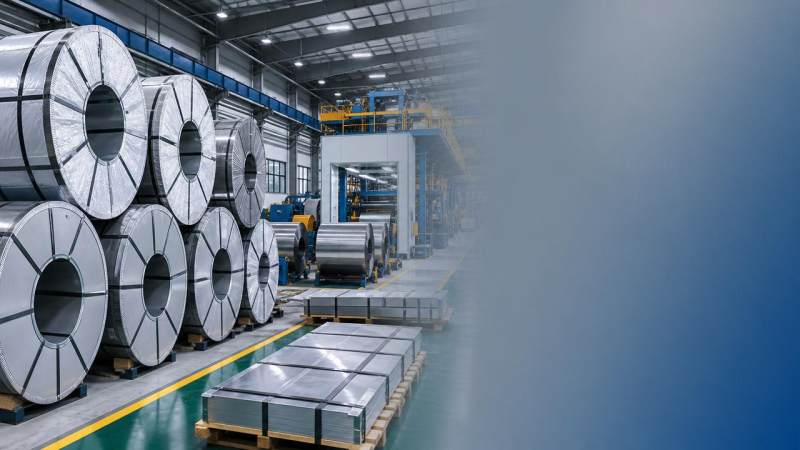
Many buyers start with a quoted ton price, but experienced procurement managers know that the cheapest offer can become the most expensive order. In steel purchasing, hidden cost often comes from inconsistent quality, unclear specifications, rework, delivery delays, and compliance gaps.
This is especially true when comparing steel coils suppliers across different export regions. A low ex-works figure may exclude coating thickness control, slit edge quality, packaging, inspection, or destination freight. Once these items are added, the total landed cost changes significantly.
For buyers in construction, manufacturing, and industrial projects, procurement decisions should focus on total acquisition value instead of base metal cost alone. That means evaluating product suitability, standard compliance, conversion efficiency, production stability, and supplier response capability.
- Base steel price only reflects the raw material market at a given time and does not cover all project-specific requirements.
- Processing, coating, tolerances, and documentation can raise or lower real procurement value.
- Stable lead time and repeatable quality often save more money than a slightly lower initial quote.
Which price factors matter beyond the base metal cost?
When steel coils suppliers prepare quotations, the final price is built from multiple technical and commercial variables. Buyers who understand these drivers can negotiate more accurately and prevent disputes caused by mismatched assumptions.
Material grade and mechanical requirements
Different grades carry different alloy content, yield strength, tensile strength, and forming behavior. A coil made to ASTM, EN, JIS, or GB requirements may have a higher price than a general commercial grade, but it reduces the risk of failure in downstream fabrication or structural use.
Coating type and coating weight
Galvanized, pre-painted, or other coated coils are priced not only by steel substrate, but also by coating thickness, zinc consumption, surface finish, and corrosion resistance requirements. In aggressive environments, under-specifying coating to save cost often leads to much higher maintenance or replacement expense later.
Thickness, width, and tolerance control
Non-standard dimensions, narrow tolerance demands, and strict flatness requirements can increase production complexity. A supplier may need dedicated rolling schedules, extra inspection, or slitting operations, all of which affect price and lead time.
Order quantity and mill efficiency
Small trial orders usually cost more per ton than container-level or recurring volumes. Steel coils suppliers can optimize production planning, packaging, and freight when orders are larger or forecasted in advance. Procurement teams with stable demand often gain better commercial terms through longer-term supply planning.
Processing and conversion services
Slitting, cut-to-length, perforation, punching, forming, and OEM fabrication all add value, but also affect pricing. Buyers should compare whether outsourced conversion at destination is truly cheaper than integrated supply from the manufacturer.
The table below helps procurement teams compare the most common cost elements used by steel coils suppliers during quotation and contract review.
A quotation becomes truly comparable only when these variables are aligned. Procurement teams should request a detailed price breakdown instead of comparing headline numbers from different steel coils suppliers.
How do standards, testing, and documentation affect real purchasing cost?
For global buyers, compliance is not a paperwork formality. It directly affects import clearance, downstream approval, installation safety, and project acceptance. In many cases, a supplier with a slightly higher price but complete documentation creates lower commercial risk.
Structural and industrial projects commonly require material certificates, dimensional inspection records, coating data, and conformity with standards such as ASTM, EN, JIS, or GB. If the supplier cannot provide consistent documentation, the buyer may face site delays or secondary testing costs.
- Check whether the quoted product standard matches the actual project specification.
- Confirm if mill test certificates, inspection reports, and packing lists are included in the commercial scope.
- Ask whether third-party inspection is possible before shipment if the project is compliance-sensitive.
Hongteng Fengda supports international buyers with structural steel products manufactured under strict quality control and aligned with major global standards. For procurement teams, this helps reduce sourcing uncertainty when projects span different regional code systems.
Why freight, packaging, and delivery reliability can outweigh a lower unit price
A frequent mistake in steel sourcing is to compare FOB offers without calculating inland transport, port handling, ocean freight, insurance, destination charges, and loading efficiency. Steel coils suppliers with stronger export coordination may provide better total cost even when nominal unit price is not the lowest.
Packaging also matters. Inadequate protection can cause edge damage, corrosion, shape deformation, or identification errors. Such issues lead to claims, production interruption, and material sorting losses. For coils shipped long distance, proper strapping, wrapping, waterproofing, and marking are practical cost controls.
Lead time reliability is equally critical. If a delayed shipment stops a fabrication line or construction schedule, the resulting cost may exceed the original purchase savings. Procurement managers should therefore review production capacity, booking flexibility, and communication responsiveness before awarding orders.
The comparison below shows how buyers can assess total landed value instead of focusing only on base metal cost when screening steel coils suppliers.
This does not mean buyers should always choose the higher offer. It means they should normalize freight terms, packaging scope, inspection scope, and delivery commitments before comparing numbers.
What role does downstream processing play in supplier selection?
For many projects, coils are not the final product. They become profiles, frames, purlins, wall members, brackets, or fabricated structural components. That is why procurement teams often benefit from suppliers that understand not only steel production, but also downstream forming and application requirements.
A practical example is C Sections Steel, which is widely used in purlins and wall beams of steel structure buildings, lightweight roof trusses, brackets, and mechanical light industry components. Depending on the project, buyers may choose grades such as Q195, Q235, Q345, A36, SS400, or S235JR.
This type of formed section can be supplied in thicknesses from 1mm to 12.mm, common lengths including 6m, 9m, and 12m, with surface options such as galvanized, powder coating, or black varnish. Buyers may also require perforated or not perforated specifications, slit edge or mill edge, and tolerance around ±1%.
For procurement teams, this matters because the source coil specification must match the final section performance and forming method. If the steel coils suppliers do not understand end-use conversion, they may quote material that appears cheaper but performs poorly during rolling, punching, or installation.
- Confirm whether the coil grade supports the required bending, punching, or roll-forming process.
- Check if coating selection fits the service environment of the final profile.
- Review whether the supplier can support standard sections and OEM structural components in one sourcing plan.
Hongteng Fengda specializes in angle steel, channel steel, steel beams, cold formed steel profiles, and customized structural steel components. This broader manufacturing capability helps buyers connect raw material decisions with downstream application performance.
How should buyers build a practical procurement checklist?
A disciplined procurement process improves quote accuracy and reduces the back-and-forth that often delays steel sourcing. Instead of requesting price only, buyers should prepare a technical and commercial checklist before sending inquiries to steel coils suppliers.
- Define the application clearly, including structural use, fabrication method, exposure environment, and required service life.
- Specify grade, standard, thickness, width, coil weight range, and edge condition to avoid quotation mismatches.
- State coating type, coating thickness, or surface treatment if corrosion resistance is important.
- Request documentation requirements such as material certificate, dimensional report, and any inspection preference.
- Clarify trade terms, delivery destination, packaging expectation, and target lead time.
- Ask whether customized processing or OEM supply is needed now or in later phases.
When this information is shared upfront, suppliers can quote more accurately, and buyers can compare proposals based on aligned assumptions instead of rough market numbers.
Common mistakes buyers make when comparing steel coils suppliers
Mistake 1: Comparing different technical scopes as if they were equal
One quote may include a defined coating mass, export packaging, and inspection records, while another may not. Comparing only the unit price creates a false conclusion.
Mistake 2: Ignoring downstream yield and fabrication loss
A cheaper coil with poor tolerance or flatness can increase scrap, reduce line speed, and create forming defects. The final cost per usable part becomes higher.
Mistake 3: Underestimating compliance and shipment risk
If project approval requires traceable certificates or specific standard alignment, any documentation gap can delay unloading, fabrication, or site installation.
Mistake 4: Treating supplier capability as a secondary issue
Reliable steel coils suppliers do more than issue a quote. They help confirm application conditions, recommend practical specifications, control production consistency, and support scheduling under real project pressure.
FAQ for procurement teams sourcing from steel coils suppliers
How can I tell if a steel coil quote is truly comparable?
Check whether grade, thickness, width, tolerance, coating, edge condition, packaging, documentation, trade term, and lead time are all clearly stated. If any of these are missing, the quote is not fully comparable, even if the price looks attractive.
Which matters more: lower price or shorter lead time?
That depends on project impact. If delayed steel will stop fabrication or construction, shorter and more reliable lead time often creates greater value than a small price reduction. Buyers should estimate the cost of downtime before making the decision.
Should I source coils only, or ask for formed structural products too?
If your project requires consistent profiles, fabricated members, or OEM structural components, integrated sourcing can simplify quality control and scheduling. It also reduces coordination between separate raw material and processing vendors.
What documentation should I request from steel coils suppliers?
At minimum, ask for material certificates, dimensional confirmation, packing details, and standard reference. For coated products, request coating-related information as applicable. For compliance-sensitive projects, discuss inspection methods before order confirmation.
Why work with a structural steel manufacturer and exporter from China?
For global procurement teams, the best sourcing partner is often the one that combines manufacturing discipline, export experience, product range, and practical communication. Hongteng Fengda supports buyers with structural steel supply for construction, industrial, and manufacturing projects across North America, Europe, the Middle East, and Southeast Asia.
Because the company works across angle steel, channel steel, steel beams, cold formed steel profiles, and customized structural components, buyers can discuss more than just raw material price. They can align standard specifications, OEM needs, quality control expectations, and delivery planning within one supply conversation.
- Support for standard and customized structural steel requirements.
- Quality control aligned with common international standards such as ASTM, EN, JIS, and GB.
- Stable production capacity and export coordination for dependable lead times.
- Application-oriented communication that helps reduce sourcing risk and budget uncertainty.
Contact us for specification review, quotation alignment, and delivery planning
If your team is comparing steel coils suppliers and wants a clearer view of total purchasing cost, Hongteng Fengda can help review key technical and commercial points before you place an order. You can discuss grade selection, coating options, thickness and tolerance confirmation, processing requirements, and suitable structural steel alternatives based on your project use.
You can also request support for lead time evaluation, export packaging details, applicable standards, sample arrangements, OEM structural components, and quotation communication for both recurring and project-based demand. A well-defined inquiry usually leads to faster pricing, fewer revisions, and lower sourcing risk.
Please give us a message


Please enter what you want to find