Choosing between a Steel Beam and other structural shapes affects load capacity, cost, and project efficiency. From I beam vs H beam selection to steel beam factory price, buyers and engineers must compare performance, standards, and sourcing options. Whether you need S355JR, Galvanized sections, or guidance on how to calculate i beam weight, this article helps global purchasers make informed decisions.
How do steel beams compare with other structural shapes in real projects?
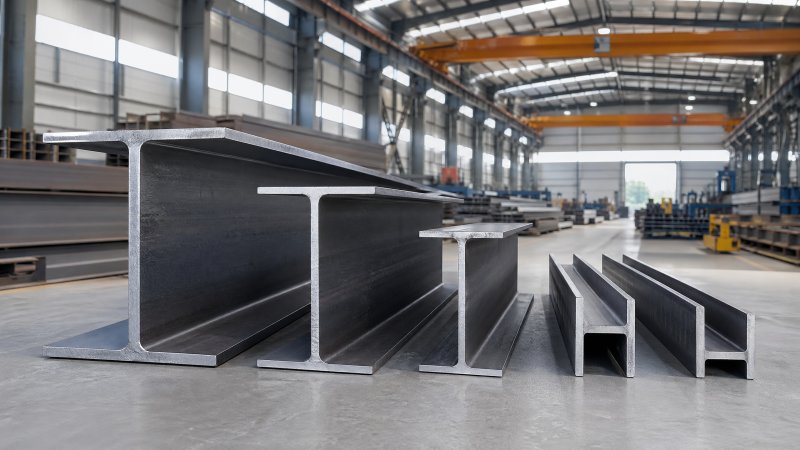
In structural steel procurement, the question is rarely whether a beam is good or bad. The real question is which shape fits the load path, fabrication method, installation schedule, and budget. A steel beam often becomes the default choice for floor framing, transfer members, and long-span support, but channels, angles, hollow sections, and cold formed profiles can deliver better value in lighter or secondary applications.
For technical evaluators and project managers, shape selection usually starts with 3 core indicators: bending resistance, connection practicality, and total installed cost. For procurement teams, another 3 factors matter just as much: standard availability, delivery cycle, and consistency between batches. In many export projects, the best section is not simply the heaviest one, but the one that balances structural performance with smoother sourcing and lower downstream risk.
I beams and H beams are widely used because their geometry concentrates material where bending stress is highest. That gives them a strong strength-to-weight relationship in many building frames. However, channels can be easier for edge framing, angles can simplify bracing, and Z-shaped or cold formed profiles can reduce dead load in roof and wall systems where full hot-rolled beam capacity is unnecessary.
This is where an experienced structural steel manufacturer matters. Hongteng Fengda supports buyers across North America, Europe, the Middle East, and Southeast Asia with angle steel, channel steel, steel beams, cold formed profiles, and customized structural components. For buyers comparing ASTM, EN, JIS, and GB requirements, stable production and controlled tolerances can be as important as the nominal section size.
Quick comparison before selecting a section
The table below summarizes how common structural shapes are typically evaluated during early-stage design and sourcing. It is not a substitute for engineering calculation, but it helps procurement, commercial review, and site teams align on the practical differences before RFQ issuance.
A practical reading of this table is simple: when load is high and span is demanding, beams usually lead. When speed, lower dead load, or repetitive light framing matters, other shapes may improve both cost and installation efficiency. That trade-off should be confirmed during design review, not after fabrication begins.
Which shape performs better for load, span, and fabrication efficiency?
From an engineering perspective, a steel beam is often selected because flange-and-web geometry performs well under bending. In many floor, mezzanine, and industrial platform applications, that translates into efficient section use over spans such as 6–12 m, although exact suitability depends on load combination, deflection criteria, and connection design. H beams may also offer advantages in column applications because of their balanced proportions.
Still, performance is not only about maximum capacity. Operators and fabricators often prefer shapes that simplify cutting, punching, or bolting. A channel or cold formed section may reduce fabrication steps in repetitive assemblies. If a project has 50, 100, or even 500 repeated roof members, saving one processing step per piece can materially reduce labor hours, lead time pressure, and installation sequencing problems.
Weight calculation also affects selection. Buyers searching how to calculate i beam weight typically need a fast estimate for freight, crane planning, and budget review. In practice, section weight per meter should be checked against the official standard table, then multiplied by total cut length, with allowance for wastage, splices, and accessories. For export packaging and logistics, length bands such as 2–6 m, 6–9 m, and 9–12 m often influence container planning and handling cost.
Another key point is whether the project requires hot rolled or cold formed steel. Hot rolled beams usually suit heavy-duty frames and major load paths. Cold formed shapes work well where lower thickness, controlled punching, and lightweight construction matter. This distinction is especially important for project leaders balancing foundation load, erection speed, and total steel tonnage.
Performance factors that should drive selection
- Load behavior: Primary bending members usually favor beam sections, while secondary framing may use channels or formed profiles more efficiently.
- Fabrication method: If the project needs perforation, repetitive hole punching, or lightweight roof framing, formed sections can reduce processing complexity.
- Corrosion environment: Galvanized sections can be practical for exposed or semi-exposed conditions where maintenance intervals are long.
- Transport and installation: Longer members may reduce splices but increase freight constraints, lifting requirements, and site access challenges.
Mid-project alternative for lightweight systems
In roof, wall, and purlin systems, many buyers evaluate shaped profiles instead of standard beams. A practical option is Z-beam, especially for large-scale steel structure workshops, wall beams, lightweight roof framing, brackets, and light manufacturing members. Available material options include Q235B, Q345B, Q420C, Q460C, SS400, SS540, S235, S275, S355, A36, A572, G50, and G61.
For buyers focused on specifications, this profile is commonly supplied in thicknesses from 6–25 mm, lengths of 2–12 m or customized, with ±1% tolerance and mill edge or slit edge options. Perforated and galvanized coated versions are available, with common finishes such as zinc and silver appearance. Certifications listed include CE, SGS, BV, and ISO, which can help when project documentation requires basic compliance support across multiple markets.
The decision point is straightforward: if the application is a heavy primary beam, a standard I beam or H beam may still be the right answer. If the system is a repetitive lightweight roof, wall beam, purlin, arm, or bracket structure, shaped alternatives can reduce dead load and improve installation speed without over-specifying the section.
What should buyers compare when reviewing steel beam factory price and sourcing risk?
Price comparison in structural steel should never stop at ex-works tonnage. Procurement personnel and finance approvers need to compare at least 5 cost layers: base material grade, processing cost, coating or galvanizing, packing and freight, and risk cost from delay or nonconformity. A lower quoted steel beam factory price may lose its advantage if rework, shortage, or non-matching standards force schedule changes on site.
Lead time is another area where decisions go wrong. Standard sections may be available faster, while custom punching, coating, or OEM fabrication can extend the cycle. In many export orders, a common planning range is 2–4 weeks for conventional stock-related processing and longer for customized assemblies, subject to quantity, coating process, inspection scope, and shipping arrangement. Project teams should confirm this before releasing downstream installation plans.
Quality risk also directly affects landed cost. For steel buyers and quality control managers, 4 checks are especially important: material grade traceability, dimensional tolerance, surface condition, and document alignment with the purchase order. When suppliers work across ASTM, EN, JIS, and GB systems, translation between equivalent or near-equivalent grades should be verified carefully instead of assumed.
Hongteng Fengda addresses this B2B reality by combining standard structural steel supply with customized solutions. For importers, distributors, and project contractors, this reduces the need to split sourcing across multiple vendors for beam sections, channels, angles, and formed profiles. Stable production capacity and dependable lead times are not abstract benefits; they help lower coordination cost across purchasing, logistics, installation, and commercial settlement.
Cost and sourcing comparison table
Before placing an order, buyers should compare the commercial impact of shape choice, not only the unit price. The table below highlights where total procurement cost often changes across structural options.
The key takeaway is that cost optimization should follow the function of the member. Heavy beams are rarely economical when the application is only a purlin or wall support. At the same time, a light profile is not a substitute for a true primary load-bearing beam. Smart sourcing starts with correct classification of the structural role.
How to check standards, materials, and quality before approval?
For technical reviewers, quality managers, and safety-focused buyers, compliance review should be treated as a structured process rather than a document formality. At minimum, the team should verify 4 things: material grade, dimensional tolerance, surface treatment requirement, and applicable standard system. Typical grade requests may include S235, S275, S355, A36, or A572 depending on project geography and specification language.
Tolerance matters more than many first-time buyers expect. Even a nominally correct section can create site problems if cut length, hole position, or straightness falls outside project acceptance. For formed or customized members, a stated tolerance such as ±1% gives buyers a measurable basis for inspection. Quality teams should align this with drawing critical dimensions before production starts, not during final loading.
Surface condition and corrosion protection should also be reviewed by application. Mill finish may be suitable for further shop treatment, while galvanized coated sections can be better for exposed roof and wall systems. Procurement teams should check whether the RFQ needs bare steel, primer-ready steel, or galvanized supply, and whether edge condition such as mill edge or slit edge affects the downstream fabrication route.
Because Hongteng Fengda manufactures and exports structural steel for global markets, buyers can align products with widely used standards including ASTM, EN, JIS, and GB. This is valuable when multinational EPC teams, distributors, or project owners need equivalent documentation across multiple countries and approval workflows.
A practical approval checklist for steel section procurement
- Confirm the structural role of the member: primary beam, secondary beam, purlin, wall beam, bracket, bracing, or column.
- Match the material grade to the design basis and region-specific standard, such as ASTM, EN, JIS, or GB terminology.
- Review key dimensions including thickness range, cut length, hole pattern, and tolerance requirement before production release.
- Check whether the order requires galvanized coating, perforation, test documents, or third-party inspection support.
- Verify packing, container loading length, and realistic lead time so site installation planning remains aligned.
Common selection mistakes that increase project cost
One common mistake is selecting by section name alone. “Beam” does not automatically mean suitable, and “lightweight profile” does not automatically mean cheaper after engineering review. Another frequent issue is overlooking connection details. Two sections with similar theoretical capacity may require very different plate work, bolt arrangement, or welding hours in the shop and on site.
A second mistake is treating standards as directly interchangeable without verification. While there may be approximate grade parallels across systems, approval should consider yield strength, chemical limits, mechanical properties, and project-specific notes. This is especially important when a buyer changes source region to reduce cost but must still satisfy a fixed design specification.
What are the most common buyer questions before choosing a steel beam or alternative?
Inquiries from researchers, engineers, procurement teams, and distributors often follow the same pattern: what section should be chosen, how long delivery may take, how cost differs, and what documentation is needed. These are practical questions, and they usually determine whether the project moves forward smoothly or enters repeated redesign and quotation cycles.
The answers below focus on common B2B decision points rather than generic theory. They are especially relevant for project-based purchasing where technical approval, commercial review, and shipping coordination must happen in parallel.
How do I choose between I beam vs H beam?
Start with the member function. If the section is mainly resisting bending in a floor or roof beam line, either may be considered depending on geometry and standard system. If the member is also acting as a major column, H beam proportions can be attractive because they often provide more balanced section behavior. The final answer should come from span, load, connection type, and standard table verification, not only naming convention.
When is a shaped profile better than a conventional beam?
A shaped profile is often better in repetitive lightweight construction such as purlins, wall beams, brackets, and support arms. If the design load is moderate and the project values lower dead load, quicker handling, and pre-punched installation, formed profiles can outperform a heavy beam in total project efficiency. This is common in large workshop envelopes and light industrial buildings.
What should I ask a supplier before requesting a quotation?
At minimum, ask for 6 items: grade options, size range, processing scope, surface treatment, tolerance basis, and delivery schedule. Also confirm whether the supplier can support standard and customized orders in the same project. This is particularly useful when one package includes beams, channels, angles, and formed steel components with different inspection requirements.
How long does delivery usually take?
There is no universal number, but common planning ranges are often 2–4 weeks for straightforward processing and longer for custom fabricated or coated items, depending on quantity, production queue, and shipping arrangement. Buyers should also allow time for drawing confirmation, document review, and any third-party inspection if required by contract.
Why work with a structural steel manufacturer that offers both standard and customized solutions?
Many international buyers do not need a single product; they need a coordinated steel package. A project may include primary beams, channel supports, angle bracing, and cold formed roof members in one purchase cycle. Working with a supplier that understands these combinations can reduce handoff gaps between design intent, manufacturing detail, documentation, and logistics execution.
Hongteng Fengda focuses on structural steel manufacturing and export from China, supplying angle steel, channel steel, steel beams, cold formed steel profiles, and customized structural steel components. For global construction, industrial, and manufacturing projects, this means buyers can discuss section selection, OEM requirements, coating needs, and standard compliance within one supply relationship instead of fragmenting responsibilities.
This approach is useful for different stakeholders. Engineers get closer alignment with material and fabrication realities. Procurement teams gain clearer RFQ and cost comparison. Finance reviewers see fewer hidden risk items. Quality and safety managers receive a more consistent basis for inspection and compliance review. Distributors and agents benefit from more stable product range planning across repeated orders.
If you are comparing a steel beam with channels, angles, or formed profiles, the best next step is to review the project by application category, not by product name alone. Share your required grade, section list, length range, coating need, target standard, and expected delivery window. That allows a more accurate discussion on product selection, customized solution options, certification support, sample availability, and quotation timing.
What you can contact us about
- Parameter confirmation for beam sections, channels, angles, and formed steel profiles
- Selection advice for S235, S275, S355, A36, A572, Q235B, Q345B, and related grades
- Delivery cycle planning for standard products, OEM orders, galvanized items, and perforated components
- Compliance communication for ASTM, EN, JIS, and GB related project requirements
- Sample support, packaging discussion, and export quotation for global project procurement
When the right section is chosen early, projects move faster, costs stay more visible, and approval risk drops. If you want support comparing steel beams with alternative structural shapes for your next project, contact Hongteng Fengda with your drawings, target standard, quantity range, and delivery destination for a more practical evaluation.
Please give us a message


Please enter what you want to find