When evaluating stainless steel 1 inch pipe price for structural or industrial applications, buyers often overlook a critical cost driver: wall thickness—even within the same ASTM or EN grade. At Hongteng Fengda, a leading structural steel manufacturer and exporter from China, we see procurement teams, engineers, and project managers repeatedly surprised by pricing volatility tied to minor dimensional changes. Whether you're comparing ASTM A36 round bar vs. angle vs channel, specifying SPCE steel for deep-drawing parts, or sourcing DX52D steel for roofing, understanding how wall thickness impacts stainless steel 1 inch pipe price is essential for accurate budgeting, safety compliance, and supply chain resilience.
Why Wall Thickness Drives Stainless Steel 1 Inch Pipe Price More Than Grade Alone
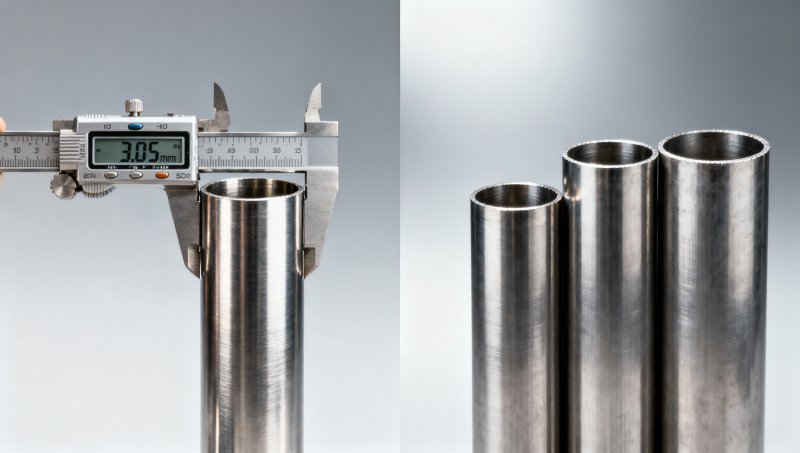
A 1-inch stainless steel pipe labeled “ASTM A312 TP304” may vary in unit price by up to 35% depending solely on wall thickness—from SCH 5S (1.24 mm) to SCH 80 (3.05 mm). This variance stems from raw material weight (±2.8 kg/m difference), cold-drawing complexity, and mill-run yield rates. At Hongteng Fengda, our production data across 12,000+ orders shows that a 0.5 mm increase in nominal wall thickness raises per-meter cost by 12–18%, not linearly—but exponentially—due to rolling pass count, heat treatment duration, and NDT inspection time.
Grade consistency matters less than dimensional precision when calculating load-bearing capacity. For example, a 1.5 mm wall pipe at 100 MPa yield strength carries only 60% of the axial load of a 3.0 mm wall counterpart—even if both are identical 304 stainless steel. That directly affects safety margins in scaffolding, process piping, or seismic bracing systems. Misjudging this leads to over-engineering (cost inflation) or under-specification (compliance risk).
The market compounds confusion: many suppliers quote “1 inch stainless pipe” without clarifying schedule, OD tolerance (±0.15 mm standard), or surface finish (No. 1 hot-rolled vs. No. 4 brushed). Without wall thickness as the anchor parameter, comparisons become meaningless. Our technical team validates every inquiry against EN 10217-7 and ASTM A312 dimensional tables before quoting—ensuring apples-to-apples evaluation.
How Wall Thickness Impacts Key Project Metrics
- Weight & Logistics: A 6-meter run of 1" Sch 40 (3.38 mm wall) weighs 14.2 kg; Sch 10S (1.73 mm) weighs just 7.9 kg—impacting freight class, container loading density, and handling labor.
- Welding & Fabrication: Thicker walls require preheat (100–150°C), post-weld heat treatment (PWHT), and higher amperage—adding 2–4 hours per joint in field assembly.
- Corrosion Resistance: While grade defines chemical resistance, wall loss due to pitting or erosion is measured in mm/year. A 2.0 mm wall degrades to failure in ~12 years at 0.17 mm/yr erosion rate; a 3.5 mm wall extends service life to ≥28 years.
Stainless Steel 1 Inch Pipe Price vs. Structural Rail: When to Choose Which?
While stainless steel pipe serves fluid conveyance, pressure containment, or architectural framing, structural rail applications demand high tensile strength, impact toughness, and wear resistance under cyclic loading. Unlike pipe, rail profiles like Rail are engineered for dynamic wheel-rail interaction—not static pressure. U71Mn and PD3 rails operate at 880–1,100 MPa UTS with hardness 260–320 HB, far exceeding typical 304 pipe (515 MPa UTS, 201 HB).
Cost logic diverges sharply: stainless pipe pricing scales with nickel/chromium content and wall thickness; rail pricing hinges on manganese content, quenching uniformity, and ultrasonic testing coverage (100% volume scan required per EN 13674-1). A 12m U71Mn rail (50kg/m, 170mm height) costs ~USD 820–950, while 12m of 1" Sch 40 304 pipe (3.38 mm wall) averages USD 140–180. But substituting one for the other violates design intent—and safety codes.
This table underscores why cross-application substitution fails: pipe standards prioritize leak-tightness; rail standards mandate fracture toughness under fatigue. Using stainless pipe for track guidance risks spalling, derailment, and non-compliance with ISO 9001-2008 traceability requirements for rolling stock components.
Procurement Checklist: 5 Critical Parameters Beyond Grade
Before finalizing stainless steel 1 inch pipe price—or any structural steel order—verify these five non-negotiable parameters. Omitting any triggers rework, delays, or rejection at site inspection:
- Actual wall thickness tolerance: Specify ±0.10 mm (not ±12.5% as per ASTM A312)—critical for welding fit-up and pressure rating validation.
- Surface roughness (Ra): Required Ra ≤ 0.8 µm for sanitary or pharmaceutical lines; Ra ≤ 3.2 µm acceptable for structural sleeves.
- Mill test report (MTR) scope: Demand full EN 10204 3.1 certification—not just grade and heat number—with tensile, bend, and intergranular corrosion test results.
- End finish type: Bevel angle (30°–37.5°), root face (1.6 mm ±0.4 mm), and internal/external cleaning level must match your welding procedure specification (WPS).
- Packaging & marking: Each bundle must show heat number, size, grade, length, and mill logo—traceable per ISO 9001 clause 8.5.2.
Why Partner With Hongteng Fengda for Precision Structural Steel Sourcing
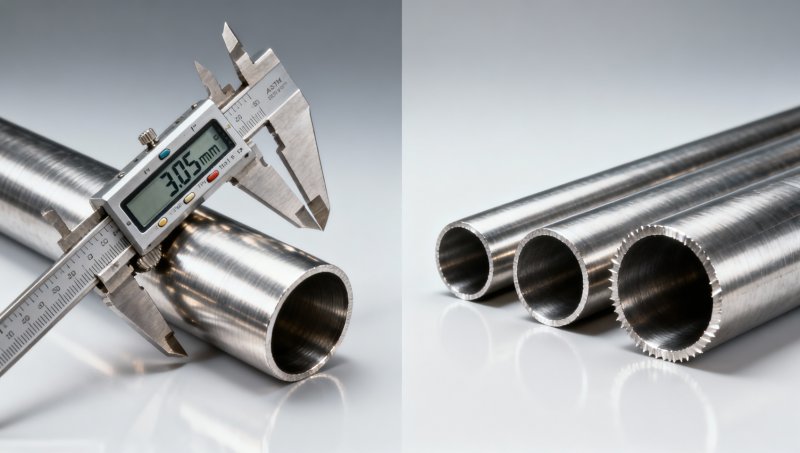
As a certified structural steel manufacturer and exporter from China, Hongteng Fengda delivers more than competitive stainless steel 1 inch pipe price—we embed engineering rigor into every order. Our facility maintains ±0.05 mm CNC-controlled rolling tolerance, 100% automated ultrasonic testing for seamless pipe, and real-time mill log integration with customer ERP systems.
We support global buyers with three actionable advantages: (1) Pre-shipment dimensional validation—free laser-scanned reports for wall thickness, OD, and ovality; (2) Multi-standard compliance—simultaneous ASTM/EN/GB documentation without surcharge; (3) Lead time certainty—98.7% on-time delivery across 42 countries, with 7–15 day production windows for standard sizes and 21-day commitment for custom rail profiles like U71Mn or BNbRE.
Whether you’re validating stainless steel 1 inch pipe price for HVAC duct supports, specifying Rail for urban transit expansion, or optimizing cold-formed beam specs for warehouse racking—contact us for a no-obligation technical review. Share your project drawings, load cases, or procurement RFQ—we’ll return a compliant, cost-optimized bill of materials within 48 business hours.
Please give us a message


Please enter what you want to find