Choosing the right stainless steel sheet for kitchen use can affect hygiene, durability, and long-term cost. If you are comparing 304 and 430 grades, this guide explains the key differences in corrosion resistance, finish, maintenance, and application value, helping buyers, fabricators, and project teams make a practical decision with confidence.
In commercial kitchens, food processing rooms, residential cabinetry, and catering equipment projects, stainless steel is not selected by appearance alone. The wrong grade can lead to tea staining, edge rust, frequent cleaning issues, or unnecessary material cost over a service life of 5–15 years. For procurement teams and engineers, the 304 vs 430 decision is often a balance between corrosion resistance, budget control, and fabrication needs.
For steel buyers sourcing from China or comparing international supply options, understanding grade differences also supports better quotation analysis, specification alignment, and quality inspection. Hongteng Fengda serves global industrial and construction buyers with standardized production, OEM support, and quality control based on ASTM, EN, JIS, and GB requirements, making technical comparison more actionable during supplier evaluation.
304 and 430 Stainless Steel: What Really Changes in Kitchen Use
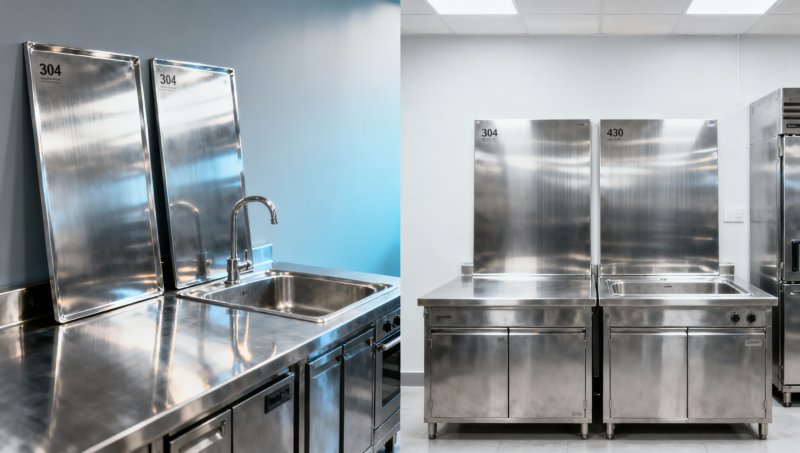
Both 304 and 430 are widely used stainless steel grades, but they belong to different metallurgical families. Grade 304 is an austenitic stainless steel with higher nickel content and strong corrosion resistance. Grade 430 is a ferritic stainless steel, usually lower in cost and magnetic, but less resistant to chloride exposure and humid kitchen conditions over time.
In practical kitchen applications, this difference matters most on worktops, sinks, splashbacks, cabinet panels, oven trims, and exhaust covers. If the surface is exposed to water, salt, acidic cleaners, sauces, or high-cleaning-frequency environments, 304 generally performs better over 8–12 years. If the part is decorative, lightly touched, and kept relatively dry, 430 can still be a cost-effective option.
Another major distinction is fabrication reliability. 304 is usually easier to deep draw, weld, and form for sinks, counters, and custom food-contact parts. 430 can also be processed, but it may be less forgiving in certain forming operations depending on thickness, bend radius, and finish requirements. For OEM kitchen equipment, this affects scrap rate, rework risk, and dimensional consistency.
Buyers should also note that magnetic behavior is not a quality defect. Many end users assume “non-magnetic means better,” but that is too simplified. Magnetism helps identify family type, not total application value. The more accurate question is whether the steel sheet matches the kitchen’s cleaning frequency, humidity level, contact media, and service expectations.
Core technical differences at a glance
The table below summarizes the most relevant factors for kitchen sheet selection, especially for purchasing, QC review, and project specification writing.
The table shows that 304 is not automatically the right answer for every project. However, when hygiene, moisture resistance, and longer service stability are the main drivers, 304 often provides lower lifecycle risk even if the initial sheet price is higher by a noticeable margin.
How Corrosion, Finish, and Cleaning Performance Affect Total Cost
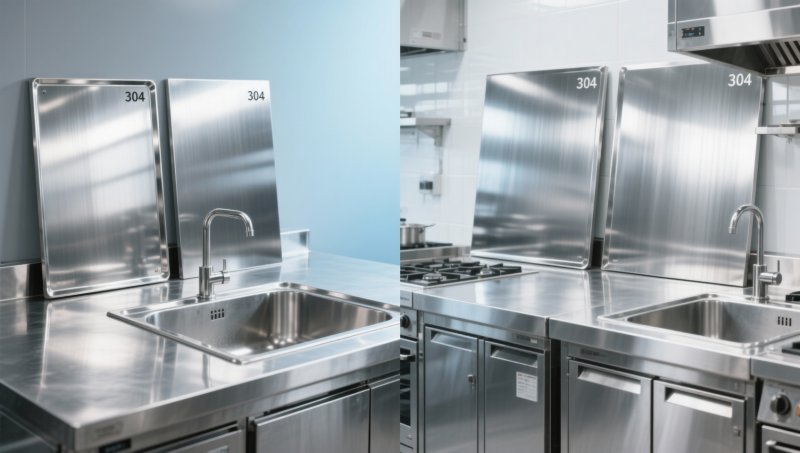
Kitchen environments are harsher than many buyers expect. Water splash, detergent residue, food acids, chloride-containing cleaners, steam, and repetitive wiping can all stress the steel surface. In these conditions, 304 stainless steel sheet usually offers stronger resistance to pitting, staining, and weld-area discoloration. That is why it is often specified for commercial foodservice areas with daily cleaning cycles of 2–6 times.
Grade 430 performs acceptably in many indoor applications, but it is less tolerant of aggressive cleaning chemicals and prolonged wet exposure. If used around sinks, drainboards, or poorly ventilated kitchen corners, the risk of visible staining increases. This may not create immediate structural failure, but it can affect appearance, sanitation perception, and maintenance workload within 12–36 months.
Surface finish also changes user experience. Common kitchen finishes include 2B, BA, No.4, and brushed finishes. A No.4 or brushed finish is often selected for visible panels because it masks fingerprints and small scratches better than mirror-like finishes. However, finish quality depends not only on the grade but also on sheet flatness, polishing process, protective film quality, and post-fabrication handling.
From a procurement perspective, the right evaluation should compare total installed cost across 3 dimensions: material cost, fabrication cost, and maintenance cost. A lower-priced 430 sheet may increase cleaning complaints or replacement frequency, while a well-specified 304 sheet can reduce long-term callbacks in hotels, canteens, hospitals, and central kitchens.
Typical cost and maintenance decision factors
The following comparison is useful for finance approvers, project managers, and distributors who need a practical, not purely metallurgical, view.
For projects with daily cooking, sanitation checks, and food safety sensitivity, 304 usually offers better long-term value. For appliance covers, outer panels, or cost-sensitive decorative sections, 430 may still be the smarter purchase if the operating environment is controlled and dry.
Selection by Kitchen Scenario, Thickness, and Fabrication Process
Selecting stainless steel sheet should start with the actual kitchen scenario rather than grade habit. A restaurant back-of-house, hotel buffet station, hospital prep room, and residential cabinet supplier face very different performance thresholds. In many projects, sheet thickness ranges from 0.5 mm to 2.0 mm for visible kitchen parts, while heavier fabricated counters or structural supports may require thicker material depending on span and load.
For sinks, worktables, and food-contact benches, 304 is often preferred because welding zones and folded edges are exposed to moisture and cleaning chemicals. For refrigerator side panels, microwave trims, door skins, and dry storage units, 430 may meet technical needs at a lower cost. A one-grade-fits-all strategy can either overspend or create avoidable durability complaints.
Fabricators should also review bend radius, weld polishing requirements, and surface protection during transport. A sheet with the correct grade but poor protective film, excessive coil memory, or unstable surface finish can still create defects during forming. This is why experienced buyers check not only alloy grade but also tolerances, flatness, finish consistency, and edge condition before approving mass production.
In broader stainless product sourcing, many industrial buyers also compare bars, rods, and profiles used in kitchen fixtures, support frames, or mixed-material assemblies. For example, Stainless Square steel rod in 201 stainless steel may be considered for non-food-contact decorative supports, urban decoration work, light household products, or customized fabrication where high formability is important. Its listed tensile strength is ≥ 520, yield strength is ≥ 275, elongation is about 55–60, and available square bar sizes include 18 mm to 47 mm, with customized lengths from 1 to 6 meters.
A practical 4-step grade selection method
- Define the contact condition: food contact, splash water, steam, grease, or dry decoration.
- Confirm fabrication process: cutting, bending, deep drawing, welding, polishing, or stamping.
- Set the service expectation: temporary fit-out, 3–5 year use, or 8–12 year durability target.
- Check supplier quality controls: standard compliance, surface inspection, packing, and delivery consistency.
Common scenario recommendations
For central kitchens, marine-adjacent properties, or projects using strong cleaners, 304 is usually the safer baseline. For decorative facings, appliance shells, and low-moisture interiors, 430 can be acceptable when the design avoids trapped water and the cleaning process remains mild. If budgets are tight, mixed-grade design is often more efficient than a full downgrade.
A mixed-grade strategy might use 304 for counters, sink areas, and splash zones, while 430 is used on outer cladding or non-contact covers. This approach can improve cost control without reducing performance in the most critical areas.
What Buyers Should Check Before Ordering from a Steel Supplier
Whether you are a distributor, OEM buyer, project contractor, or kitchen equipment manufacturer, ordering the right stainless steel sheet involves more than confirming “304” or “430” on paper. The supplier should be able to discuss standards, tolerances, finish options, packaging, and lead time with clarity. For export projects, missing details at the quotation stage often lead to disputes after arrival.
Hongteng Fengda supports international steel sourcing with stable production capacity and quality control aligned with major standards such as ASTM, EN, JIS, and GB. For buyers managing multiple SKUs across structural steel and stainless-related fabrication needs, supplier consistency matters. This reduces risk across purchasing, production planning, container loading, and site installation schedules.
A practical purchasing review should include at least 6 checkpoints: grade confirmation, thickness tolerance, finish requirement, protective film or packaging method, quantity and delivery schedule, and inspection documents. For project shipments, also confirm edge treatment, sheet size, pallet condition, and damage prevention during sea transport, especially for polished or BA surfaces.
Lead time is another key factor. Standard sheet orders may move faster, but custom cut sizes, OEM labeling, or mixed containers with profiles and fabricated parts often require additional planning. A typical export schedule may involve 7–15 days for standard stock preparation or 3–6 weeks for more customized production, depending on volume, finish, and testing requirements.
Supplier evaluation checklist
The table below can help technical and commercial teams align before issuing a purchase order.
This checklist is especially useful when comparing multiple quotes. A lower unit price is not necessarily lower procurement cost if finish inconsistency, packaging damage, or rework at installation increases the final project expense.
FAQ and Final Buying Advice for 304 vs 430 Kitchen Sheet
Many buyers ask the same question in different ways: which stainless steel sheet is better for a kitchen? The more useful answer is to match grade to environment, processing method, and expected service life. Below are common decision questions that help narrow the choice without oversimplifying the issue.
Is 430 stainless steel good enough for a home kitchen?
Yes, in some parts of a home kitchen. It can work for appliance exteriors, trim panels, and low-moisture decorative surfaces. It is less ideal for sink surrounds, heavy splash zones, or areas cleaned with aggressive chloride-containing chemicals several times per day.
Why is 304 more common in commercial kitchens?
Commercial kitchens face repeated cleaning, heat, moisture, and food-contact exposure. Grade 304 generally offers a more stable surface under these conditions, reducing visible corrosion risk and extending usable life. For restaurants, hospitals, and hotels, fewer callbacks can justify the higher upfront material cost.
Can I mix 304 and 430 in one project?
Yes. This is often the most cost-effective strategy. Use 304 where hygiene and wet resistance matter most, and use 430 on decorative or lower-risk sections. The key is to define the bill of materials clearly so installers and procurement teams do not mix grades by mistake.
What is the most common buying mistake?
The most common mistake is selecting by price alone without considering environment and finish. The second is requesting a grade but not specifying thickness tolerance, surface finish, or protective packaging. For export orders, these omissions can create claims even when the chemistry is correct.
If your project prioritizes hygiene, moisture resistance, and long-term value, 304 stainless steel sheet is usually the safer choice. If your application is decorative, dry, and budget-sensitive, 430 can be a practical alternative. The best decision comes from matching grade to real kitchen conditions, fabrication method, and lifecycle expectations rather than following a one-size-fits-all rule.
For buyers seeking reliable steel supply, customized specifications, and consistent export support, Hongteng Fengda provides professional service across structural steel and related product sourcing. Contact us today to discuss your kitchen material requirements, request a tailored quotation, or get support for your next OEM or project-based order.
Please give us a message


Please enter what you want to find