Choosing the right stainless steel sheet supplier is not only about price—it is also about lead time reliability and MOQ flexibility. For distributors, agents, and stockists, these factors directly affect inventory pressure, delivery commitments, and profit margins. This guide explains how to compare suppliers more effectively, reduce sourcing risks, and find a partner that supports stable business growth.
In steel distribution, a delay of 7 to 15 days can disrupt downstream fabrication schedules, force emergency purchasing, and damage customer trust. At the same time, an MOQ that is too high may lock working capital into slow-moving grades or non-standard sizes. That is why evaluating a stainless steel sheet supplier requires a broader sourcing view, especially for buyers serving multiple project types and regional markets.
For importers and channel partners, the best supplier is usually the one that balances delivery speed, order flexibility, quality consistency, and communication discipline. This is particularly important when your product portfolio includes both stainless sheet and structural steel items for construction and manufacturing customers.
Why Lead Time and MOQ Matter More Than Quoted Price
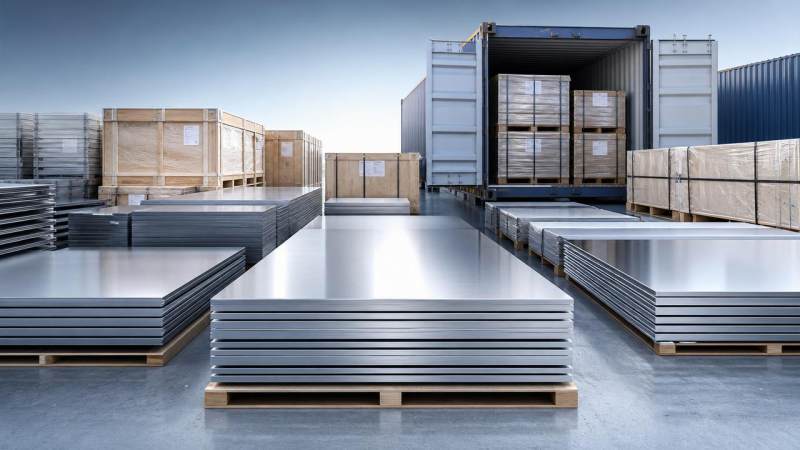
Many buyers compare 3 to 5 quotations and focus first on unit price per ton. However, a lower price can quickly lose value if production takes 30 to 45 days instead of 15 to 25 days, or if the supplier only accepts full-container quantities on every specification. For a distributor, these hidden constraints directly affect turnover speed and order fulfillment.
A reliable stainless steel sheet supplier should be assessed through at least 4 commercial dimensions: standard lead time, rush-order capability, MOQ by grade and thickness, and shipment consolidation ability. These factors determine whether a supplier can support real market demand instead of only offering an attractive quotation on paper.
Lead time affects service credibility
If your customers expect stock replenishment every 2 to 4 weeks, inconsistent delivery creates a chain reaction. Warehouse planning becomes unstable, project buyers ask for compensation, and sales teams become cautious about accepting new orders. In steel trading, predictability often matters more than the shortest possible schedule.
MOQ affects cash flow and product mix
MOQ is not only a purchasing threshold. It is a cash-flow decision. A 25-ton MOQ for one thickness may be reasonable for fast-moving 304 sheet, but risky for slower-demand finishes or uncommon dimensions. Buyers should compare MOQ by specification group, not only by total order volume.
What distributors should ask first
- What is the normal production lead time for standard grades such as 201, 304, and 316?
- Is the quoted lead time counted from deposit receipt, drawing approval, or mill slot confirmation?
- Can mixed thicknesses or sizes be combined into one MOQ?
- What is the minimum order per item, per grade, and per shipment?
- How often does the supplier update production status during the 2 to 6 week cycle?
The table below shows a practical comparison framework that buyers can use when screening a stainless steel sheet supplier before sample approval or contract negotiation.
A buyer does not need the shortest lead time in every case. What matters is whether the supplier can keep delivery within an agreed window, such as 21 plus or minus 3 days, and whether MOQ rules fit your sales rhythm. Consistency lowers risk more effectively than one-time pricing advantages.
How to Compare a Stainless Steel Sheet Supplier in a Practical Way
A disciplined supplier comparison should follow a clear process. Instead of asking only for a quotation, distributors should build a 5-step review method that covers product scope, capacity alignment, technical compliance, logistics coordination, and after-sales responsiveness. This helps identify the supplier that can support repeat business over 6 to 12 months, not just one shipment.
1. Separate stock items from project items
The same stainless steel sheet supplier may perform well on standard inventory grades but struggle on custom-cut sheets, protective film requirements, or special surface finishes. Divide your RFQ into at least 2 categories: fast-moving stock material and project-based customized material. Then compare lead time and MOQ separately for each category.
2. Verify real production capability
Ask whether the supplier is a stockholder, processor, integrated manufacturer, or exporter coordinating multiple mills. Each model affects control over scheduling. A processor may offer faster cut-to-size service within 7 to 10 days, while a mill-based route may require 20 to 35 days but provide stronger consistency for larger volumes.
3. Check standard compliance and tolerance control
For global trade, material should be aligned with the market’s required standards and documentation. Depending on destination, buyers often need ASTM, EN, JIS, or GB references, plus inspection records, packing details, and heat or batch traceability. If a supplier cannot explain tolerance handling or documentation flow, lead time promises alone are not enough.
4. Evaluate communication speed
A stainless steel sheet supplier may have competitive pricing, but if RFQ feedback takes 72 hours and document revisions take another 2 days, small delays accumulate. For channel business, response speed within 12 to 24 hours is often a more useful indicator of future cooperation quality than marketing claims.
5. Review consolidation options across steel categories
This point is often overlooked. Buyers serving construction and manufacturing customers usually source more than one steel product line. A supplier with broader structural steel capability can help combine shipments, reduce documentation complexity, and improve container utilization.
For example, if your business also handles cold-formed or structural components, integrating items such as Z-beam into a broader sourcing plan may improve efficiency. This Z-shaped steel profile is commonly used in steel structure construction purlins, wall beams, lightweight roofs, brackets, mechanical columns, and light manufacturing beams or arms.
Typical specifications include thickness from 6 to 25mm, length from 2 to 12m or customized, mill edge or slit edge, and tolerance around ±1%. Material options can include Q235B, Q345B, Q420C, Q460C, SS400, SS540, S235, S275, S355, A36, A572, G50, and G61, with perforated or galvanized coated versions available for different project needs.
For distributors, this matters because a supplier with experience in both stainless products and structural profiles is often better positioned to support mixed orders, standard compliance, and coordinated export documents. Certifications such as CE, SGS, BV, and ISO may also support smoother project review where required by the buyer or end user.
Questions That Reveal Whether Lead Time Is Real or Just a Sales Promise
Some suppliers quote a short lead time to secure the order, then adjust the schedule after payment. The best way to avoid this is to ask operational questions that require specific answers. If a stainless steel sheet supplier can explain each production and shipping step clearly, the quoted timeline is usually more reliable.
Ask for milestone-based timing
- Order confirmation and deposit receipt
- Raw material allocation or mill booking
- Processing, slitting, cutting, or finishing
- Inspection and packing
- Container loading and shipping document release
A realistic schedule may show 3 to 5 working days for raw material allocation, 5 to 10 days for processing, and 2 to 3 days for inspection and packing. The exact timeline varies by grade, finish, and quantity, but the supplier should be able to break it down rather than giving only one total number.
The table below helps buyers test whether a quoted lead time is commercially dependable.
The key conclusion is simple: dependable lead time is measurable. It should include process steps, checkpoints, and contingency options. A buyer should prefer a realistic 25-day plan with updates over an unsupported 15-day promise.
How MOQ Flexibility Supports Distributors, Agents, and Stockists
MOQ flexibility can improve stock turnover, reduce dead inventory, and allow testing of new grades or dimensions in smaller quantities. For agents entering a new regional market, this is especially useful because demand may not yet justify container-scale volume for every item.
Three practical MOQ models
- Per size MOQ: useful for established, high-volume specifications
- Per grade MOQ: suitable when multiple dimensions are needed within one alloy
- Mixed-container MOQ: best for distributors managing varied downstream demand
A flexible stainless steel sheet supplier should explain which model applies to standard sheet, cut pieces, special finishes, and export packing. In many cases, buyers can lower inventory pressure by mixing 3 to 8 specifications in one shipment instead of overbuying one item simply to meet a rigid minimum.
Common MOQ mistakes
One common mistake is accepting a low total MOQ without checking MOQ per size. Another is overlooking packaging and surface protection requirements, which may increase the minimum practical quantity. Buyers should also confirm whether sample orders can convert into repeat-order terms after the first 1 or 2 shipments.
For steel businesses that value long-term supply stability, supplier flexibility is often a sign of operational maturity. It shows the supplier understands channel sales cycles, seasonal demand swings, and the need to balance stock availability with working capital discipline.
What to Look for in a Long-Term Steel Supply Partner
A capable stainless steel sheet supplier should not work as a quote-only vendor. The better partner helps reduce sourcing risk through stable production, standard-based quality control, and practical export coordination. This is where broader steel manufacturing experience becomes valuable.
Hongteng Fengda is a professional structural steel manufacturer and exporter based in China, supporting global construction, industrial, and manufacturing projects with reliable steel products and customized solutions. The company focuses on angle steel, channel steel, steel beams, cold formed steel profiles, and customized structural steel components, serving buyers who need both standard specifications and OEM support.
With modern manufacturing facilities and strict quality control, products are produced in line with major international standards such as ASTM, EN, JIS, and GB. For buyers across North America, Europe, the Middle East, and Southeast Asia, this kind of manufacturing and export background can help reduce communication gaps, documentation errors, and scheduling uncertainty.
Useful partner-selection checklist
- Can the supplier support both standard and customized steel requirements?
- Is quality control explained clearly, including tolerance and inspection steps?
- Are major export standards understood for your destination market?
- Can the team coordinate lead time expectations before contract confirmation?
- Is there enough production stability for repeated orders over 3, 6, or 12 months?
When these points are in place, buyers gain more than product supply. They gain a sourcing framework that supports project execution, customer retention, and margin control.
If you are comparing a stainless steel sheet supplier and want a more dependable sourcing partner for structural steel, cold formed profiles, or customized export solutions, now is the right time to review your lead time assumptions and MOQ strategy. Contact Hongteng Fengda to discuss your material list, request a tailored supply plan, or learn more about coordinated steel solutions for your market.
Please give us a message


Please enter what you want to find