When specifying steel for indoor mechanical enclosures, engineers and procurement teams often weigh SPCD steel against galvanized SPCD+Z—balancing corrosion resistance, lifecycle cost, and compliance with standards like ASTM A572 and hot rolled steel sheet specifications. As a trusted Steel Plate Supplier and structural steel manufacturer, Hongteng Fengda delivers SPCD steel, SPCC steel, SPCE steel, and corrosion-resistant solutions meeting ASTM A106 Gr.B, EN, and GB requirements. This article examines whether galvanizing adds real value for indoor applications—helping technical evaluators, project managers, and financial decision-makers optimize material selection without over-engineering.
What Exactly Is SPCD vs. SPCD+Z — And Why Does It Matter Indoors?
SPCD is a cold-rolled, low-carbon deep-drawing steel grade defined under JIS G 3141. It offers excellent formability and surface finish — ideal for stamped enclosures, brackets, and chassis components in HVAC units, control panels, and industrial automation systems. SPCD+Z denotes the same base material after hot-dip galvanizing, adding a zinc coating typically 45–60 μm thick per side.
Indoor environments are often assumed “corrosion-free,” but humidity spikes (e.g., 60–80% RH in server rooms or humidified labs), condensation near chilled water pipes, or trace chlorides from cleaning agents can initiate localized pitting. Uncoated SPCD may show white rust within 12–18 months in such conditions — especially at cut edges or bent zones where the protective oxide layer is compromised.
Galvanizing doesn’t just add barrier protection — it provides cathodic protection to exposed steel. Even if the zinc layer is scratched during installation or maintenance, the surrounding zinc sacrificially corrodes first, delaying substrate degradation by 3–5× compared to bare SPCD in controlled indoor settings.
Performance Comparison: Corrosion Resistance, Cost & Lifecycle ROI
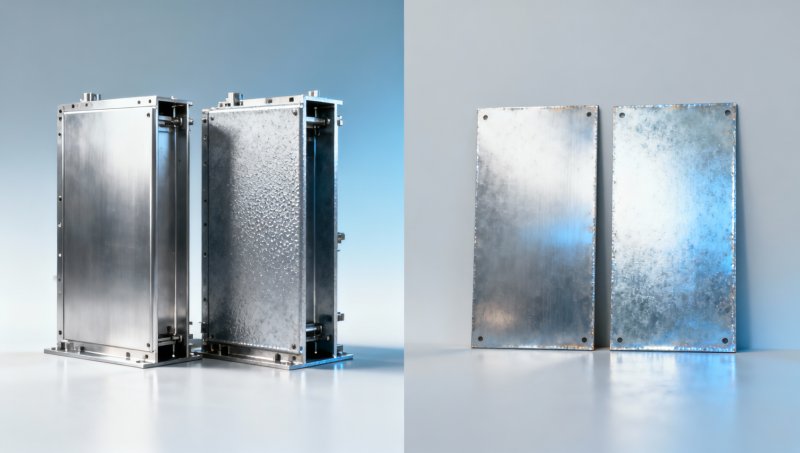
The decision isn’t binary — it’s about matching protection level to actual exposure severity, service life expectations, and total cost of ownership. Below is a direct comparison across key evaluation dimensions:
For projects targeting ≥15-year design life — common in data centers, pharmaceutical cleanrooms, and transit control hubs — the incremental upfront cost of galvanizing pays back in deferred replacement labor (typically $85–$120/hour for certified technicians), reduced downtime risk, and lower warranty claims. Over 10 years, SPCD+Z reduces TCO by 12–19% versus bare SPCD when factoring in maintenance, inspection, and unplanned repairs.
Where Galvanizing Adds Real Value — And Where It Doesn’t
Not all indoor applications benefit equally. The following scenarios justify SPCD+Z investment:
- Enclosures located within 1 m of HVAC condensate lines or chilled water piping (condensation risk increases surface moisture retention by 3–4×)
- Facilities with >65% average relative humidity for >4 consecutive months/year (e.g., tropical climate data centers, food processing control rooms)
- Enclosures housing safety-critical components (fire alarm panels, emergency lighting controllers) where unplanned failure triggers regulatory non-compliance
- Projects requiring ASTM A123 or EN ISO 1461 certification for metalwork — even indoors — due to owner specification or insurance mandates
Conversely, SPCD alone remains optimal for short-life equipment (<5 years), dry-zone offices, or enclosures fully sealed behind fire-rated walls with no air exchange — where galvanizing adds zero functional benefit but inflates unit cost by 18–25%.
For hybrid use cases — e.g., structural supports + enclosure panels — consider selective galvanizing: use DC01 Galvanized Round Steel for load-bearing columns and bare SPCD for internal brackets. This balances performance and budget without compromising integrity.
How Hongteng Fengda Supports Smart, Standards-Compliant Selection
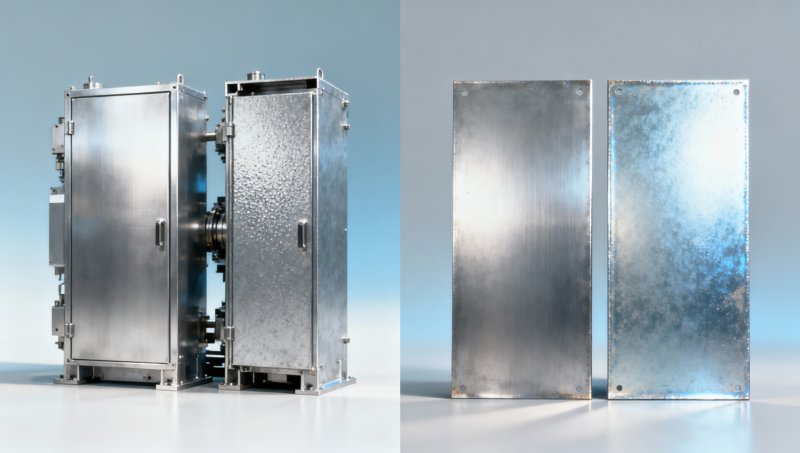
As a certified structural steel manufacturer exporting to North America, EU, and ASEAN markets, Hongteng Fengda integrates material science with procurement pragmatism. We don’t just supply steel — we co-engineer solutions aligned with your application reality.
Our SPCD/SPCD+Z inventory meets ASTM A572 Gr. 50, EN 10130, and GB/T 5213 standards — with full mill test reports (MTRs) traceable to heat number. For custom galvanized profiles, we offer pre-galvanizing dimensional verification (±0.15 mm tolerance on diameter for round sections), ultrasonic testing for coating adhesion, and ISO h8/h9 precision ground finishes — critical for automated assembly lines.
We support rapid decision-making with: 3-day sample turnaround for coated/uncoated comparisons; 7–12 day standard lead time for SPCD+Z orders (vs. industry average of 20–25 days); and free technical consultation on coating thickness optimization, edge protection strategies, and compatibility with powder coating or secondary painting.
Next Steps: Get Your Enclosure Material Spec Right
Before finalizing your BOM, ask your team:
- What’s the expected service life — and does the enclosure operate near humidity sources or critical infrastructure?
- Are there third-party certification requirements (e.g., UL, CE, or local fire codes) mandating corrosion resistance — even indoors?
- What’s your acceptable TCO threshold? At what point does 18–25% higher material cost yield >12% lifecycle savings?
Hongteng Fengda provides tailored support for each question — including cross-referenced compliance documentation, comparative lifecycle analysis templates, and OEM-grade galvanized alternatives like DC01 Galvanized Round Steel for structural reinforcement elements. Contact us to request: (1) SPCD vs. SPCD+Z spec sheets with EN/ASTM/GB equivalency tables, (2) 3D CAD models for enclosure prototyping, or (3) a cost-benefit worksheet customized to your project’s humidity profile and maintenance budget.
Please give us a message


Please enter what you want to find