Is cheap steel from China reliable? The short answer is: sometimes yes, sometimes no—and the price alone tells you almost nothing. Low-cost steel can be a smart sourcing decision when the supplier has verified production capability, clear material traceability, and compliance with the standards your project requires. But if “cheap” comes from weak quality control, unclear grades, missing test reports, or inconsistent dimensions, the real cost can show up later in fabrication delays, safety risks, claims, and replacement expenses.
For buyers comparing H-beam, Z-beam, rebar, profile steel, or products such as DX53D Galvalume Steel Coil and A36 Carbon Steel Round Bar, the right question is not “Is Chinese steel cheap?” but “Why is this offer cheaper, and what risks are being transferred to me?” This article explains how to evaluate low-priced steel from China in a practical way—so procurement teams, engineers, QA staff, project managers, and business decision-makers can reduce sourcing risk without overpaying.
What does a low steel price really mean?
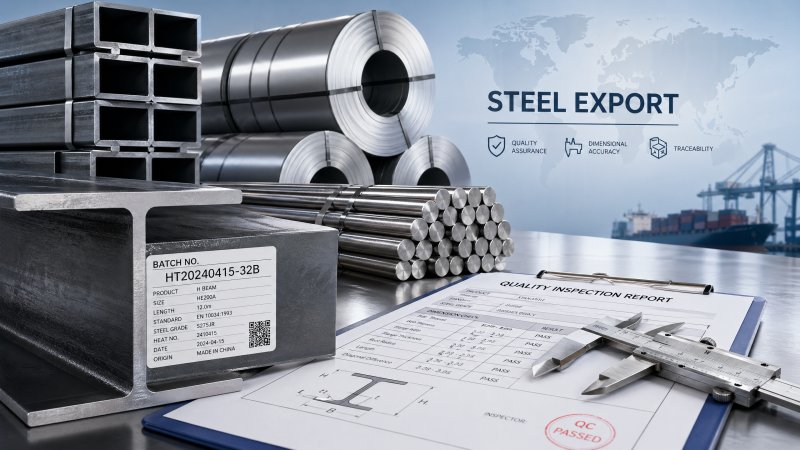
A lower quotation is not automatically a red flag. In many cases, Chinese steel can be competitively priced for legitimate reasons:
- Large-scale manufacturing and stable upstream supply chains
- High production efficiency and lower unit processing cost
- Standardized product lines with optimized output
- Flexible OEM production for project-based needs
- Strong export experience and consolidated shipping arrangements
However, a low price can also hide risk. The most common issues include:
- Material grade substitution
- Thickness, diameter, or weight below tolerance
- Inconsistent mechanical properties
- Poor surface treatment or corrosion protection
- Incomplete inspection records or fake certificates
- Weak packaging that causes transport damage
- Unstable lead times that affect project schedules
For most buyers, the real decision point is whether the lower initial price still delivers acceptable total value after quality verification, logistics, fabrication performance, and lifecycle use are considered.
What are buyers most worried about when sourcing cheap steel from China?
Different stakeholders focus on different risks, but their concerns usually connect to the same final outcome: can this steel be used safely, predictably, and profitably?
- Procurement teams want to know whether the supplier is truly reliable and whether the quoted price will change later through hidden costs.
- Engineers and technical evaluators care about grade accuracy, tolerances, welding performance, and compliance with ASTM, EN, JIS, or GB requirements.
- QA and safety personnel focus on traceability, mill test certificates, inspection methods, and consistency from batch to batch.
- Project managers need predictable delivery and minimal rework risk.
- Business leaders and finance approvers look at total cost of ownership, supplier stability, and claim exposure.
- Distributors and resellers worry about complaint rates, reputation risk, and repeatability across orders.
This is why the best evaluation process goes beyond unit price. It looks at commercial terms, manufacturing controls, technical documentation, and actual use performance together.
How can you tell whether cheap steel is good value or high risk?
A practical evaluation should cover five areas.
1. Check whether the grade and standard match your real application
Many sourcing problems start with a mismatch between what was quoted and what the application actually needs. A lower-grade substitute may look similar on paper but perform differently in load-bearing, welding, bending, or corrosion conditions.
Confirm:
- Exact steel grade and equivalent grade claims
- Applicable standard: ASTM, EN, JIS, GB, DIN, etc.
- Required mechanical properties and chemical composition
- Dimensional tolerances and length requirements
- Surface finish or protective treatment
2. Verify manufacturing capability, not just trading ability
A polished quotation does not prove production control. Buyers should know whether the supplier is a manufacturer, exporter, or intermediary, and what part of the process they directly control.
Useful checks include:
- Factory audit or live video inspection
- Production line photos and equipment list
- Quality control workflow
- Export history to your target market
- Experience with similar project specifications
3. Review inspection and traceability documents carefully
Reliable low-cost sourcing depends on documentation that can be verified. Ask for:
- Mill test certificates
- Chemical composition reports
- Mechanical test results
- Dimensional inspection records
- Heat number or batch traceability details
- Third-party inspection reports when needed
If a supplier is reluctant to provide these before order confirmation, that is often a warning sign.
4. Look beyond product cost to total landed and usage cost
Steel that is 5% cheaper per ton can become far more expensive if it creates cutting loss, welding problems, repainting needs, corrosion failure, or delayed installation. Evaluate:
- Freight and port costs
- Packaging quality
- Customs and document accuracy
- Fabrication efficiency
- Expected service life
- Cost of rejection, replacement, or site delay
5. Test the supplier with a smaller first order if possible
When risk is unclear, start with a trial order or mixed batch before committing to long-term volume. This helps you evaluate communication, document accuracy, packing, delivery reliability, and material consistency under real conditions.
Which quality warning signs should not be ignored?
Some warning signs are more serious than others. The following often signal elevated sourcing risk:
- Price far below market without clear explanation
- Vague product descriptions such as “same as” or “equivalent to” without technical evidence
- Inconsistent answers about standards or grade substitution
- No clear batch identification
- Certificates that appear incomplete, generic, or altered
- Unrealistically short lead time for customized production
- Refusal to accept third-party inspection
- Poor responsiveness after technical questions are raised
In steel sourcing, communication quality often reflects process quality. A supplier that cannot answer basic technical and QC questions clearly may not control the product as well as they claim.
How should you assess steel samples and specifications in practice?
For technical teams and buyers, sample review should focus on measurable points rather than impressions alone. Create a simple checklist that includes:
- Grade identification
- Diameter, thickness, straightness, and length tolerance
- Surface condition and coating uniformity
- Weight consistency
- Mechanical test compliance
- Suitability for cutting, welding, bending, or machining
For example, if your project requires round bar for fabrication, construction support, water supply-related applications, or general manufacturing use, it is important to confirm not only strength but also wear resistance, finish condition, and dimensional range. A product such as Hot rolled Carbon Steel Round Bar may be offered in multiple grades including S235JR, S355JR, ST37, ST52, Gr.B, X42 to X70, and 30CrMo, with diameter options from 5 mm to 2500 mm and lengths such as 2 m, 5 m, 6 m, and 12 m. In such cases, the commercial offer must match the actual engineering requirement exactly, especially when different grades, surface treatments, and minimum order quantities can significantly affect both price and performance.
This is where many buyers make mistakes: they compare prices without aligning the full specification package. Two quotations may look similar but involve different standards, treatments, tolerances, or delivery conditions.
Can Chinese steel meet international standards?
Yes—if it is produced and controlled correctly. Many Chinese manufacturers supply steel products that meet ASTM, EN, JIS, and GB standards for overseas construction, industrial, and manufacturing projects. The key issue is not the country of origin by itself, but whether the supplier has the systems and discipline to produce consistently to the required standard.
When evaluating a supplier, look for evidence of:
- Modern manufacturing facilities
- Defined QC procedures
- Experience exporting to North America, Europe, the Middle East, or Southeast Asia
- Ability to support standard and custom structural steel requirements
- Stable lead times and consistent batch quality
A professional structural steel manufacturer and exporter should be able to explain how they manage raw material sourcing, production control, testing, packaging, and documentation for international buyers. That clarity reduces uncertainty and helps buyers make decisions based on evidence, not assumptions.
What is the smartest way to buy lower-cost steel without increasing project risk?
The safest approach is not to avoid low-priced steel completely. It is to buy selectively, with controls. A smart sourcing process usually includes:
- Define the exact technical requirement before asking for quotes
- Compare offers on a like-for-like specification basis
- Screen suppliers for real production and export capability
- Verify certificates, standards, and inspection methods
- Use third-party inspection for critical or high-volume orders
- Review packaging, shipping, and claim handling terms
- Start with a trial order when entering a new supplier relationship
This method helps buyers control cost without transferring hidden quality risk into fabrication, installation, or after-sales problems.
Conclusion: cheap steel is not the problem—unverified steel is
Cheap steel from China can be either a cost advantage or a project liability. The difference comes down to verification. If the supplier can prove grade accuracy, compliance, traceability, production control, and delivery reliability, a lower price may reflect efficiency—not poor quality. If those points are unclear, the cheapest quote may become the most expensive choice.
For buyers of structural steel, profile steel, round bar, beams, and custom components, the best decision is rarely based on price alone. It is based on total value: fit-for-purpose material, dependable documentation, stable supply, and reduced execution risk. When you evaluate steel this way, you can source competitively while still protecting quality, safety, and long-term project outcomes.
Please give us a message


Please enter what you want to find