Is corrosion resistant steel rebar really worth the extra investment for modern projects? For buyers, engineers, and contractors comparing lifecycle cost, durability, and safety, the answer depends on environment, standards, and application. As a structural steel manufacturer and exporter from China, Hongteng Fengda helps global customers assess corrosion resistant steel rebar alongside solutions such as hot dip galvanized angle steel, custom steel profiles, and ASTM standard steel pipe for reliable project performance.
For many construction and infrastructure projects, the real question is not only the initial price per ton, but how steel reinforcement performs over 20, 30, or even 50 years of service. In coastal zones, bridges, wastewater plants, parking decks, tunnels, and chemical facilities, corrosion can shorten service life and increase maintenance budgets far earlier than expected.
That is why corrosion resistant steel rebar has become a serious evaluation item for technical teams, procurement departments, quality managers, and financial approvers. The material may cost more at the beginning, but if it reduces repairs, shutdowns, concrete spalling, and structural risk, the long-term economics can be favorable.
This article explains when corrosion resistant rebar is worth it, when standard carbon steel rebar may still be sufficient, what standards and performance factors matter, and how buyers can make a practical sourcing decision based on environment, design life, and total project cost.
What corrosion resistant steel rebar means in real project terms
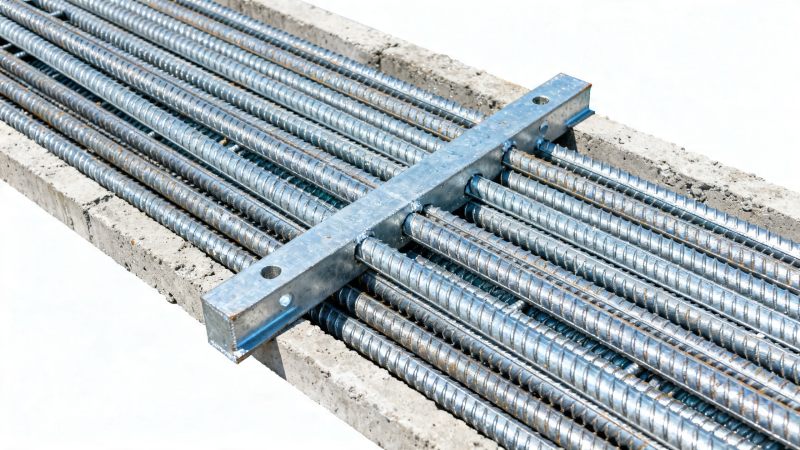
Corrosion resistant steel rebar refers to reinforcing steel designed to perform better than conventional rebar when exposed to moisture, chlorides, carbonation, industrial pollutants, or aggressive chemicals. It is commonly used where concrete structures face repeated wet-dry cycles, deicing salts, seawater spray, or high humidity over long periods.
In practice, this category can include epoxy coated rebar, galvanized rebar, stainless steel rebar, and corrosion resistant alloy steel rebar. Each option has a different balance of upfront cost, handling sensitivity, coating integrity, expected service life, and suitability for specific standards such as ASTM, EN, JIS, or local project specifications.
For engineering teams, the benefit is not abstract. Corrosion of embedded steel can expand the rebar diameter through rust formation, create internal stress, crack the concrete cover, and lead to delamination. A few millimeters of concrete cracking can become a major repair issue within 3 to 7 years in severe environments if the wrong reinforcement system is selected.
For procurement and finance teams, the key point is that corrosion risk changes the cost model. The lowest purchase price at month 0 may create higher inspection, patch repair, traffic interruption, labor, and liability costs in years 5, 10, or 15. In many public or industrial structures, downtime can be more expensive than the steel itself.
Common environments where corrosion risk rises quickly
Corrosion risk is not the same for every project. Rebar performance should be assessed by actual exposure, not by a generic assumption that all concrete offers permanent protection.
- Marine and coastal construction within 1–5 km of shoreline, where chlorides can penetrate concrete over time.
- Bridge decks and ramps exposed to deicing salts for 3–5 months per year in cold regions.
- Wastewater and treatment facilities with chemical exposure, humidity above 70%, and intermittent immersion.
- Industrial plants where airborne contaminants, acidic conditions, or process leaks increase attack on reinforcement.
- Parking structures and podium slabs that face water ingress, chloride contamination, and heavy traffic loads.
Quick comparison of common rebar options
The table below gives a practical comparison for decision-making. Actual selection should still follow project design requirements, cover thickness, concrete quality, and applicable standards.
The most important conclusion is that “worth it” depends on exposure severity and design life. Paying 1.5x for better rebar in a low-risk warehouse slab may not be justified. Paying 2.0x or more in a chloride-heavy bridge deck designed for 50+ years can be a sound risk-control decision.
When the extra cost delivers real value
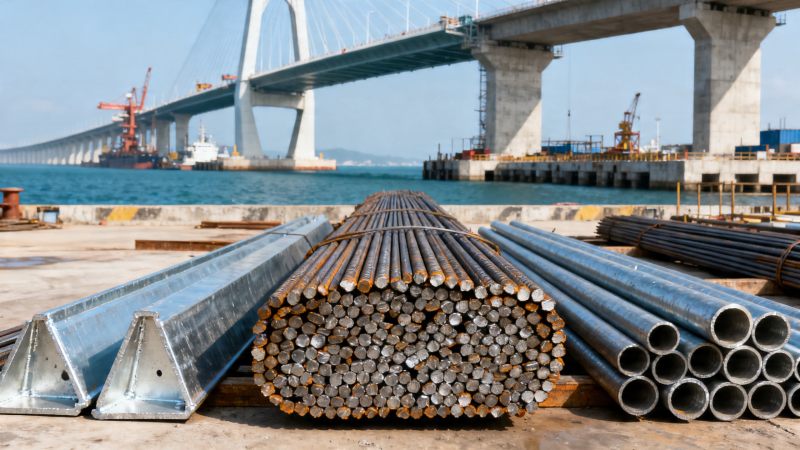
Corrosion resistant steel rebar becomes easier to justify when the project has one or more of these conditions: high chloride exposure, difficult future repairs, strict safety requirements, long design life, or large indirect costs caused by maintenance shutdowns. In those cases, the premium can be recovered through lower lifecycle cost rather than lower material cost.
A useful way to think about the decision is to compare the steel premium against the cost of failure. If a structure needs lane closure, demolition, recasting, coating repair, traffic diversion, equipment shutdown, or tenant disruption, even a relatively small corrosion issue can create costs that exceed the original rebar upgrade budget by several times.
For example, in infrastructure, repairing chloride-induced concrete damage often involves 4 to 6 steps: inspection, demolition, steel cleaning or replacement, recasting, curing, and traffic control. Those steps require labor, schedule extension, and quality verification. In contrast, a higher-grade rebar solution adds cost mainly at the procurement stage, when the structure is still easy to build.
Project managers and business evaluators should also consider service life expectations. If the target is 10–15 years with low exposure, conventional reinforcement with proper cover and concrete quality may be acceptable. If the target is 30–75 years in aggressive conditions, corrosion resistant rebar deserves serious consideration.
Key decision factors for lifecycle value
The following matrix helps different stakeholders align technical and commercial priorities before placing an order.
If a project falls mainly into the high-risk column, corrosion resistant steel rebar is usually worth reviewing in detail. The higher the exposure and repair difficulty, the stronger the economic case becomes.
A common mistake in cost evaluation
One common procurement mistake is comparing only the per-ton or per-piece price. A better method uses 4 cost layers: material, installation, maintenance, and consequence of failure. This is especially important for public works, export projects, and industrial plants that must meet predictable operation schedules.
- Material cost: base rebar versus coated, galvanized, or alloy corrosion resistant rebar.
- Installation cost: handling care, cutting, bending, and field damage control.
- Maintenance cost: inspections, patch repairs, coatings, and future rebar treatment.
- Failure consequence cost: safety exposure, traffic loss, production downtime, and contract claims.
Technical selection: standards, processing, and system compatibility
Choosing corrosion resistant steel rebar is not just about material grade. Buyers need to verify standard compliance, mechanical properties, fabrication compatibility, and the complete structural system. A rebar upgrade can lose value if concrete cover, detailing, or site handling remains poor.
A reliable assessment should include at least 6 checkpoints: applicable standard, yield strength, ductility, bending performance, coating or alloy integrity, traceability, and transport protection. Depending on the project region, buyers may need alignment with ASTM, EN, JIS, or GB requirements, plus owner-specific technical documents.
It is also important to consider related steel components in the same project. Corrosion management should not stop at rebar. Stairs, gratings, supports, floor plates, platforms, angle steel, channel steel, and steel pipe may face similar environmental risks and should be selected as part of one coordinated durability strategy.
For example, equipment platforms and industrial walkways often require anti-slip steel surfaces in addition to reinforcement durability. In these cases, buyers may combine corrosion-resistant reinforcement with products such as S335JR Patterned steel plate, which is widely used in transportation, construction, decoration, machinery zones, shipbuilding, and floors around equipment.
Example of complementary steel selection in industrial and construction projects
When selecting floor plates or walkway materials, technical teams often compare dimensions, anti-skid function, and standard compliance alongside structural steel durability. The following data illustrates a practical product profile relevant to project planning.
This kind of inserted product selection matters because durability decisions often extend beyond one material line item. A well-planned steel package can improve safety, installation efficiency, and sourcing consistency across the full project scope.
What buyers should confirm before ordering
- Verify the required standard and grade, including yield strength, chemistry, and bending requirements.
- Confirm whether the project specification accepts galvanized, epoxy coated, stainless, or alloy rebar alternatives.
- Review packing, transport, and storage conditions to reduce coating damage or contamination.
- Check mill test documentation, heat traceability, and third-party inspection needs before shipment.
- Coordinate lead time, especially if multiple steel products must arrive within the same 2–6 week construction window.
Procurement strategy, quality control, and supplier evaluation
For global buyers, the best rebar choice is only useful if the supplier can deliver consistent quality, stable lead time, and clear documentation. This is why supplier evaluation should include manufacturing capability, export experience, quality control process, and responsiveness on technical clarification. A cheap offer without production discipline can create costly project delays.
In steel procurement, a practical review often includes 5 checkpoints: material conformity, production capacity, dimensional consistency, document completeness, and shipment reliability. If any of these areas is weak, the risk moves from metallurgy to project execution. For time-sensitive jobs, even a 7–10 day delay can affect concrete pouring schedules and subcontractor coordination.
As a structural steel manufacturer and exporter from China, Hongteng Fengda supports international customers with structural steel products, OEM solutions, and quality-controlled supply for construction, industrial, and manufacturing projects. The company focuses on angle steel, channel steel, steel beams, cold formed steel profiles, and customized steel components under major standards such as ASTM, EN, JIS, and GB.
For buyers comparing corrosion resistant steel rebar with other durability solutions, a supplier with broader structural steel knowledge can be valuable. Many projects require coordinated sourcing across reinforcement, sections, plates, supports, and fabricated components. Working with a partner that understands both product standards and export execution can reduce sourcing risk and improve schedule control.
Supplier evaluation table for steel projects
The table below can be used by procurement teams, technical reviewers, and project managers during supplier comparison.
A disciplined supplier evaluation process can often save more money than negotiating a small unit-price discount. In complex steel projects, quality consistency and dependable delivery directly affect labor efficiency, installation flow, and final acceptance.
Practical sourcing advice
- Request a technical quotation, not just a price quotation, especially when multiple standards or exposure classes are involved.
- Align incoterms, packing details, and inspection scope before production starts.
- For projects with mixed steel needs, ask whether one supplier can support bundled sourcing to reduce coordination time.
- Set acceptance criteria for dimensions, coating condition, labeling, and documentation before shipment release.
FAQ: practical questions before choosing corrosion resistant rebar
Many project teams ask the same questions when reviewing corrosion resistant steel rebar. The answers below focus on realistic purchasing and engineering concerns rather than generic claims.
How much longer can corrosion resistant rebar last?
There is no single number for all projects because service life depends on chloride exposure, concrete permeability, cover depth, crack control, and maintenance conditions. In practice, corrosion resistant systems are usually selected when owners target 30–75 years of service in moderate to severe environments. The correct question is not “how many years guaranteed,” but whether the material meaningfully delays corrosion initiation and reduces repair frequency under the actual exposure condition.
Is corrosion resistant steel rebar necessary for every concrete structure?
No. For dry indoor buildings, low-humidity storage areas, or projects with limited design life and easy future repair access, standard rebar may be sufficient if concrete quality and cover are properly controlled. The upgrade is most justified where chloride ingress, moisture cycling, chemical exposure, or difficult access make future repairs expensive or disruptive.
What are the most common mistakes during procurement?
The top mistakes are comparing only the initial price, ignoring handling requirements, failing to confirm applicable standards, and overlooking full-system durability. Some buyers also assume any “corrosion resistant” label means the same performance level, which is incorrect. Coated, galvanized, stainless, and alloy rebar have different limits, costs, and field considerations.
How long is the normal supply cycle for structural steel and related products?
Typical lead time depends on grade, quantity, customization, and testing requirements. Standard stock items may move faster, while made-to-order structural steel components often require around 2–6 weeks for production and preparation. Export shipping adds additional transit time depending on destination region and port conditions. Early technical confirmation is the best way to prevent schedule pressure.
What should quality teams inspect on arrival?
A practical inbound checklist includes 5 areas: identification marks, dimensions, surface condition, quantity, and documents. For coated or galvanized items, surface damage and packing condition should be reviewed immediately. For plates, profiles, and structural sections, dimensions, tolerances, and certificate matching should be checked before site release or fabrication.
Corrosion resistant steel rebar is worth the investment when the project environment is aggressive, the design life is long, and future repair costs are high. It is less compelling where exposure is mild and maintenance access is easy. The best decision comes from balancing material premium against lifecycle cost, structural risk, and execution requirements.
For global buyers looking for dependable structural steel supply, Hongteng Fengda provides standard and customized steel products supported by modern manufacturing, quality control, and export experience. If you are evaluating corrosion resistant rebar, steel sections, patterned plate, or integrated steel sourcing for your project, contact us to get a tailored solution, technical support, and product details for your application.
Please give us a message


Please enter what you want to find