When evaluating industrial galvanized pipe options, procurement and project teams need more than a price quote—they need clarity on the specs that truly drive total cost. From wall thickness and coating weight to standard compliance and fabrication requirements, each detail affects budgeting, sourcing risk, and long-term performance. Understanding these factors helps business evaluators make smarter, lower-risk purchasing decisions.
For business evaluators in construction, industrial systems, and manufacturing projects, the cost of industrial galvanized pipe is rarely determined by tonnage alone. Base steel grade, zinc coating method, dimensional tolerance, inspection scope, and delivery terms can shift a project budget by 8% to 25% or more across a full package.
That is why procurement teams increasingly compare total landed cost instead of unit price only. A lower quote may still lead to higher fabrication loss, coating rework, delayed installation, or early replacement. Buyers sourcing from China and other export markets need a practical framework to assess which specifications matter most before issuing a purchase order.
Key industrial galvanized pipe specs that directly influence project cost
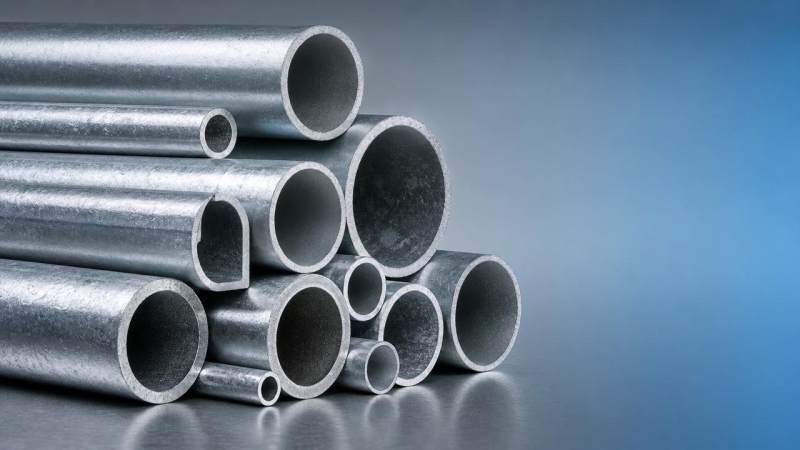
The main cost drivers of industrial galvanized pipe can be grouped into five technical areas: pipe size, wall thickness, galvanizing coating, material standard, and secondary processing. Each one affects not only ex-works price, but also freight efficiency, welding time, corrosion life, and project risk.
Wall thickness and nominal size
Wall thickness is one of the fastest ways to change cost because it directly changes steel consumption per meter. For the same outer diameter, moving from 2.5 mm to 3.25 mm wall can raise weight by roughly 20% to 30%, depending on the pipe size. That increase then affects galvanizing consumption and freight.
Nominal diameter also matters because larger sizes often have different mill availability, production efficiency, and minimum order quantity. Small-diameter industrial galvanized pipe may be easier to bundle and ship, while larger diameters can trigger lower container loading efficiency and higher handling cost per ton.
Why evaluators should check weight-per-meter data
Many commercial comparisons fail because suppliers quote by ton while project users estimate by meter or by installed length. A 3% to 5% difference in actual weight-per-meter can materially affect a large tender. Always align pipe schedule, theoretical weight, and tolerance range before comparing offers.
Zinc coating method and coating weight
Hot-dip galvanizing usually delivers stronger corrosion protection than lighter electro-galvanized finishes for industrial environments. However, not all hot-dip results are equal. Coating thickness or coating mass, often expressed in g/m² or microns, can significantly affect both pipe cost and expected service life.
For example, a heavier zinc layer may raise purchase cost by several percentage points, but in outdoor, humid, or mildly corrosive environments it can reduce repainting or replacement frequency over 5 to 15 years. Business evaluators should relate coating weight to actual exposure conditions rather than buying to the minimum spec by default.
Material grade and compliance standard
Industrial galvanized pipe may be produced to ASTM, EN, JIS, or GB standards, and those standards are not always interchangeable without review. Mechanical property requirements, dimensional tolerances, test items, and documentation obligations can differ. A lower-cost substitute can become expensive if it fails local approval or downstream fabrication checks.
For global buyers, compliance costs should include mill test certificates, third-party inspection if required, and any additional testing such as flattening, hydrostatic checks, or coating adhesion review. These are small line items compared with the full contract value, but they can prevent schedule disruptions that cost far more.
The table below shows how common pipe specifications typically influence cost planning in export procurement.
The key conclusion is simple: the right industrial galvanized pipe specification is the one that minimizes total project cost, not only purchase price. For many buyers, the biggest hidden cost comes from mismatched thickness, underdefined coating requirements, or unclear compliance documents.
How fabrication, logistics, and risk control change the real cost picture
Beyond the pipe itself, business evaluators should map three cost layers before final supplier selection: processing cost, supply chain cost, and failure risk cost. In international sourcing, these three layers often explain why two quotes for similar industrial galvanized pipe can differ by 10% to 18%.
Fabrication requirements and site efficiency
If the project needs threading, grooving, beveling, punching, or custom cut lengths, pre-processing at the supplier side may reduce site labor by 1 to 3 steps per piece. However, tighter fabrication tolerances may increase unit cost and require more detailed drawings, approval cycles, and inspection checkpoints.
For repetitive industrial works, such as support frames, protection rails, utility routing, and modular assemblies, off-site fabrication often creates better schedule control. Even a 2-day installation reduction can justify a moderately higher product cost when shutdown windows or labor access are limited.
Packaging, loading efficiency, and shipment terms
Export buyers should not ignore packaging and loading plans. Bundle size, protective wrapping, end caps, and container loading strategy influence damage rate and cubic efficiency. A supplier with better packing discipline may help fit more usable tonnage into one container, lowering freight cost per delivered ton.
Lead time also needs to be split into at least four stages: raw material preparation, pipe production, galvanizing, and inland-to-port delivery. A nominal 20-day promise may become 30 to 40 days if coating capacity or port booking is tight. Reliable scheduling can be more valuable than a slightly lower quote.
Related galvanized steel products in package sourcing
In some projects, buyers do not source industrial galvanized pipe alone. They also procure fastening, tying, mesh, or light industrial accessories within the same shipment. Combining related galvanized steel items can improve container utilization and reduce coordination cost across 2 to 4 suppliers.
A practical example is Hot Dipped Galvanized Steel Wire, which can be used in construction, wire mesh, packaging, breeding, barrier isolation, and general industrial applications. Available wire diameter ranges from 0.25 mm to 5.0 mm, with zinc coating thickness of 8 to 25 g/m2 and tensile strength of 350 to 550 Mpa.
For buyers already evaluating corrosion-resistant steel products, this type of wire offers strong flexibility, good ductility, and a bright smooth surface. It can also be formed by cold stamping, rolling, and bending without easily damaging the coating, which supports mixed procurement planning for industrial sites.
The next table breaks down several non-material factors that often reshape the final budget for industrial galvanized pipe procurement.
This comparison shows why the cheapest industrial galvanized pipe quote is not always the most competitive procurement result. Evaluators should review every commercial offer as a package of steel, processing, timing, compliance, and risk allocation.
A practical evaluation framework for B2B buyers
For tendering, budgeting, or supplier shortlisting, a structured method can reduce uncertainty. The most effective approach is to score industrial galvanized pipe offers across four dimensions: technical fitness, delivered cost, supply reliability, and documentation completeness.
Four-step review process
- Confirm application conditions, including indoor or outdoor use, expected corrosion exposure, and design life target such as 5, 10, or 15 years.
- Lock the technical baseline: diameter, wall thickness, length tolerance, galvanizing requirement, and standard reference.
- Compare landed cost, not ex-works price only, including packaging, inspection, inland delivery, ocean freight terms, and possible rework cost.
- Review supplier execution capability, such as production capacity, export experience, lead time consistency, and responsiveness to document control.
Common mistakes that increase cost later
- Approving a quote without confirming coating requirement in measurable terms
- Comparing different standards as if they were equivalent products
- Ignoring tolerance impact on mating parts or support assemblies
- Leaving packaging and marking requirements undefined for export handling
Why supplier capability matters as much as the pipe spec
A technically correct specification still depends on consistent execution. For global buyers, working with a structural steel manufacturer and exporter that understands ASTM, EN, JIS, and GB expectations can shorten clarification cycles and reduce sourcing risk. Stable production planning and strict quality control often save more than aggressive price cutting.
Hongteng Fengda supports international projects with structural steel products, standard specifications, and OEM-oriented supply solutions. For procurement teams that need coordinated support across steel sections, fabricated components, and galvanized products, this kind of supplier profile can simplify communication and improve delivery predictability.
Questions evaluators should ask before approval
Ask for the coating basis, tolerance standard, testing list, bundle packing method, and realistic production timeline. Also ask whether cut lengths, threaded ends, or custom markings are included. These details often decide whether the delivered industrial galvanized pipe will move directly into installation or into correction work.
If the project requires long-term corrosion resistance and dependable export execution, the decision should favor clarity and fit-for-purpose specifications over headline price alone. That approach protects budget accuracy, reduces claims, and supports smoother project delivery across international supply chains.
Industrial galvanized pipe cost is shaped by measurable specifications, not by one line of pricing. Wall thickness, diameter, zinc coating, compliance standard, fabrication scope, and shipment execution all contribute to the true commercial outcome. Buyers who evaluate these factors early can control both direct purchasing expense and downstream risk more effectively.
For companies sourcing steel products from China, a supplier with stable manufacturing, quality control discipline, and export coordination can add tangible value beyond the quotation sheet. If you need support comparing specifications, reviewing project requirements, or building a customized steel supply plan, contact us today to discuss your application and get a practical solution.
Please give us a message


Please enter what you want to find