Choosing the right tin can machinery manufacturer requires more than comparing prices. For business decision-makers, the real focus should be production stability, quality standards, customization capability, and long-term supply reliability. A careful comparison helps reduce sourcing risks, control project costs, and secure equipment partners that can support efficient manufacturing and consistent business growth.
Why comparing a tin can machinery manufacturer is really a supply chain decision
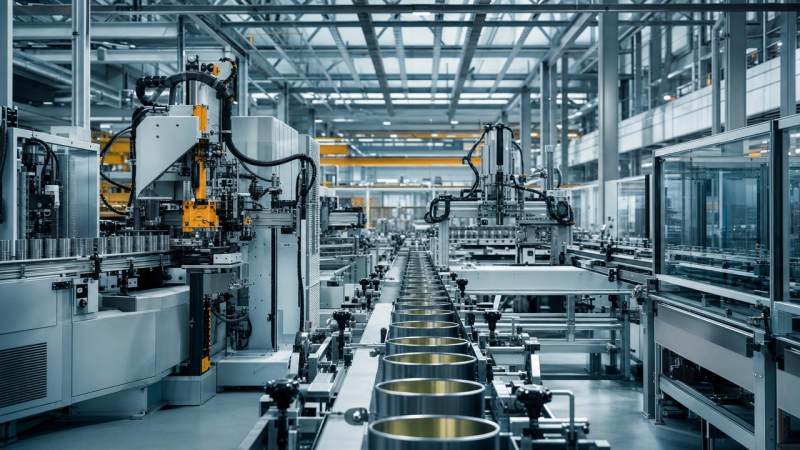
When buyers search for a reliable tin can machinery manufacturer, they often start with machine speed, layout, and price. That is reasonable, but incomplete. In practice, the comparison should also include the steel supply behind the equipment structure, supporting frames, plant expansion parts, and custom fabricated components.
For enterprise decision-makers, poor supplier evaluation can create hidden costs. Delayed installation, inconsistent steel quality, weak corrosion resistance, or dimensional deviation in structural parts can affect machinery stability, maintenance frequency, and operating safety.
This is where steel expertise matters. A manufacturer or project partner with strong structural steel capability can support machinery-related construction, workshop reinforcement, conveyor supports, mezzanines, brackets, and cold formed profiles that help a production line run with fewer interruptions.
- Equipment comparison should include not only machine output, but also the structural reliability of installation environments.
- A low initial quote may become expensive if steel components require rework, replacement, or repeated site corrections.
- A dependable supply partner helps control risk across purchasing, fabrication, logistics, and project execution.
What should decision-makers compare beyond price?
A useful comparison framework for any tin can machinery manufacturer should be practical and measurable. Buyers need to know which supplier can support long-term operations, not just who can send a quick quotation. This is especially important for projects involving workshop construction, line relocation, or capacity expansion.
The table below highlights key evaluation dimensions that are often overlooked when reviewing a tin can machinery manufacturer and its related steel support capability.
This comparison shows why a tin can machinery manufacturer should not be reviewed in isolation. Structural steel quality, fabrication accuracy, and international delivery reliability can directly affect equipment commissioning and project payback.
Questions procurement teams should ask
- Can the supplier provide standard and custom steel components for line support or plant modification?
- How are tolerances controlled during forming, cutting, and finishing?
- What standards are commonly supplied for export markets?
- How are lead times protected when project volume increases suddenly?
How steel capability supports machinery projects in real operating scenarios
In many production projects, buyers comparing a tin can machinery manufacturer also need to assess facility readiness. New lines often require support frames, purlins, wall beams, roof structures, mechanical columns, and equipment access platforms. These are steel-intensive tasks, and weak coordination can slow the whole investment plan.
Hongteng Fengda serves this need as a professional structural steel manufacturer and exporter from China. The company supplies angle steel, channel steel, steel beams, cold formed steel profiles, and customized structural steel components for global construction, industrial, and manufacturing projects.
For buyers evaluating a tin can machinery manufacturer, this kind of supplier support is useful when the project includes workshop expansion or production line reinforcement. Materials aligned with ASTM, EN, JIS, and GB can simplify international sourcing decisions and improve cross-market compliance confidence.
A practical example from cold formed profile selection
A common requirement in light industrial construction is a profile that balances strength, installation flexibility, and corrosion protection. One example is Z-beam, a Z-shaped steel profile used in large-scale steel structure workshops, wall beams, purlins, lightweight roofs, brackets, mechanical columns, and light manufacturing beams.
Available materials may include Q235B, Q345B, Q420C, Q460C, SS400, SS540, S235, S275, S355, A36, A572, G50, and G61, with thickness from 6 mm to 25 mm, length from 2 m to 12 m or customized, and tolerance around ±1%. Perforated and non-perforated options support different assembly needs.
For decision-makers, this matters because plant infrastructure around a tin can machinery manufacturer project is rarely generic. Roll formed, galvanized, export-packed profiles with CE, SGS, BV, or ISO related documentation support can help reduce handling issues and on-site adaptation work.
Which technical and quality factors matter most?
A buyer comparing a tin can machinery manufacturer should verify the technical discipline of the steel supplier involved in the project. Even when machines are sourced elsewhere, supporting steelwork must match drawings, loading conditions, and environmental demands.
The next table summarizes useful technical checkpoints for structural steel and formed profiles used in industrial production environments.
These technical points are often more important than a small price gap. In capital projects, rework, downtime, and installation delays usually cost more than a moderate difference in unit material pricing.
Standards and compliance should not be treated as paperwork only
When a tin can machinery manufacturer project is intended for export-oriented production, buyers should align structural steel with destination market expectations. ASTM is common in North America, EN in Europe, JIS in Japan-related supply systems, and GB in China-based manufacturing. Cross-referencing these standards early can avoid redesign and approval delays.
- Request material grade confirmation before fabrication starts.
- Check whether packaging protects coated surfaces during long-distance shipping.
- Confirm whether custom drilling, punching, or cutting is based on approved drawings.
How to compare suppliers on cost, lead time, and risk
Cost evaluation should not stop at quoted unit price. A strong tin can machinery manufacturer comparison includes fabrication cost, packaging, shipping efficiency, installation readiness, and replacement risk. This broader view is especially valuable when a project must launch on a fixed schedule.
The table below helps procurement teams compare sourcing options in a more commercial way.
In many cases, the better-control option delivers stronger total value. For enterprise buyers, predictable delivery and fewer corrective actions can protect margins better than chasing the lowest quoted figure.
A practical procurement checklist
- Define whether the project needs standard sections only or OEM steel components.
- Match material grades and profile types to structural function and local compliance needs.
- Review packaging, loading, and shipment terms for the destination market.
- Ask for tolerance, coating, and fabrication confirmations before production release.
- Evaluate communication speed and drawing clarification ability during the quotation phase.
Common mistakes when evaluating a tin can machinery manufacturer
Is the lowest price always the best choice?
Usually not. Low pricing can hide thinner coating, looser tolerances, limited customization, or unstable lead time. For industrial buyers, these issues increase lifecycle cost and create pressure during installation.
Should buyers separate machinery sourcing from steel sourcing completely?
Not always. If the project includes workshop work, machine bases, supports, roof or wall systems, then coordinated sourcing can reduce interface problems. A structural steel exporter with custom manufacturing capability helps simplify this coordination.
Are standard products enough for every project?
No. Many industrial plants require custom lengths, hole patterns, grade substitutions, or profile changes. Standard sections are useful, but projects often succeed faster when suppliers can also offer tailored fabrication.
What lead time issue is most commonly underestimated?
Approval time for drawings and specification confirmation. Buyers often focus on production days only, but technical clarification, export packing, and shipping schedules can affect the actual delivery date just as much.
Why many global buyers work with a structural steel partner from China
For companies comparing a tin can machinery manufacturer, China-based structural steel supply can be attractive when the supplier combines production stability, broad grade availability, custom processing, and export experience. This is particularly relevant for buyers serving North America, Europe, the Middle East, and Southeast Asia.
Hongteng Fengda supports these needs with modern manufacturing facilities, strict quality control, standard specification supply, and OEM solutions. The practical advantage is not only product availability, but also the ability to reduce sourcing risk, control costs, and support project completion more efficiently.
That combination is valuable when a tin can machinery manufacturer project depends on dependable structural steel delivery, whether for a new workshop, an expansion phase, or a replacement program with compressed timelines.
Why choose us for your structural steel support needs
If you are comparing a tin can machinery manufacturer and also need reliable structural steel support for the surrounding project, Hongteng Fengda can help you assess the requirements in a practical way. We supply angle steel, channel steel, steel beams, cold formed profiles, and customized structural steel components for industrial and manufacturing applications.
You can contact us to discuss material grade selection, profile type confirmation, custom dimensions, perforated or non-perforated options, coating needs, tolerance expectations, export packing, and target delivery schedule. We can also support quotation communication based on drawings, standards, and project application details.
For buyers managing cost pressure, compliance requirements, and tight project timing, an early technical discussion is often the fastest way to avoid procurement mistakes. Share your required parameters, product selection needs, delivery timeline, certification expectations, sample request, or custom solution inquiry, and we can help you move the project forward with clearer decision support.
Please give us a message


Please enter what you want to find