Choosing the right cold formed steel is critical for light frame projects that demand strength, cost efficiency, and reliable installation performance. For project managers and engineering leaders, the right selection can reduce sourcing risks, improve structural consistency, and keep schedules on track. This guide explains the key factors to evaluate, from profile type and load requirements to quality standards and supplier capability.
Why does cold formed steel selection matter so much in light frame projects?
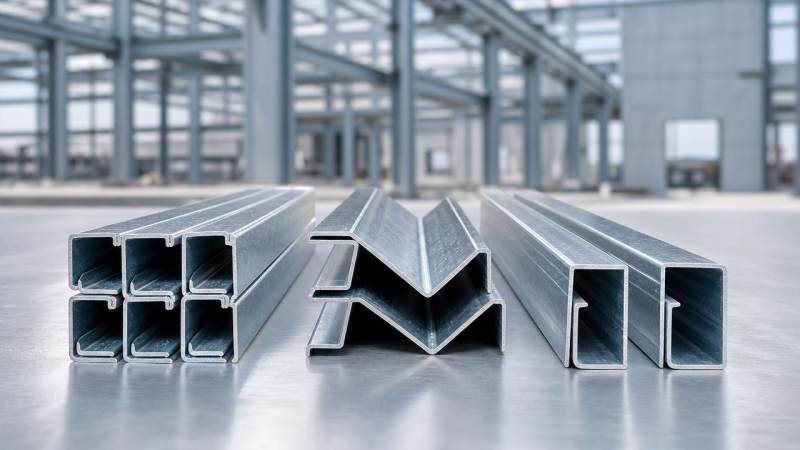
In light frame construction, cold formed steel is not just a material choice. It affects structural stability, fabrication accuracy, corrosion resistance, labor efficiency, and long-term maintenance. A poor match between section design and project load can create delays, rework, and unnecessary cost escalation.
Project managers usually balance several pressures at once: tight schedules, strict budgets, code compliance, and installation reliability. That is why cold formed steel selection should be based on measurable project conditions rather than only on unit price or common market availability.
Compared with heavier hot rolled members, cold formed steel profiles offer lower self-weight, easier transport, cleaner fabrication, and flexible forming options. These benefits make them well suited for light frame walls, roof systems, purlins, girts, modular structures, and secondary support components.
- Lower dead load can reduce demand on the foundation and supporting structure.
- Consistent dimensions help improve fit-up accuracy on site.
- Factory-controlled forming can support repeatable quality for multi-unit or modular projects.
- Protective coatings can extend service life in humid or exposed environments.
However, these advantages only work when profile geometry, material grade, coating system, and supplier process control are aligned with the application. This is where many procurement mistakes begin.
What should project managers evaluate before specifying cold formed steel?
Before ordering cold formed steel, decision makers should define the structural role of the member. Is it load-bearing, bracing-related, enclosure support, or part of a prefabricated frame system? The answer changes the acceptable section shape, thickness range, and mechanical property requirements.
Core selection factors
- Load demand and span length. Bending, deflection, wind load, and local buckling resistance should be checked together.
- Section type. C sections, U channels, Z profiles, hat sections, and customized shapes serve different framing functions.
- Steel grade and yield strength. Higher strength can reduce weight, but may affect forming behavior and connection design.
- Thickness tolerance and dimensional accuracy. These influence assembly speed and consistency.
- Corrosion protection. Coating mass and environmental exposure must be matched carefully.
- Applicable standards. ASTM, EN, JIS, or GB requirements should be confirmed at the RFQ stage.
If any of these points remain unclear, the project may face hidden costs later. Typical examples include unsuitable coating for coastal air, insufficient thickness for screw pull-out performance, or profile distortion caused by inconsistent forming quality.
The table below helps procurement teams evaluate cold formed steel from a project decision perspective rather than from a simple commodity price perspective.
For project managers, this evaluation structure supports faster technical alignment between design, purchasing, and site teams. It also helps compare suppliers based on total execution value, not only on quoted tonnage price.
Which profile type is better for your light frame application?
Not all cold formed steel profiles behave the same way in service. Selection should reflect load path, connection method, and fabrication logic. A profile that works well for roof purlins may not be ideal for wall studs or equipment enclosures.
Typical profile choices in light frame systems
The comparison below summarizes common section types used in light frame projects and how they are typically evaluated in procurement and engineering reviews.
A practical rule is simple: choose the profile around structural behavior and assembly sequence, not just drawing habit. If the site team needs faster positioning and fewer adjustments, dimensional repeatability becomes as important as nominal strength.
How do thickness, strength, and coating affect real project performance?
When teams discuss cold formed steel, they often focus on section shape first. In practice, thickness, base metal strength, and corrosion protection can have an equal or greater impact on service performance and project cost.
Thickness is not only about strength
A thicker member usually improves stiffness and local buckling resistance, but it can also change screw performance, transport weight, and fabrication cost. Overspecifying thickness may solve one concern while creating another in budget or installation efficiency.
Strength grade should fit forming and design logic
Higher yield strength can reduce steel consumption in some designs. Yet if the profile has complex bends, punch features, or demanding connection details, the forming process must remain stable. The best choice is often the grade that balances structural performance with manufacturability.
Coating is a life-cycle decision
Galvanized surfaces are common for cold formed steel because many light frame systems operate in semi-exposed or humid conditions. For projects requiring sheet-based accessories, flashing parts, enclosure components, or customized formed pieces, Galvanized Steel Sheet can be integrated into the wider material package to improve corrosion resistance and streamline fabrication coordination.
Available grades such as DX51D, SGCC, DX52D, S250GD, S350GD, and S550GD serve different forming and strength needs. Typical thickness ranges from 0.12mm to 6.00mm, width from 600mm to 1500mm, and length from 1m to 12m, with customization support. Depending on project requirements, hot galvanizing zinc layers of 60-275g/m² or pre-galvanized layers of 80-275g/m² may be considered.
For teams that need both cold formed steel profiles and compatible sheet material, coordinating these materials through one capable supplier can reduce dimensional mismatch, documentation gaps, and lead-time fragmentation. This is especially useful in modular buildings, industrial sheds, agricultural structures, and enclosure support systems.
What standards and certifications should be checked during procurement?
Compliance review should begin before purchase order issuance, not after production. In international light frame projects, buyers often need alignment with ASTM, EN, JIS, or GB standards. The exact standard set depends on project location, engineer preference, and client documentation requirements.
- Confirm the applicable material standard for base steel and coating system.
- Request mechanical property data linked to the supplied grade.
- Check dimensional tolerances and test or inspection documents for each batch.
- Verify whether the supplier understands destination market requirements.
Hongteng Fengda supports global buyers with steel products manufactured under strict quality control and with reference to major international standards including ASTM, EN, JIS, and GB. For project managers, this matters because cross-border procurement failures often come from documentation inconsistency as much as from physical material defects.
How can you reduce sourcing risk and keep delivery on schedule?
Even if the cold formed steel specification is technically correct, projects can still fail on execution. Sourcing risk usually appears in four forms: unstable production capacity, inconsistent quality between batches, unclear communication on customization, and poor shipping coordination.
A practical supplier review checklist
- Ask whether the supplier can produce both standard profiles and OEM sections.
- Review how raw material, roll forming, punching, cutting, and inspection are controlled.
- Confirm packaging, marking, and traceability for site receiving and installation planning.
- Align on lead time by item, not only by total order volume.
- Check the supplier’s export experience with North America, Europe, the Middle East, or Southeast Asia if your project is in those markets.
Hongteng Fengda manufactures and exports structural steel products from China, including angle steel, channel steel, steel beams, cold formed steel profiles, and customized structural components. For buyers managing multiple work packages, this broad capability can simplify procurement interfaces and shorten coordination cycles.
Stable supply is especially important when the site schedule depends on phased deliveries. A reliable producer can help reduce the risk of mismatched batches, urgent substitutions, and installation stoppages caused by missing members.
What are the most common mistakes when choosing cold formed steel?
Many light frame procurement problems come from assumptions that seem minor at the bidding stage. The following mistakes are common and expensive.
- Choosing cold formed steel only by nominal size without checking effective section performance.
- Treating all galvanized products as equal without comparing coating mass and environment.
- Ignoring tolerance and hole position accuracy for prefabricated assembly.
- Assuming higher strength always delivers lower total cost.
- Requesting custom profiles too late, after installation details are already fixed.
The best prevention method is early technical clarification. Procurement, engineering, and the supplier should review the section type, loading assumptions, coating, standards, and delivery sequence together before final confirmation.
FAQ: practical questions project teams ask before ordering
How do I choose cold formed steel for coastal or humid projects?
Start with exposure severity. In humid or coastal conditions, corrosion protection deserves the same attention as structural strength. Review galvanizing type, zinc layer range, and whether enclosed spaces may trap moisture. Also check fasteners and connected materials to avoid durability mismatch.
Is higher yield strength always the better option for cold formed steel?
No. Higher strength can reduce section weight, but it does not automatically optimize the project. Forming complexity, connection behavior, deflection limits, and local buckling must also be considered. The right grade is the one that meets structural demand with practical manufacturing and installation performance.
What should I ask a supplier before placing an order?
Ask for grade confirmation, coating specification, thickness tolerance, profile drawings, applicable standards, inspection records, packaging details, and estimated lead time by batch. If the order includes custom components, confirm approval steps for samples or shop drawings before mass production.
Can one supplier support both standard and custom light frame steel components?
Yes, but capability varies. A supplier with standard structural steel products, cold formed steel profile experience, OEM flexibility, and export coordination can better support mixed orders. This reduces interface risk when the project requires both routine sections and project-specific parts.
Why choose us for cold formed steel and related structural steel supply?
For project managers and engineering leaders, the right supplier should help more than procurement. Hongteng Fengda supports global construction, industrial, and manufacturing projects with structural steel products, cold formed steel profiles, and customized solutions designed around practical delivery needs.
Our value lies in combining manufacturing capability, export experience, and quality control with an understanding of how projects are actually executed. We help buyers compare specifications, review profile options, align products with ASTM, EN, JIS, or GB expectations, and organize reliable delivery plans for international orders.
- Need support confirming cold formed steel profile type, thickness, or strength grade? We can assist with technical matching.
- Need a quotation with lead time visibility? We can discuss production scheduling and shipment planning.
- Need OEM or customized structural steel components? We can review drawings and supply feasibility.
- Need confirmation of standards, coating requirements, or sample support? We can align documentation before order release.
If your light frame project requires a dependable cold formed steel partner, contact us with your drawings, required standards, target delivery schedule, and quantity breakdown. We can help you assess material options, reduce sourcing risk, and build a purchasing plan that supports both structural performance and project control.
Please give us a message


Please enter what you want to find