Sourcing industrial galvanised pipe safely requires more than comparing prices. It depends on standards, zinc coating quality, supplier credibility, and dependable delivery.
In steel supply chains, small specification mistakes can create major installation delays, corrosion failures, or compliance issues. A careful buying process reduces those risks.
This guide explains how to evaluate industrial galvanised pipe, review suppliers, confirm technical details, and support project performance across global markets.
Understanding Industrial Galvanised Pipe
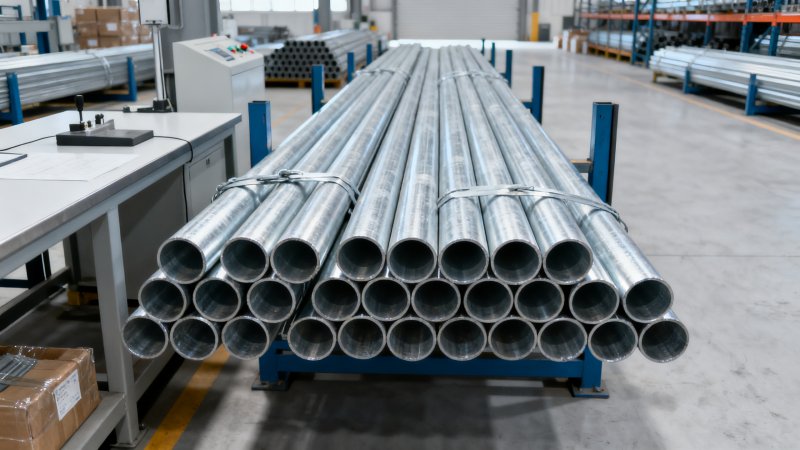
Industrial galvanised pipe is steel pipe protected by a zinc coating. The coating helps resist rust in construction, utility, industrial, and outdoor environments.
The most common production methods are hot-dip galvanising and pre-galvanising. Hot-dip galvanised pipe usually offers stronger corrosion protection for demanding service conditions.
When buying industrial galvanised pipe, the pipe itself is only one part of the decision. Base steel grade, wall thickness, surface finish, and zinc adhesion also matter.
A safe sourcing decision should connect technical requirements with the actual application. Water exposure, humidity, load-bearing needs, and fabrication steps all influence the right choice.
Current Market Focus in Steel Pipe Sourcing
Global buyers now pay closer attention to traceability, coating consistency, and delivery stability. Price remains important, but hidden risk often costs more than the initial quote.
For industrial galvanised pipe, the most common concerns include certification gaps, uneven coating thickness, substitute raw materials, and shipment damage during export handling.
These issues are especially important in steel-related projects where one delayed component can affect fabrication, coating, transport, and final installation sequences.
Key Technical Checks Before Ordering
A safe purchase of industrial galvanised pipe starts with a clear technical checklist. Verbal descriptions are not enough for reliable sourcing across borders.
1. Confirm the base steel specification
Request the exact standard and grade. Common references may include ASTM, EN, JIS, or GB, depending on project region and engineering requirements.
Mechanical properties should match the intended use. Structural, pressure, and support applications often need very different performance levels.
2. Verify galvanising method and coating data
Ask whether the industrial galvanised pipe is hot-dip galvanised after fabrication or coated through another process. The answer affects corrosion resistance and edge protection.
Request zinc coating thickness, coating mass, and test method. Good suppliers can provide inspection reports with clear values and acceptance criteria.
3. Review dimensions and tolerances
Check outside diameter, wall thickness, length, straightness, and end preparation. Tolerance control is critical for threading, welding, and modular assembly.
4. Evaluate surface condition
A consistent silver or zinc appearance is a useful initial sign, but visual inspection alone is not sufficient. Look for bare spots, heavy ash, drips, cracks, or peeling.
Supplier Assessment and Manufacturing Capability
Choosing a qualified source for industrial galvanised pipe requires more than checking a website. Manufacturing capability, quality systems, and export experience all affect final results.
A professional structural steel supplier should show stable production capacity, documented inspections, and understanding of international standards and shipping practices.
Hongteng Fengda is a structural steel manufacturer and exporter from China. The company supplies standard and customized steel products for construction and industrial applications.
Its product scope includes angle steel, channel steel, steel beams, cold formed profiles, and tailored structural steel components. Quality control supports ASTM, EN, JIS, and GB compliance.
For projects combining pipe systems with framing elements, related components should also be reviewed. One example is Z-beam for purlins, wall beams, brackets, and lightweight roof structures.
This Z-shaped steel profile is available in grades such as Q235B, Q345B, S235, S275, S355, A36, and A572. Thickness ranges from 6-25mm, with lengths from 2~12m or customized.
Galvanized coated and perforated options are available. CE, SGS, BV, and ISO certifications support quality review, while tolerance control is listed at ±1%.
Application Value and Business Impact
The right industrial galvanised pipe improves more than corrosion resistance. It supports predictable installation, lower maintenance, and better lifecycle cost control.
In many steel projects, material failure does not start with dramatic collapse. It begins with early rusting, fit-up issues, coating damage, or mismatch between documents and delivered goods.
Reliable sourcing helps avoid those problems. It also improves downstream planning for cutting, welding, transport, site storage, and assembly.
- Longer service life in humid or outdoor conditions
- Lower replacement and maintenance frequency
- Better compatibility with structural steel systems
- Reduced project risk from non-compliant supply
- More stable total landed cost over time
Typical Use Cases and Selection Priorities
Industrial galvanised pipe appears in many steel-related environments. Selection should reflect both exposure conditions and fabrication requirements.
Practical Steps for Safer Global Procurement
A structured sourcing process makes industrial galvanised pipe buying safer and more efficient. The following actions are practical and widely applicable.
- Prepare a written specification with standard, grade, dimensions, coating, and testing requirements.
- Request mill test certificates and galvanising inspection records before production release.
- Confirm whether third-party inspection is available for critical orders.
- Review packaging details to reduce coating damage during loading and sea transport.
- Check lead time by production stage, not only by final promised shipment date.
- Ask for references involving export supply to North America, Europe, the Middle East, or Southeast Asia.
It is also useful to compare quotations on a like-for-like basis. A lower offer may exclude testing, thicker coating, better packaging, or compliance documentation.
For industrial galvanised pipe, landed value matters more than unit price alone. Freight, claims, delay cost, and replacement risk should be part of the decision.
Next-Step Planning for Reliable Supply
Safe sourcing of industrial galvanised pipe comes from clear specifications, verified quality systems, and suppliers with dependable export execution.
Before placing an order, align technical documents, inspection expectations, packaging rules, and delivery milestones. This reduces confusion and protects project schedules.
If a project also requires structural steel members, working with an experienced Chinese exporter with integrated product support can simplify coordination and reduce sourcing risk.
A careful review today helps ensure industrial galvanised pipe performs as expected in service, on schedule, and within total cost targets.
Please give us a message


Please enter what you want to find