Choosing the right Steel Coil Supplier can directly affect product quality, cost control, and delivery reliability. Whether you source Q235 steel, SPCC steel, API pipe, or work with a trusted steel sheet supplier and Steel Plate Supplier, understanding certifications, capacity, and service is essential. This guide explains how to evaluate suppliers with confidence for industrial, construction, and manufacturing needs.
For most buyers, the real question is not simply “who offers the lowest price,” but “which supplier can deliver the right steel consistently, with acceptable risk, documentation, and support.” A good supplier helps you avoid quality disputes, delayed shipments, hidden compliance problems, and rising project costs. A poor one can create expensive problems long after the purchase order is signed.
What matters most when choosing a steel coil supplier?
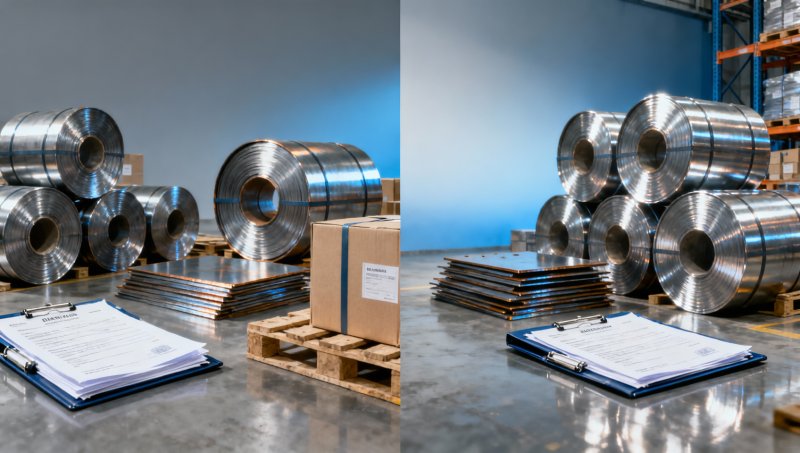
If you are comparing suppliers, focus first on the factors that affect business outcomes: product consistency, standard compliance, lead time stability, communication efficiency, and total landed cost. Many buyers initially compare only unit price, but in steel procurement, the cheapest quote is often not the lowest-cost option once you include scrap rate, claims, delays, and rework.
A reliable Steel Coil Supplier should be able to answer these questions clearly:
- What grades, sizes, and surface conditions can you supply consistently?
- Which international standards do your products follow, such as ASTM, EN, JIS, or GB?
- Can you provide mill test certificates, inspection reports, and traceability records?
- What is your normal production lead time and export cycle?
- How do you handle claims, replacement, or quality exceptions?
- Can you support custom processing, OEM requirements, or mixed orders?
These are the questions that matter to procurement teams, quality managers, engineers, and project owners because they directly affect project execution and risk control.
How to verify product quality before you place an order
Quality assessment should go beyond the sales catalog. A dependable supplier must show that its steel products are suitable for your actual application, whether for construction, manufacturing, structural fabrication, or downstream processing.
When reviewing quality, pay attention to:
- Material grade accuracy: Confirm the exact grade, such as Q235, SPCC, or other required specification, and check equivalency if different standards are involved.
- Mechanical properties: Review yield strength, tensile strength, elongation, and tolerance data against your technical requirement.
- Surface quality: Inspect for rust, scratches, waviness, edge cracks, scale, or coating inconsistency if relevant.
- Dimensional tolerance: Thickness, width, coil weight, inner diameter, and flatness can affect downstream processing efficiency.
- Testing and documentation: Ask for MTCs, third-party inspection options, and batch traceability.
For technical evaluators and quality teams, it is also important to confirm whether the supplier can maintain consistency across multiple shipments, not just one sample batch. Repeatability is often more valuable than a single good test result.
Can the supplier support your project schedule and order complexity?
Delivery reliability is one of the most overlooked supplier selection criteria. A supplier may offer attractive pricing but still become a weak link if production planning is unstable or export coordination is poor. This matters especially for contractors, distributors, and manufacturers working with strict timelines.
Check the supplier’s ability in these areas:
- Production capacity: Can they handle your order volume without overcommitting?
- Lead time control: Do they give realistic schedules for manufacturing, inspection, packing, and shipment?
- Export experience: Are they familiar with destination-country requirements, documentation, and port operations?
- Order flexibility: Can they support trial orders, urgent replenishment, or customized processing?
- Packing quality: Is the packaging suitable for sea freight and long-distance logistics?
For example, some buyers source both coil products and related construction steel from one supplier to simplify procurement. In such cases, a manufacturer with broad structural steel capability can offer efficiency advantages. Mid-project demand may also include reinforcing steel for concrete work. A product such as HPB300 Rebar is commonly used in load-bearing, structural, and stirrup applications, with standard yield strength of no less than 300 MPa, available in sizes from 6mm to 50mm and supported by certifications such as API, ISO9001-2008, SGS, and BV. For buyers managing combined material packages, this kind of coordinated supply can reduce sourcing complexity and improve schedule control.
How should you compare price without increasing risk?
Price comparison should always be based on total procurement value, not just the base material quote. A lower ex-works or FOB price can become more expensive if the product causes production loss, claim costs, or late delivery penalties.
Build your comparison around these cost factors:
- Base material price
- Processing or customization cost
- Inspection and certification cost
- Packing and freight cost
- Import duties and local compliance cost
- Potential defect, return, or replacement risk
- Inventory pressure caused by unstable lead times
Ask suppliers to quote under the same commercial conditions, with the same technical specification, tolerance range, coating or finish requirement, quantity, packing method, and delivery term. This is the only way to make a fair comparison.
For financial approvers and management teams, the best supplier is often the one that balances competitive pricing with predictable execution. Stable supply and lower risk usually produce better long-term cost performance than occasional low quotes.
Which certifications and supplier credentials actually matter?
Not all credentials carry the same value. Buyers should focus on documents that prove the supplier can meet market, project, and compliance requirements in practice.
The most useful checks include:
- Quality management system: ISO certification is a good starting point, but confirm how quality control is applied in production.
- Product standard compliance: ASTM, EN, JIS, GB, or other project-required standards.
- Third-party inspection: SGS, BV, or similar reports can add confidence, especially for export orders.
- Mill test certificates: Essential for verifying chemistry and mechanical properties.
- Export track record: Experience in North America, Europe, the Middle East, or Southeast Asia can show familiarity with different market requirements.
A supplier with strong internal control and documented export performance is usually more dependable than one relying only on generic marketing claims.
What are the warning signs of a poor supplier?
Red flags often appear early if you know what to look for. Buyers should be cautious when a supplier:
- Provides unclear or inconsistent technical answers
- Refuses to share test reports or sample documentation
- Offers unusually low pricing without explaining specification differences
- Cannot confirm realistic delivery schedules
- Has weak communication during the quotation stage
- Lacks traceability or after-sales handling procedures
If communication is already slow or vague before payment, service after the order is unlikely to improve. Strong pre-sales responsiveness is often a practical sign of stronger project coordination later.
What does a strong long-term steel supply partner look like?
The best supplier is not just a seller of steel coils. It is a partner that understands your application, helps control sourcing risk, and supports your business with consistent quality and dependable delivery. This is particularly important for recurring buyers, distributors, engineering projects, and manufacturers with strict process requirements.
A strong partner typically offers:
- Stable manufacturing capacity
- Compliance with major international standards
- Support for both standard and customized requirements
- Reliable communication and documentation
- Export experience and practical logistics coordination
- Clear quality accountability
For companies sourcing from China, manufacturers with established structural steel production and export experience can offer added value by combining product breadth, controlled production, and flexible support for global projects.
In summary, picking the right Steel Coil Supplier means balancing quality, compliance, delivery, service, and total cost. The best choice is the supplier that can consistently meet your technical requirements while reducing commercial and operational risk. If you evaluate suppliers through documentation, production capability, export reliability, and real communication performance, you will make a much safer and more profitable sourcing decision.
Please give us a message


Please enter what you want to find